Reviews Coming Soon

Album Review: TBA
Showing posts with label opeth. Show all posts

Friday, March 29, 2013

News: Anciients & Buzzard King

The joys of traipsing through BandCamp has revealed two total stunners this week in the form of Canada's Anciients and Cambridge, England's Buzzard King.

Anciients, set to release their debut album on April 12th (April 16th in North America), are described as "somewhere between sheer, apocalyptic heaviness and precise riffing — a Vancouver-based rock juggernaut forging crushing heavy metal evocative of veterans High on Fire and contemporary sonic craftsmen Opeth, Anciients have combined fuck-off-huge chords with mind-altering riffage that takes you on an unfamiliar trip."

They've stuck up a trio of tracks from their forthcoming Heart Of Oak album on their BandCamp page here - http://anciientriffs.bandcamp.com/album/heart-of-oak - I think you'll find "Faith And Oath" to be an absolute jaw-dropper.

Fans of  "bourbon-soaked heavy rock noir", as the band describes themselves, need to head over to Buzzard King's BandCamp page - http://buzzardking.bandcamp.com/ - and pay close attention to the tracks "Diesel And Danger" for it's stone-cold groove, sweet riffage and blues-streaked vocal and "Tumbling Spires" for it's howling drive and memorable barbs of each verse and the effortless roll as it takes you through their full range of gears. Think Clutch meets Rival Sons via The Doors and Graveyard.

As an interesting aside, Rival Sons are playing Cambridge soon and I haven't a clue why this lot aren't on the bill. The campaign starts here, folks...

Friday, September 14, 2012

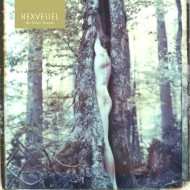
Album Review: Hexvessel - No Holier Temple

Hexvessel love trees. It’s quite clear that the “Temple” in the title of their sophomore album is referring to all things nature and, in particular, the life cycles of those tall, knotty skyscrapers themselves. Mat McNerney and his “Death Magicians” have moved on from their Dawnbearer debut and are taking their mystical folk music into some pretty dark, haunting places and on trips that may (or may not) have involved prolonged episodes of mushroom-munching.

There’s still a strong acoustic folk vibe going on with big plays coming from sax (“Woods To Conjure”), violin and piano (“Wilderness Is) and even didgeridoo (“Elegy To Goyahkla”), but they also unveil moments that will see you referencing black metal, and a decaying velocity that wraps its outstretched arms around the genre of doom. The opening, wildly self-indulgent, spoken passage outlining the glory of “Heaven And Earth Magic” sets the more solemn tone whilst passages of crystal clear, eulogising vocal plugged with stronger harmonies, particularly noticable in “His Portal Tomb” set one in mind of the work of Neil Hannon (The Divine Comedy). They are rich in melody and travel lightly along a gentle cadence. Around them is layered the sort of music that could be described as possessing a certain Beatles-y charm.

In and out of the subtle shades of potency, those that evoke the music of Ihsahn and Opeth comes something else. Tracks like the 10-minute “His Portal Tomb” and the 13-minute “Unseen Sun” that see the band happily ringing in the changes with warm, fuzzed guitar cracking out those metallic elements. They, in turn, ignite the doom fuse for those that didn’t even realise it was there all along. More twists await in the form of the cabaret wake-up call of “Are You Coniferous?” and the addictive, Levellers-esque ceremonial melodies of “Sacred Marriage”.

Ultimately, though, there is just so much music here that fails to capture the heart in the same way that a small portion of the songs do. It’s always a disappointment to hear so much falling short of hitting the mark that the standard-bearers set. The opening groundwork, so grindingly laid out, is just too weak to support the grit that the back end of the album displays. There’s way too many pompous passages of spoken word; poetic and thought-provoking, for sure, but completely energy-sapping. The fact they’ve covered a track (“Your Head Is Reeling”, one of the album’s better ones) by a band called Ultimate Spinach speaks volumes about them. Hexvessel’s exploration of the connective possibilities of their humble folk music is certainly impressive and No Holier Temple is a definite step forward but they need to stop sucking the life out of their music.

Also online (with extras) @ Ave Noctum =  http://www.avenoctum.com/2012/09/hexvessel-no-holier-temple-svart-records/

Tuesday, May 29, 2012

Album Review: Ihsahn – Eremita

’s “Rainbow In The Dark”, ’s “The Loneliness Of The Long-Distance Runner”, ’s “One”; from metal’s first tentative footsteps, bands have sung songs, constructed albums and gifted themselves names based around the theme of isolation. Having completed his “A”-trilogy, comprising (The) Adversary, AngL and After, now turns his attention to the subject and, unsurprisingly, he appears to have rediscovered a connection to his muse, Friedrich Nietzsche.

Over the years, the presence of the influential German philosopher, the self-professed “hermit of Sils-Maria”, has been keenly felt, littering ’s work as both solo artist and frontman. The album title alone (Eremita being Latin for “hermit”) would have been enough to tip us off, but the man himself is there, upside-down, on the front cover. Most tellingly, though, it is the emotion-doused content that seals the deal.

As a solo artist, has always been quick to seek the input of others and this time round he has called on the assistance of guitarist Jeff Loomis (ex-), drummer Tobias Ørnes Andersen () and teased vocal performances from his wife Heidi S. Tveitan (), Einar Solberg () and . Also, it’s no surprise to see Jens Bogren (, ) on mixing duties again as had admitted to having trouble getting the sound he wanted without him – “Originally my plan was to mix it myself, as I did with the first two albums, but I just had to throw the towel in and get Jens to do it”.

With After having broken new ground with its delicate touch and ornately progressive, open construction, Eremita notably takes a couple of large steps backwards into the shadows. “There’s some full-blown black metal stuff on there”, warns . “There’s some jazz-influenced stuff and there’s some progressive stuff. There’s some really fast stuff and some really dark stuff.” The lyrical content is definitely both dark and oppressive, matching the conjured bleak and forbidding soundscapes. With ’s paint-stripper-gargling larynx regularly seeing action we get lycanthropic pained howls that come direct from his tortured soul. It all begins to hark back to some of ’s final outpourings. In this morbid place, the jazz saxophone plays less of a significant role in the chaos – instead, the returning Jørgen Munkeby chooses to languish within; to merely dot the i’s and cross the t’s of the hermit.

Of his guests, surprisingly it is , naturally eager to repay ’s own guest spot, who seems to have made the biggest of impacts on the man here. The throbbing pulse of “The Paranoid” and more intuitive moments of “Introspection” echo parts of Devin’s own Deconstruction. The former track’s deep groove and enigmatically rotating lyrics – “the shame feeds the anger feeds the shame feeds the anger feeds the shame” – could even mark it out as the debauched, blacker cousin of “Juular”.

Eremita is a transformational album that can turn from sullen acceptance, of the kind that afflicts both “Catharsis” and the ugly, horror-movie synth melodramatics of “Grief”, to become something more approaching a grim determination for “Something Out There” and “The Grave”. Then there is the lunatic element; tracks such as the desperately posturing and over-reaching “Departure” and the far more-likeable “The Eagle And The Snake” that hammer in a whole host of twisted shapes; strong, angular changes both oblique and acute. The pair are mazes that you will constantly find yourself getting lost in. The absorbing and wildly meandering guitar solo and blasts of discordant sax that lurk in the latter are the mere cherries on top.

Comparing Eremita to his last release, has said it is “not as joyful” and “a lot more claustrophobic” and it is most certainly both those things. Predictably, it’s an album that craves its own isolation. So lock the door, slam on the cans and buckle up. It’s one wild, nightmarish ride that Nietzsche, himself, would no doubt have begrudgingly approved of.

Also online @ The NewReview (with video preview) = http://thenewreview.net/reviews/ihsahn-eremita

Wednesday, September 28, 2011

Album Review: Opeth - Heritage

I have to confess, I’ve never quite understood ’s modus operandi. Blink once and they’re soothing the soul with softly-spoken words placed carefully over dark, yet harrowing, prog rock; blink twice and they’re hacking your face off and dripping pure death into the bloodied holes with the most vitriolic, post-apocalyptic, black metal. To qualify as a bona fide fan, I suppose you really have to dig both sides of the band’s twisted dual personality. Lord knows I’ve tried to love the heavier stuff but my heart’s just not in it – I’m a Damnation man through and through. I’ve listened to album after album and gone to show after show but I always end up either skipping tracks or ducking for cover whilst others go apeshit in front of me. A part of me strongly suspects there are others who share my theory but I doubt, just as much, that they are willing to support it. Well, if you are out there, folks, this one’s for you.

Heritage is a milestone for , their tenth album, and this time there are no death growls. They have clearly marked the occasion with a change of direction that they discovered whilst writing for their last album, Watershed. It’s something haven’t tried since Damnation, oddly enough; yet even that album’s clean lines can’t compare to the streaky rhythms and ethereal hues that this one carries. In that sense, it’s more likely to occasionally draw comparison to the bleak wasteland portrayed in Still Life. It’s intensely gothic in places, and startlingly barren in others, but it always seems to, like much of ’s proggier material, peel back the layers and bury itself deep into your brain.

Producing the album himself, frontman Mikael Åkerfeldt has stripped back the guitars and vocals, leaving an opaque imprint that will both fascinate and challenge all-comers. From its title-track with solemnly authoritative piano underpinned by double-bass to “Marrow Of The Earth” with plucked acoustic and electric guitars intertwined in a balletic play of notes, know that Heritage is in the raw. Or, to put it all a little more poetically, from a silent classroom to a mere breath on a mirror.

It comes as absolutely no surprise to see Steven Wilson’s involvement either – you can almost sense the man’s energy and hear his influence steaming off of some of these tracks. In places, it’s easy to mistake Åkerfeldt’s vocal for Wilson’s own croon, whilst the opening crawling guitar riff and layered background fills within “I Feel The Dark” would nestle quite happily next to quite a few of ’s tracks – only when hammer in those gloom-stained changes of key, do they stamp their own distinctive personality on this.

There’s plenty of fuzzed guitar and warbling keys in the tight twists and loops of “The Devil’s Orchard”, all of which leads you, tellingly, to the hooked climbing chorus and and its delayed tolling follow-through. Then, those rumbling rhythms are back again for the head-nodding vibe of “Slither”. Both drag forth echoes of , and , whilst the thick guitar tone at the end of “Häxprocess” recalls Gary Moore. Of course, the jazz flute hiding in the loosely-structured “Famine” could only tweak memories of in their prime. Perhaps it is these moments that give the album its aged feel, almost like it had been written some time ago and stored like a fine wine to mature, but it is a thought that’s solidified by the album’s perfectly-weighted title. Maybe it has after all, especially since Åkerfeldt commented in his press release that he’d been wanting to write “an album like this since I was 19″. I can see him now, as an eager young man, ferreting away ideas.

There are brief moments where the jazzy elements begin to overwhelm the quietly brooding core, during “Häxprocess” and again for “Famine”, but they are mere branches within the flow of Heritage‘s crystal-clear waters. Don’t dwell on this thought because familiarity will undoubtedly be followed by acceptance. Instead, let me leave you with a description of the magnificent “Folklore”. It’s a track that dives at you in waves; rises to glorious peaks on galloping basslines and sinks into hardier sections which twinkle and glimmer like candlelight in a vast, lavishly-decorated Viking hall. It leaves me smiling blissfully every time. Each track paints a picture, tells a story, and that’s all you can ask for in an album. I don’t think it’s got the kind of overwhelmingly addictive personality that Damnation exuded, but I do think for all those lovers of ’s lighter side, they have provided some classy food for the soul and that means they can rest easy. Heritage is already a part of the furniture; something to cherish for a long time to come.

Also online @ The NewReview (with samples) = http://thenewreview.net/reviews/opeth-heritage