Reviews Coming Soon

Album Review: TBA
Showing posts with label nevermore. Show all posts

Wednesday, March 26, 2014

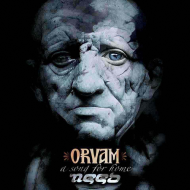
Album Review: Need – Orvam: A Song For Home

This third full-length album, following “The Wisdom Machine” and “Siamese God”, from the Greek quintet Need displays a complex grasp of 70s and contemporary prog metal. It comes spring-loaded with flighty melodic threads à la Dream Theater and Fates Warning. It consistently punches above its weight throwing in big hefty clumps of Nevermore-esque power rock and is never afraid to mine a rich seam of Tool-ian avant-garde quirks.

Opener “Lifeknot” emerges like some crazed dance robot before settling down into a steady switch-back between the half-time hush of the bitter verse and the lurching, rhythmic chorus. As you’d imagine with an album subtitle like “a song for home”, inevitably there is a sonic essence of the band’s homeland running throughout the music. That ethnic feel and tone comes through in spades on the 10-minute “Entheogen”, where we get a repeated and monotone mantra to chant back, middle-eastern guitar scales and instrumentation and a sashaying female top-end vocal piece.

Here, the multitude of layers from the foreground power of Jon V.’s emotive vocal, the interweaving shredded guitar work and the diverse soundscaped background are craftily-balanced, meaning these intial tracks are never overly-busy but varied enough to allow for a different focus on each listen.

The initial sections of “Symmetrape” threaten to break out into Rush or Journey at any point but Need quickly dispel any sense of a reclining into established AOR territory by throwing in a mind-blowing blast of stomp-heavy death-doom. It’s the most curious of tracks but rams home the point and beautifully focusses the mind on the screwy construction. The album soon establishes that theme and before-long the cutaways into lounge music, space-rock or funk piano begin to make a little more sense. Need seem able to integrate these niche segues with such ease, rarely lingering on them too long before returning to the spine of the track.

Critically, the album craves a key riff or vocal lick to really make Orvam stand out. “Construct” tries hardest of all by adding bite but neither that supreme wandering synth or repeated chorus line of “Time’s ticking away…” could be said to give this the necessary kick into the listener’s sub-conscious. Sadly, this almighty hour-long album also comes with an in-built tipping point. It appears when they break off for the off-putting, one-listen-only 3:26 spoken recording of existentialist psychobabble that constitutes “Hotel Oniro”.

That one piece alone will not make or break the album for you but the 18-minute title-track rock opera that follows may. Replete with vast orchestral flourishes and echoing the epic delivery of Turisas, it plods along at a doomy pace breathing heavy with a yawning vocal. It bristles, it slumps, it cracks us emotionally, it does the lot. Broken down into bite-size chunks, it would have been far more palatable and some sections will definitely strike a chord more than others.

Opening like a posessed demon and ending like the broken character art that adorns it, this monster of an album will grab you with its imaginative use of instrumentation and engaging stylistic skullduggery but, above all, its sheer honesty and range of emotional interplay. Think not of it as an album; think of it as a story, as a journey, as a song for home.

Also online @ Ave Noctum = http://www.avenoctum.com/2014/03/need-orvam-a-song-for-home-trailblazer/

Tuesday, May 29, 2012

Album Review: Ihsahn – Eremita

’s “Rainbow In The Dark”, ’s “The Loneliness Of The Long-Distance Runner”, ’s “One”; from metal’s first tentative footsteps, bands have sung songs, constructed albums and gifted themselves names based around the theme of isolation. Having completed his “A”-trilogy, comprising (The) Adversary, AngL and After, now turns his attention to the subject and, unsurprisingly, he appears to have rediscovered a connection to his muse, Friedrich Nietzsche.

Over the years, the presence of the influential German philosopher, the self-professed “hermit of Sils-Maria”, has been keenly felt, littering ’s work as both solo artist and frontman. The album title alone (Eremita being Latin for “hermit”) would have been enough to tip us off, but the man himself is there, upside-down, on the front cover. Most tellingly, though, it is the emotion-doused content that seals the deal.

As a solo artist, has always been quick to seek the input of others and this time round he has called on the assistance of guitarist Jeff Loomis (ex-), drummer Tobias Ørnes Andersen () and teased vocal performances from his wife Heidi S. Tveitan (), Einar Solberg () and . Also, it’s no surprise to see Jens Bogren (, ) on mixing duties again as had admitted to having trouble getting the sound he wanted without him – “Originally my plan was to mix it myself, as I did with the first two albums, but I just had to throw the towel in and get Jens to do it”.

With After having broken new ground with its delicate touch and ornately progressive, open construction, Eremita notably takes a couple of large steps backwards into the shadows. “There’s some full-blown black metal stuff on there”, warns . “There’s some jazz-influenced stuff and there’s some progressive stuff. There’s some really fast stuff and some really dark stuff.” The lyrical content is definitely both dark and oppressive, matching the conjured bleak and forbidding soundscapes. With ’s paint-stripper-gargling larynx regularly seeing action we get lycanthropic pained howls that come direct from his tortured soul. It all begins to hark back to some of ’s final outpourings. In this morbid place, the jazz saxophone plays less of a significant role in the chaos – instead, the returning Jørgen Munkeby chooses to languish within; to merely dot the i’s and cross the t’s of the hermit.

Of his guests, surprisingly it is , naturally eager to repay ’s own guest spot, who seems to have made the biggest of impacts on the man here. The throbbing pulse of “The Paranoid” and more intuitive moments of “Introspection” echo parts of Devin’s own Deconstruction. The former track’s deep groove and enigmatically rotating lyrics – “the shame feeds the anger feeds the shame feeds the anger feeds the shame” – could even mark it out as the debauched, blacker cousin of “Juular”.

Eremita is a transformational album that can turn from sullen acceptance, of the kind that afflicts both “Catharsis” and the ugly, horror-movie synth melodramatics of “Grief”, to become something more approaching a grim determination for “Something Out There” and “The Grave”. Then there is the lunatic element; tracks such as the desperately posturing and over-reaching “Departure” and the far more-likeable “The Eagle And The Snake” that hammer in a whole host of twisted shapes; strong, angular changes both oblique and acute. The pair are mazes that you will constantly find yourself getting lost in. The absorbing and wildly meandering guitar solo and blasts of discordant sax that lurk in the latter are the mere cherries on top.

Comparing Eremita to his last release, has said it is “not as joyful” and “a lot more claustrophobic” and it is most certainly both those things. Predictably, it’s an album that craves its own isolation. So lock the door, slam on the cans and buckle up. It’s one wild, nightmarish ride that Nietzsche, himself, would no doubt have begrudgingly approved of.

Also online @ The NewReview (with video preview) = http://thenewreview.net/reviews/ihsahn-eremita