Reviews Coming Soon
Tuesday, April 24, 2012
Album Review: Skyharbor – Blinding White Noise: Illusion & Chaos
Nailing a worldwide release for their double-disc debut album, Blinding White Noise: Illusion & Chaos, can’t have been the smoothest of rides (“four years of epiphanies and disappointments” according to brainchild/guitarist Keshav Dar) but it’s easy to see how they got there in the end when you see which label they are gracing (Basick) or cast your eyes down the number of international guest appearances. Also bear in mind that these contributions are from guys who offered their help, not vice-versa. Guys like ex-TesseracT vocalist Dan Tompkins, whose pin-point tone is so obviously the key to the Skyharbor door-lock and consequently ends up singing on 80% of the album, and guys like ex-Megadeth axeman Marty Friedman who contributes to two tracks.
The majority of the content is made up by the Illusion disc and, honestly, it’s a delight to finally hear a modern progressive metal record that is happy to dip its toes in the waters of djent, but doesn’t feel the need to obstruct the flow of the songs with incessant levels of palm-muted hammering or flood you with wave upon wave of ambient wash. The band has allowed for a very organic writing process. Left unencumbered by heavy-handedness or complex mathematics the natural rhythms are left to flow and create instantly recognisable patterns. The production has followed suit and swapped hard, angular tones for a softened, more emotive backline that has put the vocal upfront and undominated. “Dots” is a straight-up joy, “Catharsis” is a brilliantly-layered puzzle with an undemanding solution, and “Celestial” burns with unambiguous, anthemic ambition (listen out for Friedman’s blistered, falling riff and Amogh Symphony’s Vishal J. Singh’s quixotic solo).
Any pent up anger that comes from holding back their instincts is released within the howling confines of Chaos. The band rip into the music with vigour, winding up the pace of their attack and rolling around in distortion and syncopation like pigs in muck. Sunneith Ravankar (Bhayanak Maut) is let loose to roar almost continuously through “Trayus” and “Aphasia”, but it is the split-personalities of “Insurrection” which invigorate the most as, like a spinning compass, the befuddling rhythm finally settles on a direction, both in its more turbulent and calmer guises. Throughout Chaos you get the sense that the heart of the album is still there, latent in the background, desperately fighting to burst through the surface as and when it can. And yet I am left with mixed-feelings about this segue into crushing heaviness. There are several bands who have mastered this kind of polyrhythmic, invasive bedlam already, so whilst it provides a deathly foil for the life-giving properties of it’s sister disc, to some extent it feels a little like the band are laying out their abilities to merely impress; an over-exaggerated evil, perhaps?
Illusion is far more beguiling and there is one particular work of art that sums up everything that is brilliant about Blinding White Noise. With intertwined rough and smooth layering pouring like colors out of “Maeva”, it’s a composition that, whilst forming just one more mountain top in a rolling range of peaks, is a piece of music that seems to transcend faceless labels. You simply couldn’t get away with calling it a “track” or a “song” without doing it an injustice, so I haven’t. At its core lies a series of spine-tingling change-ups that provide the platform for Tompkins to soak us in gloriously sweet emotion. His magnificent tone and eloquent words seem such a fitting place to end this review, so I’ll hand you over to him… “It’s so damn hard to let go / But take a chance / And survive, come together, embrace life / This is India!”
Also online @ The NewReview
Friday, April 20, 2012
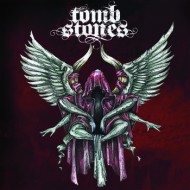
Album Review: Tombstones – Year Of The Burial
Following the unleashing of Volumes I and II, Year Of The Burial is their third album in four years, so they aren’t slow in dishing out slabs of bollock-jangling power and this is like listening to Acid King meets Acid Witch with a good dose of Bongzilla’s weighty grunt thrown in.
With dissonance and sustain applied in biblical amounts, each blissed-out down-tuned chord strike gently warps and twists but never quite reveals itself. The qualities of that mile-thick buzz are best heard in the opening long down-strokes of ‘Egypt’, a track that sidesteps from an epic crush into a stone-cold driving groove.
Whether they’re zoning out for the slow burns like ‘Quintessential’ and ‘Unveiling’ or gently chugging along for the rollers like ‘Sabbathian’ or ‘Silent Voice’, that buttock-clenchingly deep buzz rumbles ever onwards; the unstoppable force. It’s a sound that just seems to improve exponentially the higher you wind the volume up. Set it to “deafening roar” if you want to really rattle your windows.
If you suddenly become aware of someone shouting at you, it’s probably not Mrs Haggis from No. 74; rather, it’s the lead vocalist. Sounding like he’s standing alone at the back of some vast cathedral, Bjørn-Viggo Godtland’s cries out to the rafters, summoning forth any and all evil spirits from their hiding places. His crystal-clean wails are strangely stark against such a mucky foreground, and you’d probably be able to understand him, if it weren’t for the lavish amounts of reverb that have been applied. Recorded live in an Oslo studio in the midwinter, it’s the little indiscretions and that sudden contrast that leaves you feeling, wonderfully, like you’ve stumbled on a forbidden, gothic black mass.
Somewhat disappointingly, the tracks do all seem to blur into each other after a while, but the stoner swagger of the title-track is a solid attention-grabber. It steps up the pace to awaken the guitars from their reverie and, as they cough out malignant riffs, Godtland drops pitch to a sneer and spits forth black wads of dread. Venomous and bristling with murderous intention, it’s a vaguely-cosmic, grim venture into yet more dark corners.
At a miserly 39 minutes, it does feel a little short. It takes that long to settle into the sluggish pace of the songs, so all too quickly you stumble on the classic denouement, ‘Sabbathian’. It features a steadily hammering chug-and-chant that carves its way through, predictably sourcing the creator of heavy music for one last heavy-lidded, disembodied ramble down the dark path. Strangely, it’s the perfect finale for an album that, by beginning slowly and ending with plenty of bang, serves as a fitting tribute to glorious doom in all its multiple forms.
Also online @ Ave Noctum = http://www.avenoctum.com/2012/04/tombstones-year-of-the-burial-soulseller-records/
Thursday, April 19, 2012
Album Review: One-Way Mirror – Destructive By Nature
When it comes to music though, if it’s cheesy there’s plenty of folks are gonna turn their noses up and walk away. Perhaps, it’s their die-hardened old school, true or cvlt moralistic standpoints, perhaps it’s the fact that cheesy music tends to come with a whole charade of gimmicks that puts them off (e.g.; bands that wear coordinated outfits or those that sell weird, often vaguely pornographic, merch), or perhaps they’ve been burned in the past by former musical loves turning bad on them. They may even have had a sense of humor bypass. Me, I love cheese and think it’s almost essential to have a couple of cheesy bands in your collection. Hell, stick on some lounge or some nu-metal and you’ll find me swinging from the nearest obscenely-ornate chandelier.
This, naturally, brings me to the enigma that is those crazy Frenchmen One-Way Mirror. Having previously reviewed the band’s eponymous debut, I thought I knew what was coming with their latest effort, but was a little shocked all the same. With Destructive By Nature, there’s still plenty of cheese on show here – even that sumptuous artwork looks like squeezy-cheese. It’s a veritable smorgasbord of the stuff; a pastiche of yellows, off-whites and blues; a cloud of faint aromas that suddenly burst into noxious whiffs. It’s heavier than before and they’ve most certainly expanded their overt range of production and post-production techniques. The whole focus here is on the incredible diversity of vocal styles booting you regularly in the ears ranging from single, double and treble-layered vocal, gang and crowd chants, obscured sections, electronically-tweaked gargles, fuzzed bits, bass-boosted parts, grunts, screams, cleans and scratched on/off versions. Trust me, if you had a one-way mirror you’d want to have it in their studio, so you could, without hurting the bands feelings, pull the kind of incredulous faces you will be pulling when you hear this. It’s along the lines of Figure Of Six getting chewed on by Threat Signal for doing a Mnemic impression.
Take the opening few bars of the album as an example. Put simply, they use it to introduce themselves. Literally. The kick-drum pads out the timing… “One!” (crowd roar) “Way!” (crowd roar) “Mirr-or!” (crowd roar). Cue big electronic sample and in bursts Rouxel’s full drumkit. Cheesier than a ball of edam. Oh, and they’ve got a press release to match – “This album is not unlike shrapnel as it will embed itself in your system upon explosion. Some songs will make the fans bang their heads while others will simply decimate them altogether”. A wonderfully ludicrous claim and, I’m sorry, but I beg to differ.
This all feels like a bit of a step backwards. I kept listening for the addictive qualities that tracks like “Destination Device”, “As You Are Now”, “Empty Spaces” or “Sockracer”, from their debut, had in spades. That “stand up and pump your fist” hook or the “sing your heart out” anthemic lyrics to kick in, but I kept coming up with shoulders shrugged and bottom lip protruding. The groove through tracks like “Face To Face” and “Straight Into The Wall” have a sinister underbelly but there’s just no firey contents inside whilst the stinging bitchslaps of “Soupracer” and “Deadly Shores” is all fire and no subtlety. It’s almost like, by creating reverberating highly-strung walls that dive into charred chugs and by boosting Perdicaro’s rumbling bass-drive, they’ve lost the ability to punch out kick-ass lines to go with it. The verses are virtually obliterated by theatrical posturing and there’s no simple-structured switch up from there, meaning that the choruses come and go without sticking in your noggin.
They do have a bit of a crack at mixing it up. The uber-heavy thrash that blisters the surface of “Wasted Years” is a welcome addition, there’s a memorably pained howl in the verse of “Inner Symphony” and there’s a couple of sweet soaring choruses in “Unexpected” and “Made In Vain”, where their softer side comes through. Sadly though there’s just too much overlap and too much filler here. It’s a shame as they suckered me in with their yummy debut, where the contrast between rough and smooth, hook and drive, was pretty much bang on. If you’re new to OWM then, remember, the whole thing takes some getting used to (and this certainly improves with age) but if there’s nothing that grabs you on that first spin, it’s unlikely you’ll return for another nibble.
Also online @ The NewReview = http://thenewreview.net/reviews/one-way-mirror-destructive-by-nature
Monday, April 2, 2012
Festival Review: Hammerfest IV - The Hammer Of Thor
Within minutes of arriving, I hear brain-mangling tuneage blasting from the cracked doors of every visible chalet, I witness Captain America wrestling Spiderman to the ground and I’m soon being followed by a ten-foot Satan, a built dude dressed like the front-cover of Mastodon’s The Hunter and a rather attractive young woman on stilts, seemingly being eaten by an alien. It’s hard not to be moved by such scenes of complete metal immersion.
It’s not long before I’m banging my head along with the rest of my brethren as Trucker Diablo (3.5/5) let loose a volley of earth-shattering bottom-end groove from the depths of the on-site pub, the Queen Victoria (otherwise known as the third stage). The beer flows as an array of beards, of varying lengths, bob up and down with their owners and horns are thrown to the sky. Moving on to Chimaira (4/5), I quickly find myself reeling around the main stage pit as vocalist Mark Hunter peers down at his people, belching forth tracks from the band’s stunning new album The Age Of Hell. As the “Year Of The Snake” digs down to its earth-shaking dropped breakdown, the crowd slo-mo crunch together and time folds in on itself. It’s the peak of their show but, as it comes mid-set, it leads to the band coasting from here onwards.
Paradise Lost (3/5) follow up by ducking from goth-rock melodics into brooding doom and back again whilst, on the second stage, late additions Falling Red (3/5) dish up lashings of make-up and hairspray to go with their mile-wide stances and classic rawk. It’s not my cup of tea but the choons have got balls and, out front, there’s a sprinkling of gurning faces, so they must be doing something right. Headlining tonight, Anthrax (4/5) are clearly here to bring tha noize (sorry) and frontman Joey Belladonna works the gathered masses like a pro. A blazing “Indians” is the moment when the seated-VIPs can no longer resist and arise to begin rocking out with those who have been throwing shapes and hurling bodies for the duration.
With the excellent Evil Scarecrow (4.5/5) whipping up a storm of comedy and metal, those who survived the headliners begin to filter through and the lunatic quarter of Hammerfest begin to show their faces. Grown men in foil-covered cardboard boxes wade into the pit prompting plenty of laughs and pointing fingers as cries of “what the fuck is that?” hail from vocalist “Dr. Rabid Hell” (yes, really). One minute the band are lashing us with “Blacken The Everything”, a classy, post-apocalyptic powerhouse of a track, the next they are unleashing “Robototron” which reduces us to tears and has us dancing in squares. Even Lawnmower Deth (3.5/5) can’t top that, so I slip into the shadows to seek out the refuge of my chalet and my mattress.
As the sun rises on scenes of carnage, I find myself transfixed by men, still drunk from the night before, headbutting each other, one leaping from great height onto a stack of mattresses, and a few hardy souls swapping it all for a brisk walk along the nearby wind-blasted beach to scrawl rude pictures and words into the sand.
Back with the music and the blundering wake-up call comes fittingly from a duo called Oaf (3/5). Their first note is a foghorn in my cochlea. It threatens to empty the pub in one foul swoop, but it’s not long before “He Who Strums & Shouts” is settling into a devilishly heavy groove. AR (4.5/5) pick that vibe up and churn it into a barrage of driven, technical metal. Yet it is the fragmented vocal exhortations of vocalist Jhon Isaac that really fire this band into life. They initiate all manner of contortions to Isaac’s body and face, they inspire wild hopping from foot to foot and prompt bassist Simon Edwards to lead the crowd into taking part in the shenanigans. By the storming “One Day”, we are bellowing the word “spatula” back at the band, giving ourselves whiplash and grinning from ear to ear.
Over on stage two, Mortad (3.5/5) keep the party going with plenty of gruff screams à la Angela Gossow from the back-arching vocalist Somi Arian, whilst the main stage is padding its way through the uninspiring power metal of Germany’s Wizard (2.5/5) and the sleep-inducing, crown-of-thorns agonizing of Hell (2/5). That is until the devoted hit the battering ram that is Amon Amarth (3/5). Losing something in translation from the smaller stage, tonight they only really connect with the anthemic “Guardians Of Asgard” whilst the majority of tracks tend to lose their identity amidst an impenetrable wall of echoing guitar.
Wonderfully, Skindred (5/5) correct the balance as Benji Webbe orchestrates a packed house to swing their shirts above their heads, turn themselves into jack-in-the-boxes and dance until they drop. Ragga metal becomes a true force tonight, not just something to cleanse the palette, and, inevitably, it’s the bucking grooves of debut album Babylon that litter their set. From “Selector” and “Set It Off” to “Nobody” and “Pressure”, the build to the encore is one pile-driving monster to the next. By the time they sign off with the gargantuan “Stand For Something”, cosying up to The Prodigy’s “Breathe”, and the bullet-to-the-brain that is “Warning”, the crowd have melted into puddles and the world is on its head.
What a finale then to the most wild of weekends. The music may have finished us off but it was the sense of fun that will have us writing next year’s event in our diaries. The knowledge that those attending will be freely opening their chalet doors and inviting us inside to discuss their love of music is the key. There can be no doubting here, that the organizers have succeeded in marrying the word “metal” to the word “community”.
Also online (with more photos) @ The NewReview = http://thenewreview.net/show-reviews/hammerfest-iv-prestatyn-uk
Sunday, March 4, 2012
Album Review: O.S.I. – Fire Make Thunder
Of course, O.S.I. is a band and not a government office, so there’s no need for us to get our knickers in a twist. O.S.I.‘s main men are prog-rock Wunderkinds Jim Matheos (Fates Warning, Arch/Matheos) and Kevin Moore (Chroma Key, ex-Dream Theater). There’s is a long-distance partnership. Both the writing and recording for fourth album, Fire Make Thunder, (in fact, all except the final overdubs and mastering process) is done at each musician’s respective home studio. Even the drums get a home-recording – this time at sticksman, and final piece in the puzzle, Gavin Harrison’s house far away in London. With their various other projects all ticking over nicely this is clearly an arrangement that works to their advantage.
Following their frankly stunning debut album (so good it warranted a recent re-release) they have been steadily churning long-players out on a regular basis. Their last couple have seen the band produce subtler, more mellow albums that stand accused of sacrificing hooks for emotion, but Fire Makes Thunder aims to correct that imbalance. Tracks like “Cold Call”, “Guards” and “Big Chief II” all wallow hard in the groove and serve up plenty of riffs and catchy lyrics that had me helplessly mumbling along whilst en-route to my various destinations, headphones askew from gently nodding in time. Others like “Indian Curse” or “Invisible Men” drop the pace and spark moments of deep contemplation with their crafty use of psychedelic, synthetic layering.
It may yet become tiresome, but the currently innocuous recycling of riffs and lyrics is a wonderful feature of the band. It ties tracks and albums together and draws comparison with the exquisite way Porcupine Tree do the same. Good examples here are the way “Guards” continues on from “Cold Call” by linking it back using lyrical content; or when “Invisible Man” picks up its big, heavily-fuzzed riff halfway through, it immediately recalls a riff that was used to great effect in “Bigger Wave” (from 2006′s Free). All these neat touches means the album flows beautifully from piece to piece, diligently threading emotional responses together. There’s true method in their madness, y’know.
The deft instrumental, “Enemy Prayer”, with its rinsed-out lead and bucking bass, rocks its listener from pillar to post with sections of delicate piano, wild tremelo and driven guitar, and stands up as one of their finest moments. Other album highlights can be find in the dreamy, waterfalling riff, background wash and dynamically-clipped vocal of “Wind Won’t Howl” and in the searing guitars which streak across Moore’s rich, menacing delivery (curiously reminiscent of Oasis’ Liam Gallagher) during “Guards”.
“Cold Call”, despite initially biting down hard with a fierce lick, after numerous plays, quickly gets repetitive and “Big Chief II” fails to initiate lift-off with a simplistically hard heart and with little else to stir the soul. However, despite these small failings, the album is an assured winner, proving that it’s not all beer, shits & giggles in the Matheos/Moore households, and heralds a welcome return to form for the band.
Also online @ The NewReview = http://thenewreview.net/reviews/o-s-i-fire-make-thunder
Friday, February 17, 2012
Album Review: Drawers - All Is One
Drawers are a band who, amidst the trend for those one-word, pluralised bandnames and the resurgent craze for atmospherics and big riffs, are in danger of not getting picked up. It’s clear from, “All Is One”, their debut album about a sailor’s journey to meet his nemesis, that the band have sucked up many different flavours of sludge and stoner metal to produce a hard, smothering sound that’s heavy enough to suffocate.
They start aggressively with both “Capuut Mortem Ocean” and “Black Queen” ripped with the grumbling guitar tone of High On Fire and enamoured with a touch of the dark power of Purified In Blood. “Grey Sailor” piles some of Corrosion Of Conformity’s hardcore feistiness into the mix, dissecting the rhythmic groove into spasming sections. Mostly though, you’ll be hearing plenty of the low-keyed progressive fury of Crowbar and Down, especially in tracks like “Ivory Lighthouse”, “Red Ballet” and “Muddy Smoke”, both in the Anselmo meets Windstein vocal and the weight of dissonance, dissolving the chugs into a singular sound.
Tracks like the short-but-sweet “Blue Keel” and the more expansive “Silver Hand” dig down into cleaner waters adding another brief layer with a more pinched, proggy quality a la Baroness or Isis. “Silver Hand”, in particular, is a winner having retained the driven punch built up from previous tracks to offer a taste of both worlds. Another cracker is the raw power-play, “Golden Adieu”, which simply refuses to cede ground to allow you room to breathe.
With quite a few recognisable influences up front and centre, the task of projecting their own stamp on the project becomes increasingly more important as the tracks roll by. Sadly, by “Purple Ride” and “Electric Seat”, Drawers have succumbed to towing the stoner metal line, mimicking Down almost to the last detail in an attempt to suck up some of their signature, grime-slicked, deep Southern groove, wobbling along the same path, facetiously mimicking their bow-legged gait.
It’s odd that an album whose song-titles feature an array of colours should seem so undeviating, but it’s an album that undoubtedly has an enormous heft to it. It’s for this reason that, despite its lack of variety and tendency to copycat, fans of any of the aforementioned bands should get a kick out of this. For the rest of you, as it stands, if your detector gets one whiff of these Frenchmen right now, it will simply short-circuit and Drawers will find themselves sliding back down to the bottom of that haystack.
Also online @ Ave Noctum = http://www.avenoctum.com/2012/02/drawers-all-is-one-slow-burn-records/
Thursday, February 16, 2012
Album Review: Band Of Skulls - Sweet Sour
A quick glance at bassist/vocalist Emma Richardson’s Rorschashian inkblot artwork, this time around, is your first indication that Sweet Sour is going to rock harder than their debut. It has developed into something far more sinister than the blossoming glory of their debut. I’ve fallen into her trap by assembling its imagery into either a dissected, bloodied chicken corpse or, possibly, an Alien facehugger about to impregnate the viewer. Whichever it is, she’s nailed the album title in one startling image.
Certainly, the top end of Sweet Sour is all about the crunch. Guitarist/vocalist Russell Marsden has said “We wanted to write material that’s primed for where we’d got to. Beefier songs for bigger stages”. They are certainly that, with tracks like ‘Bruises’ and ‘Devil Takes Care Of His Own’ loaded with lurching, grimy riffs that pepper the songs with crafty precision, the rhythm ensconced in a methodical structure of attack and release.
They may be pulling the now-familiar shapes of rock bands past, but they have avoided the trap of merely echoing the mould that bands like The Vines or Jet once slid themselves into. Instead, BOS simply refuse to pile it all into the mix at once. Rather, enigmatic gaps in the music are added, the tonal quality becomes a malleable presence, and the pace is slowed to a crawl. It’s this kind of skillful songwriting that bolsters the effectiveness of the repeated lines which become the addictive hooks to be nailed home. It’s rock with added nous: the kind last seen active in the inventive minds of The Black Keys and Nine Black Alps.
Take the the boom-boom-tiss and falling arpeggio string taps of the title track or the steady two-chord repeater-riff that pads its way through to the key hushed strapline of ‘Devil Takes Care Of His Own’. Think Joan Jett’s ‘I Love Rock n’ Roll’ getting down and dirty with AC/DC’s ‘Back In Black’ and you’ll be half-way to understanding just how powerful these songs are.
Somewhat disappointingly, surrounding these top-end tracks lies a patchwork of hit and miss. ‘Wanderluster’ walks you down a dead-end of tentative echo and formulaic patterning before insulting you with a prosaic, posted-in chorus. ‘Lies’ crumbles beneath its own assuredness, circulating a couple of times before panicking and falling on the sword of brevity. Then, stepping back on the gas, they dredge up hints of The Subways with a soul-shaking groove, as memories of deliciously playful boy-girl harmonies are reignited, for ‘You’re Not Pretty But You Got It Goin’ On’.
The pace drops toward the album’s close, allowing the listener to sink back down within Band Of Skulls’ downier side. Tracks like ‘Navigate’, where Richardson beautifully steals the mic, ‘Hometowns’ and ‘Close To Nowhere’ all shift your perceptions of where this band fit in the wider scheme of things. Marsden recently nailed it with the words “Songs are your weapons. We’re the Swiss Army Knife of bands”. They can catch you napping with a real rocker like ‘Bruises’ or effortlessly disarm you with something like ‘Hometowns” whispered, yet super-sharp line “It’s just kids having more kids for fear of being alone” which comes from behind a veil of pastoral flute and gently tinkling stringwork.
As expected then, there’s some sweet and some sour; a description with a double meaning, applicable to both the album’s emphasis and its quality. Regardless of how fast the album grows and fades from your playlist, Band Of Skulls have cracked enough noggins here to really cause an industry ruckus. The countdown to lift-off has begun; twinkling in the distance, stardom awaits to receive them.
Also online @ TLOBF = http://www.thelineofbestfit.com/2012/02/band-of-skulls-sweet-sour/
Sunday, February 12, 2012
Album Review: Fading Waves - The Sense Of Space
Well, The Sense Of Space tries a bit of everything, opening gently with fluctuating ambient pop, before exploring the wilds of post-rock and into the chaotic worlds of progressive, doom and death metal. As the album progresses, you can hear the tracks rebounding off a series of different markers; influences that prove just how deeply Maximuk is affected by his own emotional response to music.
The elegaic introductory piece, “Air”, scuffs up the dust of Renfro, Hammock and Cloudkicker, whilst “Flashes” (featuring the distinct, lilting vocal of Anastasia Aristova wending its way around shifting patterns) marries Mono’s sense of drama to the ethereal melancholy of Katatonia. You can almost hear the gearbox grind as they yank the stick and find a progressive metal punch to match the roaring cries of Alexey Morgunov. It’s No Made Sense meets Russian Circles via Isis. Then, the foot comes back off the gas as “Perforate The Sky” and “Through The Veins” drift into view, gurning and posturing as they infliltrate the more driven realms of Pelican and The Ocean.
There’s a damaged quality to the way Morgunov’s screams have been set back in the mix, with the scaling, hollow electrics brought forward to leave the rest fighting for attention in the middle. Each instrument is given its own degree of dissonance which adds dimension, granting the music this fascinating spatial quality. Sadly, the songs themselves are far less of a fascination; development is there but, when it does occur, it’s at an agonisingly slow pace.
One oddity I wasn’t quite prepared for is the higgledy-piggledy nature of the album. Although the concept of “air, senses of flight and endless space” seems easy enough to comprehend, the implementation of it is far harder to slot into place. Each chapter here, every soundscape, seems to come from other stories, other concepts – call me ignorant, but I certainly struggled to accept The Sense Of Space as a single work of art – its more musical crazy paving! The songs also feel overly lengthy, grinding their way down blind alleys, scrambling frantically at sheer walls. Fading Waves are clearly adept at creating invasive music, music that’s emotionally-draining, but apparently struggle to maintain a decent level of consistency. So, whilst I’m delighted to say this album flies it’s flag with pride, and is still worth a listen, it’s definitely a step backwards. I fancy a return to those hit-and-run tactics they seem so good at.
5/10
Also online @ Ave Noctum = http://www.avenoctum.com/2012/02/fading-waves-the-sense-of-space-slowburn-records/Tuesday, February 7, 2012
Album Review: Overdown - Ethereal
There sure are some pretty decent tracks lurking in their debut long-player, Ethereal. “The Charm Of The Sirens”, for instance, is ripped with the kind of base-level addictive chorus that will see the crowd surging forward at their live shows – especially if Threat Signal’s Jon Howard makes an appearance, as he does here. It bursts forth from the wandering miasma of fascinating, spaced-out layering that surrounds it.
Tracks like “Genetic” and “Don’t Let Us Fall Into Temptation” match the scarring rawness of Julián del Sol’s vocal roar to the duelling guitar squall and well-timed mini-beatdowns. Sure, the click on the kick pedal is inevitably going to receive some hate, but the charged atmosphere of these bruisers will invigorate; veins will pulse on foreheads; we’ll be ready for action. And at the other end of the scale? The closer, “Gliese 581c”, is an oddity of gentile beauty.
Elsewhere, the main problem is the lack of track-to-track cohesion. Rather than an album, it feels like three EPs thrown together – 5FDP-lite ballads that give way to grim All Shall Perish ear-melters. In a nutshell, I give you “Shattered Breath”. It divides it’s time between serenading you and ripping your face off. It’s as if soft rock breathed out hard rock which breathed out a screaming metal bastard. It’s an utter lunatic of a track.
They even have a crack at cutting out the really heavy sections and leave us with the stumblingly morbid atrocity of “Rain”. Oh, and that track goes on for seven minutes – every time the track rolled around and the guitar solo kicked in, I found myself gnawing my own fingers, desperately resisting the desire to mash at the skip button. The segueing between the constituent sections of “Ether Ruins” is slightly neater but match it up to any tracks that the Basick brigade of Aliases, Visions or Circles recently managed and it falls short of impact.
They try all manner of electronic distractions, emotive pianos and squealing solos, even tricks like walking the sound from speaker to speaker, but nothing can seemingly save each track and, by design, this album from mediocrity. And their worst faux-pas of all? By opening the album with their weakest track, “Sumeria”. It opens with a formulaic, echoing, heartbeat thrum, and an oddly-warping arpeggio that skids into a technical metal smorgasboard ripped with tone-deaf screams and cleans. Given the spasmodic nature of the song construction, which in itself is unsettling, you are left with little but the gutless chorus accessible, so the listener clings to it desperately like it’s a sinking ship.
A well-read movie critic once eloquently described the first Transformers flick as the equivalent of director, Michael Bay, “beating his chest and waving his penis at us for a couple of hours” – a brilliant summation of a man who chose not to include a similar standard of character development, plot implementation or transition to that which he achieved in either The Rock or the Bad Boys movies. This pretty much sums up how I feel about Overdown and their album Ethereal. If the band has the skills but no dedicated plan on how to implement them, this is what you get. It’s maddening. Fingers crossed then, that for the next album, the Spaniards will spend as much time working their minds as they have working their willies.
Also online @ The NewReview = http://thenewreview.net/reviews/overdown-ethereal
Monday, January 30, 2012
Album Review: Corrosion Of Conformity - Corrosion Of Conformity
If you follow the band’s timeline and line-up changes, it was inevitable that this release was always going to be a return to the days before Keenan helped tweak their sound. So it is that much has changed, one of the agitators being the harsher recording which has been stripped back to the barest of bones. However, what this shift of stance has done is kickstart that 80s punk/hardcore vibe which so set fire to their early career; back when their albums bulged with virile, feisty ragers that gobbed in your face. The trio have also found time to chuck in a 70s rock n’ roll vibe to boot, perfect fodder for Woody Weatherman’s hungry guitar, until they’ve reached, by hook or by crook, the crossroads where Terror meets Voivod via Orange Goblin, Black Sabbath, Saviours and Wolfmother. Yep, try sticking that lot on at once and see what you get.
For the old school metal warrior with a penchant for retrospection, this self-titled will be like being wonderfully dragged back in time. The flurry of hardcore aggression that crawls over “Leeches” and the snot-smeared punk attitude of “Psychic Vampire”, “River Of Stone” and “Rat City” (God only knows why Tenacious D’s “Car Chase City” keeps coming to mind when I hear this) properly kick out the jams to connect with the spirit of those early COC albums. Dean’s reverb-soaked vocal goes on to peak at cosmic levels for “Your Tomorrow” before reaching a disengaged, querulous low during “What You Despise Is What You Have Become”. It’s all an experience that may prove a little confusing for those newcomers to the band. Fear ye not though, my stoner friends, for there are still little moments of bliss to be found – here, within the wallowing, mellow blues of “The Doom”, then here, following the curiously Soundgarden-like swagger of “Weaving Spiders Come Not Here” (where Dean summons some fiery Cornell passion into his aging vocal cords), and here, attached to the luxuriant, twangy instrumental of “El Lamento De Las Cabras”.
Try comparing their last release and my personal favorite, 2005′s In The Arms Of God, with this collection though, and the whole charade begins to fall apart. Dean’s sharper, less-attractive howl is a tough thing to accept when you consider what might have been. That hole left by Keenan’s linear guitar skills and deep, throaty power (the perfect accompaniment to the band’s more recent shift to breathing forth heavy-lidded, dirty blues and gurgling psych soliloquies) is gaping. It’s all to do with personal taste, of course, but Keenan just seems the far stronger singer, even when it comes to smashing up the neighborhood and breaking the speed limit. With Dean dredging the music of times past, this just feels so… dated.
So it seems, then, that your level of enjoyment is probably going to be dictated by when you first fell in love with Corrosion Of Conformity. If you’re someone who prefers a dash of Pepper with your chow, then this crackerjack-strewn skid-pan might be a bit too much to stomach. However, if you’re a fan of that early-COC punch, then this will be exactly that, a shot in the arm.
Also online @ The NewReview = http://thenewreview.net/reviews/corrosion-of-conformity-corrosion-of-conformity
Friday, January 20, 2012
Album Review: Lamb Of God - Resolution
Historically, these Virginian heavyweights rarely fall short when it comes to honing real quality. As their album output has developed from sinister slabs of misguided anger into a study in the art of attack, they have built up a portfolio of killer material second to none. Following the raw bludgeon of their early efforts, including most notably As The Palaces Burn, where speeding cantankerous hardcore was doused in that signature cyclical death metal groove, they went on to hit the motherload when they also threw anthem-fuelled hard rock onto the flaming pile. Cue the utterly masterful assault course of Ashes Of The Wake which fed us neatly into the instant addiction provided by, first Sacrament with those half-spat shards and endorphin-loaded hooks, and then Wrath with its exploratory flashes of brilliance and swaggering ability to create memorable monsters. Consequently, the longing for Resolution and the continuation of discovery has become steadily unbearable.
Resolution divides its time between disconsolately hammering your brains out with spiked aggression and then piping through deeply-rutted rhythms that toss and turn themselves into yet more hook-in-mouth bloodlust. It takes the old, uncomplicated malevolence of As The Palaces Burn and combines it with the hands-to-the-heavens glory of Sacrament and Wrath. All this means yet more of those verses that jaggedy-jaggedy-jaggedy along, before rockstar-pausing to explode with a wham-bam-thankyou-mam into the colossus that is the chorus. Randy Blythe owns these parts with his earth-shattering whoops and throaty rasps that invigorate with their intensity, each one containing coherent, slick lyrics that demand repetition and naturally provide the opportunity for plenty of heartfelt hollerbacks. When they grubbily fall flat it is disappointing to find these sequences flooding a track to bursting point yet again but, when they shed the dirt and fire on all cylinders, there is nothing in metal today that gets the blood pumping faster. Such is the fine line that Lamb Of God now find themselves treading, though only a true hater would dare suggest that, given their history and the talent on show, they are a one-trick pony.
We always knew he was a legend-in-waiting but, by actually getting fully-involved in the whole process of making an album (i.e.; not nipping off to indulge in his other projects whilst the band lay down the backing tracks), Randy has finally revealed his true value to the band by injecting more haranguing invective and raw-throated intensity than ever before. He warms hugely to his lyrics here, tugging at themes of self-destruction and isolation, with the album title left implying something much wider than just the political statement that the cover and a couple of the tracks suggest, and he delivers them with the conviction of a madman. The other tour-de-force here is Chris Adler. His rampaging drums do the work of two; an army of machine-gun peppering kicks loaded into a world of polyrhythmic intersplicing that will leave you gasping for air. He is a machine and with Resolution he finds yet another level to impress at.
Dug in amongst all this we get yet more progressive elements to savour. They lurk in tracks like “The Number Six” and “King Me” and add something spicy to the melting pot. The former plumps for gang chants and half-whispered messages (redolent of Faith No More’s “Crack Hitler”) whilst “King Me” is on a whole other level. There’s more portentous, hushed vocal but here it’s given an operatic backing (producer Josh Wilbur’s suggestion which should be roundly applauded) and the soaring dark heart, where Randy turns himself into an anvil-topped storm cloud, boiling and bubbling into a destructive twister that threatens to rip the top of your head off and suck out the contents, is mesmeric. When he finally blows himself out, you can actually hear the man collapse.
Other more intuitive tracks like the thrashy rumblings (where Megadeth meets Agnostic Front) of “Guilty” and “Visitation”, the hunk of molten metalcore that forms “Cheated”, or the jerky, bawled punk of “Invictus” provide solid, if unspectacular, padding to absorb the smack of the money-shots like “Desolation”, “Ghost Walking”, “The Undertow” and “Insurrection”. They may be the album weak points, but they aren’t those obviously jarring dips in quality that your average album carries around as bulk.
In fact, considering the quantity of variation within, from the long doomy opening blast, via the snatch of acoustic riffing, to the snippet of clean vocal harmony, there is much keep you coming back for further listens over and over again. In fact, you’ll be amazed to hear they’ve even managed to Crowbar in (pun intended) some bluesy stoner rock with “To The End”.
All this and yet the flow of the album is superb with parallel tracks linked together with re-worked riffs or just fiendishly simple wordplay and, with fourteen songs to run through, there’s plenty of bang for your buck. Okay, there is still the sense that they’ve held back, yet again, on really twisting our melons with something from left-field, and pound for pound it’s not got the star quality of say Ashes Of The Wake or Sacrament, but then it’s not lagging too far behind. An essential purchase, though? Well, put it this way, if I was an American citizen, I’d be voting for Randy!
Also online @ The NewReview = http://thenewreview.net/reviews/lamb-of-god-resolution
Tuesday, November 22, 2011
Album Review: Riotgod - Invisible Empire
The simple construction and swaggering cadence of the music helps knit the whole project together, but there is still plenty of track-to-track chopping about between styles. The guitars lay down most of the groundwork, but it is Mark Sunshine’s vocal affectations that provide the hammer to bash in the nails here. In doing so, he becomes the focal point that so identifies each change of direction. He’s there with a Stockdale-esque yelp when the band hit upon a cosmic jerkiness so reminiscent of Wolfmother, as they do for “Breed” and “Loosely Bound”, and he’s not averse to developing an affected Coverdale lilt for the surprisingly Whitesnake-a-like “Slow Death”.
At points through the swaggering “Fool”, “Tomorrow’s Today” and the menacing “Crossfade” you’ll hear some interesting grunge elements popping in. The band plunge themselves into recreating a kind of Pearl Jam meets Alice In Chains vibe with Sunshine finding time to piece together some Cantrell harmonies and they ram home the point with the standout track, “Firebrand”, which recreates the dark verses and soaring chorus that are so reminiscent of Soundgarden. Even the lyrics recall Cornell’s elemental writing style – “Nothing is spared from your wide open mind / Swallow and flower the seed.”
Having been birthed from such a vast stoner beast as Monster Magnet, it’s definitely a surprise to find hardly any heavy-lidded plodding and so many classic and alternative rock threads. You’d assume naturally that a band attempting to span both these genres, might struggle and end up producing a messy product but, save for the ostentatious acoustic “Gas Station Roses” and the disconcertingly haphazard psych break in “Hollow Mirror”, they do keep it all flowing along relatively smoothly.
They may have borrowed a couple of striking chord progressions and clichéd riffs here and there and Sunshine is certainly guilty of paying plenty of homage, but you’d balk at suggesting that this sophomore effort isn’t an enjoyable album because of it. Invisible Empire rolls along at a fair lick and is full of little treats along the way (the rock n’ roll punch of “Saving It Up” or the sweeping melodics of “Rebirth”, for instance). If you value invention over devotion then I’d suggest you steer clear of Riotgod. The rest of you, especially those with a penchant for grunge or rock music with a modish kicker, step right this way.
Also online (with track samples) @ The New Review = http://thenewreview.net/reviews/riotgod-invisible-empire
Friday, November 18, 2011
Album Review: Threat Signal - Threat Signal
"Uncensored", for instance, kicks like a mule, screams like a lunatic and double-kicks you until you actually feel bruised by the experience. Brutal enough to rub shoulders with both Mnemic and DevilDriver at the same time, it actually treads the inventive path that a small French band called Darkness Dynamite started so impressively down a few years back. "Comatose" and "New World Order" add hooked choruses which thrashily punch their way through to the dark pieces like "Trust In Noone" and "Fallen Disciples" where Howard revels in the speed, roars himself hoarse in the verses, and sinks his teeth into trying to surpass Jamey Jasta for power.
When Howard digs into the choruses his tremulous singing vocal tends to follow the same pattern of hold and pitch and it does, somewhat disappointingly, mean several of the tracks smear themselves across the album, bleeding into one another all too readily. "Death Before Dishonour", with its dark intro and polyrhythmic punch, stands out as does "Disposition" for its startlingly sudden drop into clean melodics and sweeping solo. In fact, as the album progresses, and they focus less on laying waste and more on delving into their box of tricks, they begin to find some pretty inventive methods of attack.
Having heard the nuts on this, it's no surprise to see Zeuss is on production duty and he's definitely given this one the beans. A little of 'Vigilance's subtlety has been lost somewhere along the line but, on the positive side, with an album like this, Threat Signal are now doing exactly what they say on the tin - fair warning, I believe.
Also online @ Metal Team UK = http://www.metalteamuk.net/oct11reviews/cdreviews-threat.htm
Tuesday, November 15, 2011
Gig Review: Peter Frampton - Corn Exchange, Cambridge 12/11/11
Now into his sixth decade of performing, Peter Frampton is a living legend. Commercially, his success may have been somewhat short-lived but pick at the stitching of rock music and you'll find him interwoven into its very fabric. Released in 1976, 'Frampton Comes Alive!' is still one of the greatest selling live albums ever, going six-times platinum, yet he is mostly remembered for making his guitar speak. He does this by using an effect known as a 'talkbox' and Frampton is certainly the man who popularised its use more than any other artist.That talkbox is here for tonight's gig at the Corn Exchange. The event, rather grandiosely titled "An Evening With Peter Frampton", is a sold-out, all-seater, three-hour marathon divided into two defined halves. The first half, celebrating the 35th anniversary of that aforementioned album, the one that Frampton jokingly refers to as "Me Comes Alive!", sees the band giving it a full airing. The second half, dedicated to Frampton's more recent work, includes material he's written for others and covers of songs that have inspired him.
Watching the lights dim, the large video screen at the back of the stage flood with simulated smoke and hearing the familiar recorded opening of roaring crowd burst forth from the monitors, is certainly enough to trigger off the nostalgia and a few goose bumps. The band shuffle into position and, finally, Frampton emerges with a mile-wide grin. They launch themselves straight into 'Something's Happening' and we're off. The five men, amongst them Sidney Sheldon, the album's original bassist, make a fine fist of picking their way through the order, track-by-track, note-for-note, beat-for-beat. "Hello Cambridge!", announces Frampton, before popping in the information that he has always supported the city in the Boat Race. The cheered response shows he's hitting the right notes even when he's not bending the strings.
The flowing locks and the slimline figure may be gone, as the awkwardly schmaltzy images flashing across the backdrop seem keen to highlight, but his honeyed vocal remains surprisingly undiminished. It's a soft, rich and faintly nasal Clapton-esque croon that yawns out from the back of his throat. When combined with his inspirational guitar technique, he is able to create a formidable sound. His touch, awareness and control of both tone and variation of string pressure is second to none. Every string bend, tremolo and slide is pinpoint and each finger movement is accompanied by a twist of both torso and face.
Through the funky shimmying of 'Doobie Wah' and the sweeping hit 'Show Me The Way', his pistoning knees propel him around the stage like a wobbling skittle that refuses to fall. The latter song takes him from the right to centre-stage where his talkbox is positioned and we get a full display of how his mouth shape and finger position dictate the robotic sound that emerges. Throughout the set, each guitar change brings with it a sidestep from clean and crisp into warm and tremulous. One particular highlight, 'Baby, I Love Your Way', brings the coy audience fully into play and 'Do You Feel Like We Do?' is a brilliant climax to the first half, inspiring both a guitar-battle with the increasingly-featured second guitarist and a refusal to perform the track's celebrated talkbox ending - "I don't have to do it tonight, do I?" he teases, shouting "Make me!" before, of course, he acquiesces.
Certainly, the monitors do play up momentarily, there's the occasional fluffed line, and there are a few sedentary pauses between songs whilst the band switch instruments and Frampton fires up the fans, but the gentle self-deprecation displayed by the man more than makes up for these misgivings.
After the interval, we get a good dousing of his latest album 'Thankyou Mr. Churchill' with the pacy 'Restraint' and the biographical 'Vaudeville Nanna And The Banjolele'. We're also treated to an appearance from his son, Julian, who is greeted by a coddling audience aah-ing. The hooded Frampton Junior responds by snarling back the loud rocker 'Road To The Sun', before a gaudily distracting backdrop. He cuts a menacing figure with his constantly flicked long-hair but it's mainly his formidable vocal that leaves many folks in shock.
With three barking instrumentals from the Grammy-winning 'Fingerprints' and a surprisingly caustic cover of Soundgarden's 'Black Hole Sun' it clearly defines Frampton Senior's decision to start mining a harder seam of rock. Of course, he pulls it back to something more palatable in the encore by sending us off singing his praises with a sublime rendition of George Harrison's 'Whilst My Guitar Gently Weeps'. Before a packed house, Frampton certainly came alive tonight.
Photograph courtesy of Stuart Hobden @ www.stuarthogbenphotography.
Also published @ Cambridge-News = http://www.cambridge-news.co.
Monday, November 14, 2011
Album Review: Smohalla - Resilience
From the off, Smohalla submerge and tug at you with the sweeping currents they create. Softly, echoing heartbeat kick-drum, fizzing bubbles and gargled chanting nudge you gently towards the meat of Resilience where heartier beasts like “Au Sol Les Toges Vides” and “L’homme Et La Brume” await with their avalanche of chaotic sound. Delving into the rubble you’ll find drowning synths, a cathedral-sized choir of chanting, scrawling guitar riffs, chugged chords, a demonic roaring and, right at the very bottom, a beauteous tinkle of slowly rising and falling piano. The lyrics drift through such subjects as religious holocaust, disease, famine, fear, paranoia and vanity; subjects that will inevitably eat away at you.
In between such violently melodramatic cataclysms lie moments that distort perceptions. You’ll be swept into straight-forward time signatures that acquiesce to give way to narcissistically jazzy intermissions. You’ll trip over bluesy stringwork, spoken passages, electronic beats, lovingly looped scratching and warming xylophone and you’ll crash into these psychedelic moments where the music is moved from left to right, reversed, and warped. Although excitingly disorientating, it soon becomes increasingly distracting.
Indeed, Smohalla aren’t the most comfortable of targets for the uninitiated to base their attack on such a decadent genre, but with anomalies like the gently nostalgic “Marche Silencieuse” and the mesmerising magic carpet ride that “Les Repos Du Lezard” takes you on, they show that they do have a wonderfully soft underbelly. In the main, though, Resilience is furiously experimental, is ambitious to the point of naivety, even more so than on their mini-album Nova Persei, and, as a result, could never be accused of being the class dullard. Easily as pungent as the music of their forbears, Blut Aus Nord, Arcturus and Deathspell Omega, this is Smohalla, the “Dreamer”; part-fantasy, part-nightmare.
Also online @ The NewReview (with samples) = http://thenewreview.net/reviews/smohalla-resilience
Monday, November 7, 2011
Album Review: Megadeth - Th1rt3en
I’ve always sworn blind that Megadeth’s peak was in the early 90s, so I was delighted to find that Th1rt3en recreates the same patterns that inhabit the albums from that era. For a start, Th1rt3en is less frenzied than Endgame. It’s hardly laid back, but it’s certainly less of a speed-fest and prefers to thrash out over a mid-paced rhythm, all the while tossing in strong flavors of power metal and rock n’ roll as it travels. The songs have tighter, catchier riffs that all point us directly towards each chorus, where Mustaine picks up the baton and runs in circles repeating the song-title until it lodges itself, irretrievably, in our brains.
Two songs in and I’m recalling parts of Rust In Peace‘s “Hangar 18″ in the key changes, the sharp tongue of Countdown To Extinction‘s “Architecture Of Aggression” and Youthanasia‘s “Reckoning Day” with its ripped chords. The build into the chaotic and brilliantly complex “Sudden Death” is classic, a spiralling solo and a thrilling, skidding riff that pans around your head. Following, “Public Enemy No. 1″ is all bluster and purpose with Mustaine intent on tattooing the four title words to your forehead. All this promise and yet, after a good few run-throughs, it all begins to sound a bit lacklustre. “Whose Life (Is It Anyways?)” turns out to be a limp-wristed shadow that falls apart when it drops the pounded beat (no word of a lie, it reminds me of David Lee Roth’s solo material), “Guns, Drugs & Money” wallows so long in its own filth that it simply forgets to evolve, and the mind-numbingly repetitious “Wrecker” manages to sound more Mötley Crüe than Megadeth.
There’s just so very little bite or sense of foreboding in a lot of this happy-go-lucky rock music they’ve created. Megadeth’s unbeatable sense of pervasive gloom and urgency of delivery is what defines them but save for a handful of tracks, it’s just not present. Their precious dark minor chords are suddenly thin on the ground and, “Millennium Of The Blind” excluded, even the fire of Mustaine’s famed political angst seems to have been extinguished. Who ever thought we’d hear Megadeth dishing out lyrics about life in the “Fast Lane” to a rock n roll backdrop, or hear them goading us with pop swill like “Black Swan”. Mustaine repeatedly offers up the most cumbersome of lyrics – “The soil is red now that you’re dead” from “Deadly Nightshade” or “Like a severed arm washed up on the shore, I just don’t think I can give anymore” from the title-track, and don’t get me started on the rhyming words that are shoehorned in during the chorus of “Public Enemy No. 1″. Johnny K, producer and major contributor, I’m looking at you.
Unfortunately, amidst the carnage caused by so much weak material dragging the album down, superb tracks like “Never Dead”, “New World Order”, “Millennium Of The Blind” and “13″ might just get missed. The former couple are driving, lurching, spitting demons with solos to absolutely die for, whilst the latter duo are heartfelt, colourful anthems. Amongst all the hubbub and flim-flam surrounding the band reaching the landmark of a 13th album, let these tracks not be overlooked. At the end of the day though, it does seem, rather than concentrate solely on delivering an album full of decent music, Megadeth, in some vain attempt to get their tracklisting up to the magic number 13, have gone and produced more filler than killer.
Also online (with samples) @ The NewReview = http://thenewreview.net/reviews/megadeth-th1rt3en
Thursday, October 27, 2011
Album Review: Junius - Reports From The Threshold Of Death
Without me realising it, the same thing has happened to my music collection. I knew the gap was there but, frustratingly, I just didn’t know what the right colour to fill it was. Until now. Having missed out first time on their debut full-length, The Martydom Of A Catastrophist, I’m fresh to Junius but have quickly discovered their sombre, decadently expansive slow-pieces are satisfying that very hole.
Sophomore album Reports From The Threshold Of Death conceptually follows the journey of the soul after death and the echoing, gothic hallways, along which tracks like “Betray The Grave” and “Haunts For Love” sweep, evoke both the tortured spirit of darkwave and the malingering presence that inhabits doom metal. You could, for instance, namecheck both Joy Division and Neurosis, yet you’d struggle to properly qualify either due to this album’s pungent prog and post-rock overtones. Instead, it seems far more appropriate to think of Junius as a becalmed incarnation of either Cold Cave or 65daysofstatic, or a more decadent version of either Hammock or Explosions In The Sky.
And yet, the tracks on offer here rather flatter to deceive. The music swarms around your ears, but never quite manages to dig its heels in far enough. I kept expecting to have these glorious moments of introspection but the cyclical patterns never quite managed to drag me down deep into myself enough of the time. “Transcend The Ghost”, for instance, spins itself dizzy trying to go for something light and airy, but with vocalist/guitarist Joseph E. Martinez getting stuck on repeat, the track fires off its one trump card early and runs out of gas before it even gets going. The cadence and tone of each track quickly finds a rhythm and sticks all too rigidly too it and, as we all know, familiarity can breed contempt. Try spinning “All Shall Float” or “Dance In Blood” a few times and when you spot the simplistic design, you’ll begin to forget the initial tug of the chorus hook and crave greater variety.
May I recommend you close your eyes, ramp up the volume and lay waste to your sub-woofer, because the more you shut out the world, the more likely you are to realise just how spiritually effecting and deeply cathartic the music could potentially be when Junius’ songwriting finally matches their ambition. Follow these instructions and share a rare moment with me in the all-encompassing, hammering bottom-end and dying chords of “A Universe Without Stars” or the elegantly languid vocal and warbling synth which craftily conceal the sudden, yet glorious bass thrust of “Eidolon & Perispirit”. Boom, there goes my cochlea.
So Junius may not be exactly the correct band to fill my hole (just yet), but I’ve had such fun discovering what musical characteristics I need to be looking out for now that I look forward to discovering many more holes in the future.
Also online (with samples) at The NewReview = http://thenewreview.net/reviews/junius-reports-from-the-threshold-of-death
Tuesday, October 11, 2011
Album Review: Loch Vostok - Dystopium
History tells us that they formed back in 2001 when three members of prog-metal act Mayadome decided to split and look for something a little more destructive to play with. You really only have to know that former drummer Teddy Möller has switched instruments, to perform both lead vocal duties and lead guitar for Loch Vostok, to realise the talent that lurks within their ranks. With 'Dystopium' they clearly have their sights set on ruffling a few feathers with potentially provocative song titles like 'A Mission Undivine' and 'World Trade Dissenter' - no, it's not quite what you think.
'Dystopium' starts big. Real big. Fiercely thrashy, shredded guitars release to give the spasming bass, pounding kick-drum and emotive, wildly adaptive Dickinson-esque vocal some space to spread themselves out. The black chords, djent dynamics and death motif quickly step in to wrench away any prospect of the music getting too emotive and instead manage to bestow an almost seedy vibe on proceedings. 'Repeat Offender' changes tack once more and bristles with expansive melodics, mimicking the same big choruses and stop-go patterns that makes Viking metal such a force.
There's also the aforementioned 'World Trade Dissenter' to chew on and this turns out to be an attack on multinational corporations playing games with our earnings rather than a few choice words about the War On Terror. It gallops along with a strong, clear vocal taking the lead - imagine the kind of sound Iron Maiden might make if they channelled Therion and you won't be a million miles away.
Shamefully, the band seem to run out of steam half-way in and try too hard to mix up their bag of tricks. There's the crazily overplayed mish-mash of prog and power that is 'In The Wake Of Humanity', whilst the insidious 'Viral Strain' comes off sounding like the deformed bastard son of O.S.I. and Betraying The Martyrs as they try and weld electro-industrial metal, with added vocoder, to the side of the rumbling tank that is pig-grunting deathcore. There are also far too many occasions where they disappointingly fade out just as they are getting going. Now that's unforgivable. They really need to tighten this ship up. Having said that, there are moments like 'Absence', which you'll be stunned to hear sounds an awful lot like they've stumbled upon Devin Townsend's marbles, and 'Sacred Structure', which is the undoubted star of the show. It integrates more progressive elements, like its kitsch, warbling guitar riff into the verse and a classy harmony to an insanely catchy chorus.
Being as chaotic as it is, 'Dystopium' is by no means a perfect album (for one thing, Teddy Möller definitely needs to tighten up his shaky, nail-gargling growls), but it's definitely worth checking out if you're a fan of inventive melodeath or, ironically, modern progressive metal. You do have to take the rough with the smooth but that's what happens when a band tries to cram every one of their influences into one album - Loch, Vostock and two smoking barrels. Sweden has been hiding a bit of a potential gem here.
Also online @ Metal Team UK = http://www.metalteamuk.net/oct11reviews/cdreviews-loch.htmFriday, October 7, 2011
Gig Review: Feed The Rhino - Cambridge, 26/9/11
There’s three decent warm-up acts on first tonight so there’s plenty of food for thought while we wait. Local act The Temptress (3.5 out of 5) are battling the half-empty gig room by staging their own mini dance-floor invasion. The songs are chaotic, but effective and so my only real criticism is that frontman Remi Marcel Jermy is blasting his malevolence down at his feet rather than out into our faces. Hopefully, they’ll nail down a bit more confidence as they progress and then songs like the excellent “Jack” will really leave a mark.
The odd one out here was always going to be Cambridge’s Unit 9 (3 out of 5) who, you could argue, are the only band not to dabble in hardcore. Instead they play hammering, blues-led swamp rock and sound, in turns, like Down, Black Label Society and Alice In Chains. Although “Dirty Sanchez” loses power in the chorus due to a spot of quirky offbeat drumming, “Tear It Down” goes a long way to making amends, drawing a fine reaction from the rapidly expanding, clearly open-minded crowd.
Main tour support comes from Heights (4 out of 5) who fire out a remorseless combo of slow, methodical beats and overlay it with barbed anthems which are gang-chanted in waves. “Forget”, in particularly, stands out with each word screamed out with hostile menace – “The sun will rise / And the time will pass / And I’ll forget you / I will forget you”. By the end, frontman Thomas Debaeres is getting mobbed so often he opts to retreat to a point of safety whilst the lead guitarist mounts the flimsy folding merch table, trampling CDs as he goes, in an attempt to bait the crowd further. The one image I’ll take away from it all, burnt onto the inside of my retinas, is of the bassist, all staring bug-eyes and bleeding gums, impotently mouthing the words to every goddamn song.
Feed The Rhino (4 out of 5) are in our faces from the start. Bearded frontman Lee Tobin leads the charge, but the Colley brothers and bassist Oz Craggs aren’t far behind, bonding with their disciples by means of raised guitars and mouthed lyrics; often just the odd nod is enough to get a reaction. New track “Knives” gets an early airing and pours fuel on simmering flames with all eyes now on Tobin as he falls to his knees to try and wring every last drop of energy out of his body. Thankfully, he’s up quickly to proffer the gift of an, as yet, unreleased song, and the bulldozing “Transistor Down”. The latter comes with an extra long, bassy build allowing for Tobin to mount the dangerously rickety, double-stacked PA to his left so he can really prime the crowd to full effect. No-one riles an audience like him and all his cajoling allows for a frothing collective to form; almost enough to catch him as he crazily leaps. The combination of height and weight was always going to take them down, but those who are left sprawling are quickly hauled back to their feet grinning like idiots.
From here on they lose a little of their intensity, almost as if they’ve misjudged just how hot the venue gets. Still, with the band constantly conferring to gauge each other’s impression of the show and thumbs going up, our bearded hero is soon chiming in to reward the audience with what they want to hear – the cheesy, yet clearly heartfelt “Tonight’s show has blown our minds and we’ll be coming back to Cambridge real soon.” He proceeds by teasing us with what he calls a “last song” but acquiesces to a couple extra when cries to the tune of “It’s only half-ten!” ring out. The band’s response is for one last big push and Tobin sets about organising the night’s first decent circle pit, two walls of death and a stage invasion for a crushing rendition of “Caller Of The Town”.
Despite everything, it still feels like there’s something missing from their performance – perhaps it’s the proximity of the four walls which has restricted their efforts. The band still predictably, yet exultantly, launch themselves into the crowd and manage to leave us with that delightfully disarming sense of loss and confusion that follows such mania when the banality of normality all too quickly resumes.
Also online (with more photos) @ The NewReview = http://thenewreview.net/show-reviews/feed-the-rhino-cambridge-uk