Reviews Coming Soon

Album Review: TBA
Showing posts with label folk. Show all posts

Tuesday, July 5, 2016

Album Review: Sink - Ark Of Contempt And Anger

Marked up as psychic AOR, Sink’s latest offering is far more subversive than that initial description suggests. It is, after all, an exploration into the reasons behind man’s very existence, deconstructing his own self-awareness – pure waffle or a valuable assessment? Naturally, any work that credits the occultist Genesis P-Orridge and mystic Therese Neumann is going to challenge our own conceptions of the self.

As an example of the depths we are plunging here, the PR blurb that accompanies this offers us the enigmatic line – “The history of music is merely fuel to be burned”.  It’s a bastardization of an Ayn Rand quote but this and other half-spoken observations throughout the album are our stark warning that we are expected to look beyond the obvious for this one.

Think on that as you swim into the opener, “Hunger” and that glowing, buzzing, chiming warp which lurks behind a wall of monotonous, lyrical chaos.The switch-up that follows tickles the band’s folk souls, powering down to bring us echoing pipes and a blackened, melancholic lament. Oddly, “Dream Map” forms the link between tracks one and two, ingesting parts of each and throwing in a crackling fire, ironworked effects and a slow 80’s synth.

Never ones to rest in one place, the synthetic pulse of “Consolation” offers up another change of tone, drawing inspiration from such diverse sources as Jean-Michel Jarre and 65daysofstatic. With no real direction it feels odd and misplaced – a snatch of something unbidden and incomplete. Much of what you’ll experience here though is merely that – more quick grabs at the ether than true songs.

As an example of this “Crystal Ship” is seemingly just a series of sounds thrown together. Part-industrial, part-tribal, a repeating single-note it conjures a dark, occluded picture driven by anger to the point where disintegration is the only exit strategy. Quite mental, oddly disturbing and yet curiously mesmeric. Likewise, the arena echo of “Terminal”, is at its heart just a sequence of recorded sounds. Passing traffic that morphs into the pounding of train wheels on a track. Then, there’s “World Asthma” – a minute of slow piano split asunder by static interference – it achieves what exactly? I’m losing my patience here.

Happily, “So We’ll Go No More A-Roving” does carry a purpose. It’s a slow, doomy, boy-girl lament; a Vangelis-esque tale of love dripping with real sentiment.

Yes, at it’s core Ark Of Contempt… is just a series of fiercly deconstructed songs, hammered, kneaded, and teased out into simplistic musical threads. It’s a melancholic album with a bold, dynamic range and those with inquiring, open minds will find it both invigorating and thought-provoking. However it does require a largesse of patience to escape the rigid, spartan structures and some will find it lacking in colour. On the plus side, it’s unafraid of ditching the vocal lines where necessary and, consequently leaves room for the acoustic-only tracks to release the grey matter from too much torturous instruction.

Bandcamp = https://sinkprocess.bandcamp.com/album/ark-of-contempt-and-anger

Also online @ Ave Noctum = http://www.avenoctum.com/2016/06/sink-ark-of-contempt-and-anger-svart/

Monday, March 14, 2016

Album Review: S00N – Vol. 1

Atmospheric doom quartet Soon is the brainchild of Stuart McLamb and drummer Thomas Simpson. As purveyors of indie pop, their main project being The Love Language, it’s an unusual sidestep but is a most welcome one and offers up listeners the opportunity to immerse themselves in music with a metallic canvas streaked with innovative flecks of folk and dreampop.

Although the band do find room to go low and slow, they shrug off doom’s more contemplative concepts. Instead they choose to mix up the delivery to try and keep the run-times down. The end result is a stingy album length of 35 mins.

Diving in, the instant connection to Mars Red Sky is established with opener “We Are On Your Side” revelling in its catchy vocal hook and heavy power chord combo. Lilting through the verses they lighten the crush and coat the music with a watery psychedelic wash.

From here, the tracks fire in and fade out leaving the unsuspecting a little punch drunk. They act as mere tasters of something potentially stronger. In this form, they are just fillers that lack direction. “See You Soon” and “Gold Soul” are particular culprits of these narrowed horizons. There is pillar, there is post, but the journey between them is what counts and these tracks gutter like dying candles.

An album of contrasts then, the band glory in the fact that they can stick “Glass Hours” next to “Mauveine” – one is a punky panic of flailing arms, the other a bowed beauty of gentile folk maudling. It is the final two-track statement that takes the biscuit though. “Take a trip down to the feeling / Take your hands off, take it easy” intones the three-way vocal as the band slip back into a more recognisably ponderous vibe – one that shares a commonality with the superbly bluesy experimentation of Orange Goblin and the bliss-kissed mind of Monster Magnet. Then the segue from penultimate to ultimate hits and peels away to reveal the very “abyss-gazing” that their own blurb swears blind the band don’t do.

Soon promise to be an infuriating enigma. How can an album so replete with half-baked ideas and antagonistic contradictions still produce moments of genius like these?

Also online @ Ave Noctum = http://www.avenoctum.com/2016/03/soon-vol-1-temple-of-torturous/

Monday, February 15, 2016

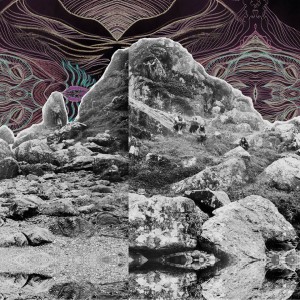
Album Review: All Them Witches – Dying Surfer Meets His Maker

Direct from the recording studio of a remote mountainside cabin, hand-built by the band, perched above the fake glamour of Dollywood, here comes an utterly bewitching album of luxuriantly rich sounds. It draws its inspiration from across the dusty plains, glutinous swamps and rolling hills of arcane America and knits together the softer edges of desert rock and folk blues with transient tonal nods to country, pop, psyche and stoner.

The first thing though that hits you about this album however is the unbelievable restraint shown throughout to not swamp the songs with lyrics, instrumentation or verbose affectations. Remarkable, especially when you consider the quality of the musicianship on show and the melodious quality of the vocalist – one Charles Parks. No, here things are stripped back to allow for the essential to shine and the unnecessary to melt away.

Stepping through the doorway and into that initial mellow riff of “Call Me Star”, you are whisked immediately away into All Them Witches’ universe. The tension, the stress melts away and you begin to float. It works as a real statement of intent, forewarning us to expect the unexpected; there are to be no fireworks, no clap of thunder, no desperate need to blast out your ears before they settle. Hewn back to its humble core, it oozes star quality. Sat atop its mellifluous acoustic guitar, the band displays an exquisite touch, gifting the song a lightness and an almost magical quality. Both beguiling and jaw-droppingly beautiful.

The instrumental eight-and-a-half-minute “El Centro” picks the pace up, drowning the listener in a Torche-like melting pot of battering stoner chugs and shifting psychedelic affectations that centres round a two-note riff. Within two tracks they have blown any preconceptions you might have of the band not once but twice. And for the kicker? How about a spot of “Dirt Preachers”? A driving rhythmic build with a grim vocal performance injected with malice and menace and a storming chorus. The viciously slow final section drags up sinister undertones of religious paedophilia by littering the lyrical wordplay with lines like “Come all you children to my arms” and “Twist your fingers, I’ll call you a star”.

Betwixt and between, there is a bluesy lush jam, a half-whispered vocal, a dash of harmonica and a gorgeous acoustic instrumental to wallow in. Venturing down “Open Passageways ” and its pursuing tonal reprise finds ATW managing to morph the goodness of Coldplay’s early naivety with Moby’s “Extreme Ways”. It’s a monster track of acoustic guitar with bowed violin gifting it a folky hue with a sumptuous kick of vocal hook – “Scream and shout and bellow / Chew up your love then swallow”.

Then, as the album draws to a close, the band continues to loosen their belts, resulting in a maddening dropping away of exploratory content. What it does allow them to do, eventually with Monster Magnet hats firmly in place, is jam; to gradually step backwards from the lead to walk beside the listener offering simple chanted echoing incantations and a degree of psychedelic warbling.

The “solitude of the mountain”, as Parks describes it, has indelibly coloured the album, removing it from their harder, faster back catalogue and gifting it a laconic, unforced swagger and a beautifully controlled flow where everything fits with everything else. Having initially been released in late 2015, essentially what you’ve got here is the record everybody missed from their album of the year lists. From here there are no limits.


Also online @ http://www.avenoctum.com/2016/02/all-them-witches-dying-surfer-meets-his-maker-new-west-records/

Wednesday, March 26, 2014

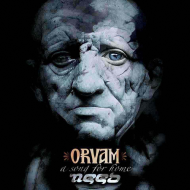
Album Review: Need – Orvam: A Song For Home

This third full-length album, following “The Wisdom Machine” and “Siamese God”, from the Greek quintet Need displays a complex grasp of 70s and contemporary prog metal. It comes spring-loaded with flighty melodic threads à la Dream Theater and Fates Warning. It consistently punches above its weight throwing in big hefty clumps of Nevermore-esque power rock and is never afraid to mine a rich seam of Tool-ian avant-garde quirks.

Opener “Lifeknot” emerges like some crazed dance robot before settling down into a steady switch-back between the half-time hush of the bitter verse and the lurching, rhythmic chorus. As you’d imagine with an album subtitle like “a song for home”, inevitably there is a sonic essence of the band’s homeland running throughout the music. That ethnic feel and tone comes through in spades on the 10-minute “Entheogen”, where we get a repeated and monotone mantra to chant back, middle-eastern guitar scales and instrumentation and a sashaying female top-end vocal piece.

Here, the multitude of layers from the foreground power of Jon V.’s emotive vocal, the interweaving shredded guitar work and the diverse soundscaped background are craftily-balanced, meaning these intial tracks are never overly-busy but varied enough to allow for a different focus on each listen.

The initial sections of “Symmetrape” threaten to break out into Rush or Journey at any point but Need quickly dispel any sense of a reclining into established AOR territory by throwing in a mind-blowing blast of stomp-heavy death-doom. It’s the most curious of tracks but rams home the point and beautifully focusses the mind on the screwy construction. The album soon establishes that theme and before-long the cutaways into lounge music, space-rock or funk piano begin to make a little more sense. Need seem able to integrate these niche segues with such ease, rarely lingering on them too long before returning to the spine of the track.

Critically, the album craves a key riff or vocal lick to really make Orvam stand out. “Construct” tries hardest of all by adding bite but neither that supreme wandering synth or repeated chorus line of “Time’s ticking away…” could be said to give this the necessary kick into the listener’s sub-conscious. Sadly, this almighty hour-long album also comes with an in-built tipping point. It appears when they break off for the off-putting, one-listen-only 3:26 spoken recording of existentialist psychobabble that constitutes “Hotel Oniro”.

That one piece alone will not make or break the album for you but the 18-minute title-track rock opera that follows may. Replete with vast orchestral flourishes and echoing the epic delivery of Turisas, it plods along at a doomy pace breathing heavy with a yawning vocal. It bristles, it slumps, it cracks us emotionally, it does the lot. Broken down into bite-size chunks, it would have been far more palatable and some sections will definitely strike a chord more than others.

Opening like a posessed demon and ending like the broken character art that adorns it, this monster of an album will grab you with its imaginative use of instrumentation and engaging stylistic skullduggery but, above all, its sheer honesty and range of emotional interplay. Think not of it as an album; think of it as a story, as a journey, as a song for home.

Also online @ Ave Noctum = http://www.avenoctum.com/2014/03/need-orvam-a-song-for-home-trailblazer/

Wednesday, November 27, 2013

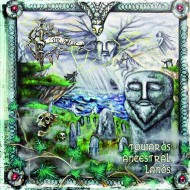
Album Review: Fir Bolg – Towards Ancestral Lands

For any one person to take it solely upon themselves to create music and get it heard is a victory for desire, dedication and sheer bloody-mindedness. Sure, eventually there is the potential for future help from management, a PR or a label, but all the way through there is only one who is creating the sounds. Dagoth is a member of the hallowed few to have achieved this and his band Fir Bolg is, by its very nature, a personal labour of love. It combines his passion for second wave black metal with his adoration of the Celts and their almost mythical tales of yore.

Mythology tells us that the Fir Bolg were an ancient race of people that ruled Ireland before the Tuatha Dé Danann. Their Irish name directly translates as “belly men” or “men of bags”, though it’s meaning is still the subject of some dispute. Quite why a Frenchman is so enamoured with their history is a little more baffling. However, back in 2006, Dagoth started work on creating the music and, seven years later, Towards Ancestral Lands is the result.

Early listens reveal that the emphasis of Fir Bolg’s long-desired debut album lies more with Dagoth’s black metal fervour than it does with his interest in rousing pagan folk music. It’s certainly a noteworthy combination but then this has been done before. Cruachan, Waylander and Primordial have led the pack out, but what is special about this particular one is Dagoth’s devotion to recreating the moves of his black metal forbears.

Although he has pulled in good friend Abaddon to perform the drum parts, he has written and tracked everything himself so it is very much a one-man concept. To this end, the music feels a little restricted by his own abilities. Due to it being extremely light on Celtic instrumentation (he does play bodhran and olifan, although you’d do well to spot them), Dagoth uses plenty of vocal power to plug any gaps. His gurgling vocals over simplistic pile-driving double-kicks and clanging guitar all come with a strong pagan twist à la Burzum but its the staple black metal riffs and lack of deviation between tracks that are most noticeable.

Underneath all the stomping about there are mythical tales of yore to convey and whilst much is rousing and tempestuous, there is plenty that gets lost amidst the gargled rants and scathing howls. One that stands out, “Strong Old Megalith”, comes with a simple, mind-raping riff and does a fine job of portraying the vast, immobile and timeless qualities of its subject matter, acting as a tonal standard-bearer for the remainder of the album. “Behind The Great Oppidum” is an avalanche of a track, the drum cacophony only giving way to allow Dagoth to roar maniacally and tear great lumps of flesh out his prey, whilst the thrashy “Blood Heritage”, pumps away like Devin’s “Juular” as the guitars throw down a series of Hatchet-esque riffs. “Banshees” and “Dun Aengus” are the first to truly impart that Celtic feel with crisp, acoustic stringwork playing a major role in setting the tone.

Star of the show here, the steady headbanger “Mag Tuired”, is the only track to really steal a march and actually grip you by the balls. Every sinew is strained and amidst the wall of vitriol and pulsing brain-veins the whole conceptual shebang slips into place. Whether intentional or not, the joy of Towards Ancestral Lands lies in its old-fashioned, uncomplex delivery. Shorn of any serious attempt at background soundscaping or degree of layering, the comedically heavy attack and ludicrously dark portent rises to the foreground. So yes, it may be wildly unoriginal and, at times, grindingly monotonous but it’s still a curiously enjoyable ride.

Also online @ Ave Noctum = http://www.avenoctum.com/2013/11/fir-bolg-towards-ancestral-lands-schwarzdorn-productions/

Thursday, November 7, 2013

Album Review: Spirits Of The Dead – Rumours Of A Presence

A quick glance around reveals just how far this modern obsession for all-things retrospective has come. From the re-emergence of the flared trouser or a penchant for all things eyeball-meltingly fluorescent to our longing for the foods we grew up with or the analogue sounds that so inspired our forebears.

Throwing in their two penn’orth, the suitably-monikered Spirits Of The Dead have gone for the latter and have set about exploring their own heroes’ musical echoes. This latest album of theirs has emerged laden with strong psychedelic and lush folk elements. It reeks of all things Floydian and Zeppelian. Its propulsive drive wraps itself around the subjects of death and the sea, drowning us in an incandescent tapestry of lyrics. But does it stand out from the sudden crowd of like-minded groups that has formed, all of them seemingly staring over their shoulders?

Having preciously dipped my toes in the melting pot of their 2008 self-titled debut and emerged with my pinkies dripping of King Crimson, Dead Meadow and Black Sabbath goo, I can assure you that they haven’t watered down their music any. Whilst this may start with the sun in its eyes, it quickly finds some shadows in which to lurk. In fact, the deeper you venture, the more inventive and impressive their music becomes. Naturally, everything within is enveloped in a warm, fuzzball production, like it’s been wrapped in cellophane and kept near the radiator for several decades.

Openers “Wheels Of The World” and the more expansive “Song Of Many Reefs” offer up big, meaty mouthfuls of 70s folk rock that echo the silken, pulsating rhythms of goliaths like Fleetwood Mac, Zeppelin and Emerson Lake and Palmer. A step back and “Golden Sun” hones the nostalgic vibe, removing the harsh, top-end chime of the guitars to leave a tone that glows with gentle proggy touches. The thick, spongy bass within provides the finishing touch – a comforting, warped groove to bolster the craftily-hooked chorus.

They haven’t fully shaken off their inability to keep the music flowing throughout. The staggered drop-off into the album’s mid-riff is a little off-putting leaving the listener struggling to connect the dots and continue their journey. “Dance Of The Dead”, a seemingly unfinished one-riff lope, spends its woefully-brief minute-and-a-half simply rising and falling like a ship lost at sea, and “Rumours Of New Presence” chaotically splits its focus, frogmarching us from a spacey, Hammond-dominated number into a dark, panic-stricken Sabbathian march.

Thankfully, the final trio of the “Red Death”, “Seaweed” and “Oceanus” are all tracks worth hanging in there for. The former is full of menace and obeyance to the forefathers of doom, with vocalist Ragner Viske giving it the full stoner growl and Ole Øvstedal’s chords shaking the ground like falling rocks, whilst the latter couplet tout an acoustic hush and a psychedelic vocal warble that thrust the soft tones of America’s “A Horse With No Name” at the majesty of early-Tull to really drive home their more folky leanings.

So, yes, it’s an album that may not be faultless, but quibbling over such small things seems a little petty when you consider the quality of the remainder. Spirits Of The Dead aren’t just copying their idols here, like retro giants Graveyard and Witchcraft they are paying them the greatest tribute by reinventing these quadrageneric artistic touches to fit a thoroughly modern template.

Also online @ Ave Noctum = http://www.avenoctum.com/2013/11/spirits-of-the-dead-rumours-of-a-presence-the-end/

Friday, August 16, 2013

Album Review: Turisas – Turisas2013

Let’s get this out of the way right now – who in their right mind calls an album Turisas2013? It’s just two words wedged together that, even when separated, mean next to nothing. Mathias Nygård, the band’s lyricist and principal songwriter, feeling the need to explain it up front, calls it “the perfect combination of self-titled with a touch of Black Sabbath’s Vol.4 and Van Halen’s 1984.” Those are not the sort of album titles to try and live up to. The former was forced on the band by the record company who wanted to call it Snowblind and the latter actually appeared on the front cover as MCMLXXXIV – still awful but at least it looked a little more interesting like that. No, sir, it’s a needlessly ambiguous, slapdash and horribly misguided eyesore of a title. Still, what’s in a name — it’s all about the music, right?


Well, get ready to expect a lot more power and a lot less folk. Turisas‘ battle metal ethos is still there but the beats per minute have shot up and the steady, emotion-draining builds have all but gone. The musical structure now has less additional elements and fewer layers. The Turisas onion has, essentially, fused together and consequently the initial hit is earlier, harder and more direct. As an example, check out the bluster and pomp of “Into The Free”; behold the jagged guitars, the hammering double-kick and the heroic chants. Elsewhere, “Piece By Piece” and “For Your Own Good” serve up a more balanced perspective, offering a little rough and a little smooth. If you don’t pick up the power aspect from the rousing chants, the songwriting, the overload of melody or the fantastical dramatics, the penny will drop when those proggy synth solos come steaming through.

So where’s this urge for change come from? Well, it has all been kick-started by a disturbingly large number of personnel changes since their last album. Thus far they’ve waved farewell to drummer Tude Lehtonen, Netta Skog (who took the band’s only accordion with her) and bassist Hannes Horma (and, incredibly, his replacement Jukka Pekka Miettenen). Robert Engstrand’s keyboards are the most noticeable addition to the band and they are the most pungent aspect of this new-look line-up and sound. None of these things are the worst of the changes though. The real kick in the teeth is the lack of a concept — Turisas’ number one calling card. Mathias has pointed out their need to “write more varied songs” when “the stories are not connected”, and you can understand this desire to explore other territory when you consider their live impact. Some might argue, however, that their live reputation has already been built on these conceptual pieces and that cutting their tracks loose just dilutes their talent for creating epic studio art, drawing their work back into the territory of those with far less talent for songwriting around a theme. Turisas can bring legends to life like no other, but they need more than a 4-minute time slot to do it in.

When they do lengthen the running time a notch or add a unique dimension, they are able to fire in stunners like “Greek Fire” and “We Ride Together”. The former is loaded with bottom-end and comes with a guitar-driven backline that shreds away like Freddy Krueger, whilst the latter is a stirring, armour-clad snarler of a track; a thrill ride atop a galloping horse heading into battle. If they’d continued in that vein, they’d have made the transition without a hitch.

Sadly, the majority of tracks are too short and too loose. They bring the dance (Turisas’ other calling-card) for “Run Bhang-Eater, Run!”, kicking off a wild party in an Arabian tent, but they upset the rhythmic flow when they cut it short to create a three-part drug and orgy monster, complete with sex noises, jazz sax and guitar solos. They also reprise their love for the drinking song with the speed-happy, pop-punker “No Good Story Ever Starts With Drinking Tea” but end up with more beer down their tunics than in their gullets – let’s just say Alestorm‘s “Rum”, Korpiklaani‘s “Vodka” and even their own “One More” put it to shame. Yet even these two have more to say than “The Days Passed” which attempts and evokes nothing inspirational and just comes across as an impassive, middling concept track missing its concept.

If you’re a fan of day-glo fantasy power metal (à la Gloryhammer or Dragonforce) then this will all cry out to your inner elf. If you’re thinking “fuck off, I’m a Viking, not some fucking pointy-eared pansy” then you’re going to be just a little pissed off. May I suggest you do a bit of burning and pillaging to make up for this strangely muddled collection. Setting fire to your incredible Stand Up And Fight graphic art cover in protest might be a step too far though, but you can burn this one — it sucks balls. Big red and black balls.

Also online @ Heavy Blog Is Heavy = http://www.heavyblogisheavy.com/2013/08/15/turisas-turisas2013/

Monday, March 11, 2013

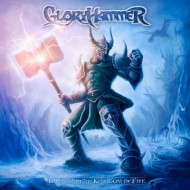
Album Review: Gloryhammer – Tales From The Kingdom Of Fife

Alestorm fans, considering the slightly ludicrous nature of that band’s twisted pirate metal, will probably already have a good sense of humour – guilty as charged, m’Lord. They will have taken note of the emergence of Christopher Bowes’ (Alestorm’s vox and keys) new project Gloryhammer and be looking forward to more of the same. Most probably won’t be surprised by the emergence of a singular, identifiable comic hero (Angus McFife isn’t quite Eddie The Head just yet – yes, he does look a bit like Thor with that hammer of his), the fantastical backstory or belly-shaking song-titles. However, I doubt all will seriously be moved by the creative choice of genre (“Heroic Fantasy Power Metal”) or the music itself.

Tracks like “Angus McFife” and the 10-minute pounder “The Epic Rage Of Furious Thunder” echo the thumping NWOBHM of Maiden and Priest, whilst the softer, lyrical beasts of “Quest For The Hammer Of Glory” and “Hail To Crail” run parallel to the rousing war stories of Turisas. Of course, the nippier, synth-loaded power metal numbers, such as “Amulet Of Justice” and “The Unicorn Invasion of Dundee”, are a tad more Dragonforce.

Thomas Winkler’s dynamic, soaring clarion cry is perfect for the task at hand, especially when the harmonies kick in behind it, but the programming tweaks that allow him to sink deep enough to become the character Angus McFife render his input utterly underwhelming.

The songwriting spends a lot of time stripping chords from the fantasy playbook and, consequently, is about as structurally innovative as a bag of chips with the cheese-munching lyrics repeating ad infinitum, ad nauseum. There’s also plenty of material that doesn’t quite sink its teeth in hard but, equally, there’s plenty that you’ll find humming to yourself later. Take “Magic Dragon” for instance – you have to say it’s about as slick a piece of music as you’ll find anywhere; paced to perfection, strong on intriguing tones and delivered with a great deal of pomp and circumstance.

The surprisingly sincere “Silent Tears Of [A] Frozen Princess” (although a giggle can still be had if you half-listen and mishear “frozen pizzas” as I did) is my personal favourite, providing a melancholic, focal axis to the album and a break from the simplistic chicanery that surrounds it. Don’t get me wrong, it’s a solid album and one that will divide opinion because of the many bases it touches. If you think you may already be a fan of heroic, fantasy or power metal and have a sense of humour, you should be giving the Gloryhammer a swing. If you’re not and you don’t, I’d advise you to duck and cover.

Also online @ Ave Noctum = http://www.avenoctum.com/2013/03/gloryhammer-tales-from-the-kingdom-of-fife/

Friday, September 14, 2012

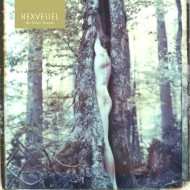
Album Review: Hexvessel - No Holier Temple

Hexvessel love trees. It’s quite clear that the “Temple” in the title of their sophomore album is referring to all things nature and, in particular, the life cycles of those tall, knotty skyscrapers themselves. Mat McNerney and his “Death Magicians” have moved on from their Dawnbearer debut and are taking their mystical folk music into some pretty dark, haunting places and on trips that may (or may not) have involved prolonged episodes of mushroom-munching.

There’s still a strong acoustic folk vibe going on with big plays coming from sax (“Woods To Conjure”), violin and piano (“Wilderness Is) and even didgeridoo (“Elegy To Goyahkla”), but they also unveil moments that will see you referencing black metal, and a decaying velocity that wraps its outstretched arms around the genre of doom. The opening, wildly self-indulgent, spoken passage outlining the glory of “Heaven And Earth Magic” sets the more solemn tone whilst passages of crystal clear, eulogising vocal plugged with stronger harmonies, particularly noticable in “His Portal Tomb” set one in mind of the work of Neil Hannon (The Divine Comedy). They are rich in melody and travel lightly along a gentle cadence. Around them is layered the sort of music that could be described as possessing a certain Beatles-y charm.

In and out of the subtle shades of potency, those that evoke the music of Ihsahn and Opeth comes something else. Tracks like the 10-minute “His Portal Tomb” and the 13-minute “Unseen Sun” that see the band happily ringing in the changes with warm, fuzzed guitar cracking out those metallic elements. They, in turn, ignite the doom fuse for those that didn’t even realise it was there all along. More twists await in the form of the cabaret wake-up call of “Are You Coniferous?” and the addictive, Levellers-esque ceremonial melodies of “Sacred Marriage”.

Ultimately, though, there is just so much music here that fails to capture the heart in the same way that a small portion of the songs do. It’s always a disappointment to hear so much falling short of hitting the mark that the standard-bearers set. The opening groundwork, so grindingly laid out, is just too weak to support the grit that the back end of the album displays. There’s way too many pompous passages of spoken word; poetic and thought-provoking, for sure, but completely energy-sapping. The fact they’ve covered a track (“Your Head Is Reeling”, one of the album’s better ones) by a band called Ultimate Spinach speaks volumes about them. Hexvessel’s exploration of the connective possibilities of their humble folk music is certainly impressive and No Holier Temple is a definite step forward but they need to stop sucking the life out of their music.

Also online (with extras) @ Ave Noctum =  http://www.avenoctum.com/2012/09/hexvessel-no-holier-temple-svart-records/

Tuesday, August 21, 2012

Album Review: Scott Kelly And The Road Home – The Forgiven Ghost In Me

Whether you are digging down to the heart of one of his multitudinous, yet always nefarious, music projects, tuning in to discover what he’s currently promoting via his co-owned internet radio station, vicariously living through the bands he’s signed up to his co-owned record label, Neurot, or eating up every one of his blogged words of wisdom, you’ll quickly discover Scott Kelly is a man who isn’t afraid to expose and promote his true feelings. frontman Nate Hall never said it better when he spoke of Kelly earlier this year: “Only a true artist would be so willingly and completely exposed; so intensely focused on truth, redemption and healing; so in tune with the song he has always heard inside.” Ladies and gentlemen, here we have a bona fide living music legend.

Of Kelly’s third solo opus, The Forgiven Ghost In Me, Hall has said “With another collection of sparse, introspective songs, Kelly delves even further into a personal, private space that he occupies fully and solely. His path has been a narrow, dark and difficult one, but… Kelly shows that his strength and vision has endured it all.” That’s quite a build, then, for what is essentially something so, well, “sparse”.

Here, his music, created with the help of friends Noah Landis and Greg Dale plus guest spots from Jason Roeder and Josh Graham, is centred very much around his deep, time-worn vocal performance and semi-acoustic guitar, with only a smattering of atmospheric touches and odd incision of other instruments popping up every now and then. There is no drumbeat here, just Kelly’s internal sense of pacing, which unsurprisingly varies from a wary snake-like slither to a laid-back, metronome-munching, elephantine slog through the undergrowth.

His weary West Coast drawl and desert-dry croak chew around “A Spirit Redeemed To The Sun” as rapidly we re-acclimatise ourselves to the way he feels around each note very deliberately. It’s one of the few brighter, more uplifting moments in what is essentially a pretty intense and downbeat album. The messages come pouring thick and fast from the guts of the man; here, he is a burst piñata of emotions. “I washed the blood from my hands / I’ve forgiven myself in my soul” leads to “In a field of death, screaming at the wind / My desires reach and hold me” for the oppressively painful crawl of “The Forgiven Ghost In Me”. By the time Landis’ gurgling dirge melts into the dark tones of “Within It Blood”, Kelly is conjuring images of “ravens” drowning and “demons” being brought on to the stage.

We are soon eagerly cutting ourselves on “the blade of the Reaper” as he submerges us in the album highlight “We Let The Hell Come”; a track that stirs the blood as he stretches his vocal. It is all polished off eloquently with the simplest yet most powerful of riffs. Keep an ear out, too, for the colour-soaked and spine-tingling “The Fields That Surround Me”. Roeder’s subdued drums and buoyant cymbal sweeps kick-start a slow build through to brusque synth and guitar fills. “The watcher watching me”… creepy.

With The Forgiven Ghost In Me, Scott Kelly takes us on yet another dark, brittle, and emotional journey. Hearing him slowly running through his personal neuroses, one by one, past the all-seeing-eye of , is a strange, immersive experience. The strange tones and textures, those that initally seemed so impenetrative, then so lacklustre, can quickly become all too familiar and, in turns, magically accessible, so that by the album’s end (and this is for those with an open mind) he has absorbed you, purged his and your mind and, in the process, begun the cleansing process.

Also online (with album preview) @ The NewReview = http://thenewreview.net/reviews/scott-kelly-and-the-road-home-the-forgiven-ghost-in-me