Reviews Coming Soon

Album Review: TBA
Showing posts with label ghost. Show all posts

Tuesday, March 24, 2015

Album Review: The Midnight Ghost Train – Cold Was The Ground


Where visual art can announce itself as everything from an explosion of different shapes, dimensions and hues or restrict itself to the most minimalist, one-dimensional, single-colour blocks, music can do much the same. This particular beard-toting Kansas trio find themselves at the latter end, pumping out an unfaltering combination of muffled fuzz bass and sludgy, rhythmic chugging. Essentially, they have taken what bands like Orange Goblin, Red Fang and Clutch have done before and refined it to something a little less expansive and a darn sight more punishing.

Cold Was The Ground marks their third foray into long-players and this one thunders along a similar path as its predecessors, crashing in on the listener as wave upon wave of sonic obliteration. Underpinning this dark, suffocating powerhouse of noisome groove, the smatterings of swampy delta blues, gnarly rock n’ roll and virulent stoner metal lie.

Gently ushering itself in with a warping, one-note crescendo, the introductory ‘Along The Chasm‘ suddenly kicks us into the hammering, rhythmic, mile-deep rut where The Midnight Ghost Train demand we remain for the majority of the album’s running time. As we speed on through tracks like the attack-and-release, riff-repeats of ‘Gladstone‘, the chilled-out Monster Magnet-esque drift and rapid wah-wah pedal pneumatics of instrumental ‘One Last Shelter‘ and the dull battery of ‘No. 227‘ we alight on the heart of the album where the band begin to find their soul.

There’s the ripped choral lick on ‘BC Trucker’, thick, dirty and moreishly addictive and ‘Arvonia‘ with its Fu Manchu wall of fuzz and dark, brooding undertones so reminiscent of All Hail The Yeti. Deeper in and there’s the sinister backwoods edge of ‘The Canfield’, the no-frills swagger and bluesy grunt of ‘Straight To The North‘ and creepy, energized panic that so engenders ‘Twin Souls‘. None of these though can compare to the simple, tender luminosity of ‘The Little Sparrow‘. It is the first true glimpse of what lies beneath the bluster – heartfelt emotion. In this case, that emotion is fear. Pure, cold sweat-inducing, neurotic fear.

Undoubtedly, there is a good helping of monotonous, atonal filler here and an infuriating paucity of texture or flavour in a scene so dependent upon small deviations in delivery. However, there is also a more subtle connection to the sordid underbelly that lurks beneath the glossy veneer of so much modern music. Here, you can taste the blood, sweat and tears.

Maybe, if Cold Was The Ground was a painting it would be a Rothko – probably one from his Black-Form series. And like Rothko’s minimalist art, it will have its admirers.


Also online @ Heavy Blog Is Heavy = http://www.heavyblogisheavy.com/2015/03/18/the-midnight-ghost-train-cold-was-the-ground/

Friday, June 14, 2013

Album Review: Dark Buddha Rising – Dakhmandal

An altered state of consciousness, is any condition which is significantly different from a normal waking beta wave state. There’s plenty of ways to achieve this, through sensory deprivation, psychotropic drugs or yoga, even by hiring the services of a thing called a derrenbrown. Someone once told me that focusing intently on the tempo of Cannibal Corpse’s specific brand of death metal, a tempo that usually spins at 200-250 beats per minute, once sent him into a trance-like state.

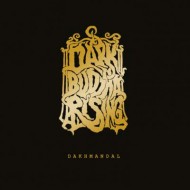
Finland’s Dark Buddha Rising definitely dabble a little in aural psychedelia and a lot in rhythmic mantra to achieve their altered state of mind and this fifth album of theirs, Dakhmandal, definitely proves its working for them. With tracks titles reduced to single letters (one assumes “D”, “K”, “H”, “M”, “N”, and “L” spell out the consonants of the album) and a plain album cover, there is no other artistic invasion of your own journey through the album other than the gentle shifting of their insistent, mesmeric drones.

With “D” setting the tone by slowly presenting layers deep enough to hide a planet in, from distant forest sounds and far-off, hollow ironmongery to front-of-house metronomic bass and piercing full-frontal feedback, the first, big impression is left for “K” to make. You needn’t worry because as much as it can, staying within the confines of the big concept, it makes a real spectacle of itself. Opening up with crushing bottom-end supporting dark, mysterious, incantations it moves through several phases of doom-laden crush before suddenly slacking 6 minutes in. Here, you can actually pick up the sounds of a bong being fired up – the rough clicks of a zippo, the pipe inhalations and accompanying bubbling – as the stoned vibe rolls onwards. When the vocal re-emerges, the deep chants have, understandably, been transformed into mad, half-choked, ravings in some scathing Goblin tongue.

There is no doubt that their are dark, occult forces at work here within Dark Buddha Rising’s elephantine doom-drone – think Ghost on morphine. “N” burns with a fire that threatens to overwhelm as it gently morphs around a mile-thick chant that sounds like it comes from the throats of a coven of hooded giants. Loud enough to move the earth with enough low-end to invade the sub-conscious, then vehement and wild enough to send your brain into spasms. This is music not of this world. Even when they’re playing it straight there’s a nihilistic black magic at work. “M”, for instance, is basically the sound of Depeche Mode playing over a howling gale – melancholic, down-tuned strings spiralling into and around the hungry spout of a tornado. Yet, before the rhythm can begin, you have to endure the opening horror film moments of a discordant Hammond organ. Nothing is straight-forward here and anything goes.

So Dakhmandal definitely comes with a warning. If you happen, like me, to find yourself walking around the streets of your hometown, headphones in position, throwing strange hand-shapes, eyes drooping, muttering under your breath, all of which should get you some pretty strange looks, do stop listening. Dark Buddha Rising’s latest, no matter how gloriously trance-inducing it may be, is pure evil and as such it should be restricted to small amounts and is definitely for personal consumption only.

Also online @ Ave Noctum = http://www.avenoctum.com/2013/06/dark-buddha-rising-dakhmandal-svart/

Friday, January 20, 2012

Album Review: Lamb Of God - Resolution

This month ’s enigmatic frontman, Randy Blythe, launched a campaign via his blog, Randonesia, to be America’s next President. Considering the timing of the announcement, with the release of the band’s new album Resolution just days away, it’s quite clearly a tongue-in-cheek PR stunt. The question here though is will the album prove as determined as his campaign?

Historically, these Virginian heavyweights rarely fall short when it comes to honing real quality. As their album output has developed from sinister slabs of misguided anger into a study in the art of attack, they have built up a portfolio of killer material second to none. Following the raw bludgeon of their early efforts, including most notably As The Palaces Burn, where speeding cantankerous hardcore was doused in that signature cyclical death metal groove, they went on to hit the motherload when they also threw anthem-fuelled hard rock onto the flaming pile. Cue the utterly masterful assault course of Ashes Of The Wake which fed us neatly into the instant addiction provided by, first Sacrament with those half-spat shards and endorphin-loaded hooks, and then Wrath with its exploratory flashes of brilliance and swaggering ability to create memorable monsters. Consequently, the longing for Resolution and the continuation of discovery has become steadily unbearable.

Resolution divides its time between disconsolately hammering your brains out with spiked aggression and then piping through deeply-rutted rhythms that toss and turn themselves into yet more hook-in-mouth bloodlust. It takes the old, uncomplicated malevolence of As The Palaces Burn and combines it with the hands-to-the-heavens glory of Sacrament and Wrath. All this means yet more of those verses that jaggedy-jaggedy-jaggedy along, before rockstar-pausing to explode with a wham-bam-thankyou-mam into the colossus that is the chorus. Randy Blythe owns these parts with his earth-shattering whoops and throaty rasps that invigorate with their intensity, each one containing coherent, slick lyrics that demand repetition and naturally provide the opportunity for plenty of heartfelt hollerbacks. When they grubbily fall flat it is disappointing to find these sequences flooding a track to bursting point yet again but, when they shed the dirt and fire on all cylinders, there is nothing in metal today that gets the blood pumping faster. Such is the fine line that now find themselves treading, though only a true hater would dare suggest that, given their history and the talent on show, they are a one-trick pony.

We always knew he was a legend-in-waiting but, by actually getting fully-involved in the whole process of making an album (i.e.; not nipping off to indulge in his other projects whilst the band lay down the backing tracks), Randy has finally revealed his true value to the band by injecting more haranguing invective and raw-throated intensity than ever before. He warms hugely to his lyrics here, tugging at themes of self-destruction and isolation, with the album title left implying something much wider than just the political statement that the cover and a couple of the tracks suggest, and he delivers them with the conviction of a madman. The other tour-de-force here is Chris Adler. His rampaging drums do the work of two; an army of machine-gun peppering kicks loaded into a world of polyrhythmic intersplicing that will leave you gasping for air. He is a machine and with Resolution he finds yet another level to impress at.

Dug in amongst all this we get yet more progressive elements to savour. They lurk in tracks like “The Number Six” and “King Me” and add something spicy to the melting pot. The former plumps for gang chants and half-whispered messages (redolent of ’s “Crack Hitler”) whilst “King Me” is on a whole other level. There’s more portentous, hushed vocal but here it’s given an operatic backing (producer Josh Wilbur’s suggestion which should be roundly applauded) and the soaring dark heart, where Randy turns himself into an anvil-topped storm cloud, boiling and bubbling into a destructive twister that threatens to rip the top of your head off and suck out the contents, is mesmeric. When he finally blows himself out, you can actually hear the man collapse.

Other more intuitive tracks like the thrashy rumblings (where meets ) of “Guilty” and “Visitation”, the hunk of molten metalcore that forms “Cheated”, or the jerky, bawled punk of “Invictus” provide solid, if unspectacular, padding to absorb the smack of the money-shots like “Desolation”, “Ghost Walking”, “The Undertow” and “Insurrection”. They may be the album weak points, but they aren’t those obviously jarring dips in quality that your average album carries around as bulk.

In fact, considering the quantity of variation within, from the long doomy opening blast, via the snatch of acoustic riffing, to the snippet of clean vocal harmony, there is much keep you coming back for further listens over and over again. In fact, you’ll be amazed to hear they’ve even managed to in (pun intended) some bluesy stoner rock with “To The End”.

All this and yet the flow of the album is superb with parallel tracks linked together with re-worked riffs or just fiendishly simple wordplay and, with fourteen songs to run through, there’s plenty of bang for your buck. Okay, there is still the sense that they’ve held back, yet again, on really twisting our melons with something from left-field, and pound for pound it’s not got the star quality of say Ashes Of The Wake or Sacrament, but then it’s not lagging too far behind. An essential purchase, though? Well, put it this way, if I was an American citizen, I’d be voting for Randy!

Also online @ The NewReview = http://thenewreview.net/reviews/lamb-of-god-resolution

Wednesday, June 15, 2011

Album Review: Devin Townsend Project - Ghost

is probably one of the most imaginative songwriters of our time. He’s also one of the most ludicrous. His ambition seems to know no bounds, although occasionally you do wish his brain would actually kick in and start vetoing things – judging from projects like the crushingly dark ambient drone of 2004′s Devlab (with its stolen front-cover and its 15 untitled tracks) or 2007′s extra-terrestrial rock opera Ziltoid The Omniscient (complete with that Mars Attacks-like comic-book character) he’s finding it harder than most.

So, when Ghost honed into view promising “ambient new wave” it’s fair to say that there would be some amongst us who would question its place on a heavy music site such as this. These folks would no doubt give it short shrift but I, despite my initial skepticism, like to think I am just a tad more open-minded.

Having now heard this, the sister album and polar opposite of the raging force that is Deconstruction, I needn’t have worried. This is still , drug-free, drink-free, utterly sound of mind and body. He is, in his own words, in “complete control” and this is startling proof that he’s starting to master the art of sober songwriting. This crazy fool has rapidly established himself as a rarity; a jack of all trades; a musical Swiss army knife.

One thing you must consider; before hitting play on Ghost, you have to completely detach yourself from anything and everything you thought you knew about . If you don’t do that, you’ll find yourself endlessly searching for the bass drum to kickstart this baby into action, some kind of drug-addled lunacy hidden within its folds, or contorted, screaming feedback bleeding its way into the background. No, this is Devin, freed from making complicated statements, kicking back, totally relaxed, jamming the kind of music that he listens to the most – “folk, new age-y stuff”. Ki hinted at the possibilities, but Ghost still has more dreamy ambience than you could ever begin to imagine could come from either the monster behind , or the avant-garde experimentalist that he has become.

Right from the off and his haunting lullaby, “Fly”, it really feels like we are hearing the real , perhaps completely, for the very first time. Close your eyes and you’re floating over mountaintops, guided on what feels like a very personal, intimate journey. Without blinking you’ll be through the gentle pulsing of the -esque “Heart Baby” and into the proggish ambience of “Feather”. Devin’s vocal, acoustic guitar and bass may be the sturdy canvas of the music, but it’s the accompaniment that surrounds it that completes the picture – not so much a collection of musical instruments as they are a palette of pastel colors daubed in bold streaks. Kat Epple’s striking flute, Dave Young’s tidal keyboard and twangy mandolin, and Mike St. John’s understated, shuffling drums. You could actually make a case for the star of this album being Epple’s flute. I defy you to listen to her fluctuating, exploding flourishes that mark out “Monsoon” or her breathy, accented dawn chorus at the centre of “Heart Baby” and not be blown away by her skill.

You’ll also pick up a few of Devin’s field recordings – the river running through, the croaking frogs, the crying gulls and the crashing waves – and the occasional, elegant accompanying female vocal (provided by Katrina). These are the things that, during the initial spin, will have you thinking “Isn’t this the music they were just playing at the massage parlour?” Or maybe, you were fooled into wondering if Devin had spent too long listening to the undeniably eerie sound of whales mating and released a tape for all you desperate insomniacs out there. However, repeated intensive listens should uncover just how dense this album is. You’ll begin to hear, not the three minutes of crisply plucked strings that form “Kawaii” but the wobbling wall-of-sound behind them, not the vocal or mandolin on the frazzled country of “Blackberry” but the sliding brushes on the snare – the multi-hued textures are mesmeric. There is material here that is reminiscent of , late-, , , , ’s Local Hero and, getting a little closer to a more appropriate reference point, the and In Your Honor‘s experimental, acoustic flourishes.

Devin does allow his metal chops to briefly gnash for “Texada”; a driven beast that gathers momentum until he seems to realise, hits the brakes and leaves it spinning out across the desert, oscillating gently until it finally comes to rest at the feet of a man whispering a prayer. With the sublime, surf-riding of “Seams” and the tribal chanting of “Infinite Ocean” (every time I put a conch shell to my ear now, this is what I expect to hear) seeing this album out, we are granted dead air to allow us to surface.

It’s by no means a perfect collection of songs; there are those clunky moments that shake you from the reverie you’ve been lulled into. The title-track, for instance, is heinously repetitious and so cloyingly predictable that it brings to mind white swinging flares and Europop mullets. There are moments when both “Blackberry” and “Texada” get carried away with themselves and I just can’t work out why “Dark Matters” has been given its own space when it doesn’t have an identity – it merely acts as a two-minute link track. But then Devin being Devin, he goes and throws something awe-inspiring at you; a sensory explosion like “As You Were” that sends shivers up your spine and dissolves your knees.

I must admit I struggle to even begin to get my head around the concept of the tetralogy, of which Ghost is the concluding part, but it all suggests some kind of schizophrenic, workaholic mind in overdrive. All I can say for definite, despite the order in which they were recorded, is that without the purging of evil that Devin went through to create Deconstruction, he would never have been able to create the angelic beauty that inhabits Ghost. Such is the power of music and I’d swear if you cut this man, music would flood out. The less polluted that lifeblood gets, the more transparent his skin becomes. A couple of times here, I swear I could even see the man’s soul.

Also online @ The New Review = http://thenewreview.net/reviews/devin-townsend-project-ghost