Reviews Coming Soon
Wednesday, May 2, 2012
Album Review: El Doom And The Born Electric – Self-Titled
Across the 53 minutes of their debut’s running time, there are some straight-forward tunes, like the indignant howls that haunt ‘With Full Force’ and the threaded hooks and melting heart of ‘The Lights’. However, the lengthier pieces reveal the band’s true colours and penchant for throwing everything into the pot and liberally stirring. Take ‘Fire Don’t Know’. It bursts forth with a bumpy camel ride of a guitar riff that unbalances you with its thunderous grunt, threatening to throw you off before El Doom can pour out his tremulous David Bowie meets Neil Arthur (Blancmange) vocal. Obscure 70s/80s references aside, the nine-minute blazer, wrapped around a malleable, prog rock wall of sound, crescendos and abates its way through careering psych and driving stickwork, vibrating wodges of Hammond and reverb-heavy guitar solo.
Thought that was good? Get a load if ‘It’s Electric’. It’s the strait-jacketed madman within; the forceful bass bullying it’s way to stand side-by-side with El Doom. It’s the sound of The Melvins channelling Rush through Mastodon’s insane set-up. The blue hints, oddly offer up the kind of tonal flourishes that Mark Morton brings to Lamb Of God to mind, and the dying licks of Spanish guitar slap on nothing but a huge grin to your gurning face.
‘The Hook’, naturally, stands out a mile. The sheer panic within Doom’s quavering vocal almost loses the plot; chaos defined. Matching it there is a blitzkrieg of guitars that dive down into cloud before reappearing to continue the dogfight. Volume knobs are toyed with and the jarring chords begin to collapse in on themselves as the production calls it a day and fades them out well before their time is up. Still, there are some sublime riffs lurking within all this. The best of which is the sinuous lick that marks out ‘Subtle As A Shit House’ and will see you strapping on the air guitar and screwing your eyes up in reverie. Sure the track falls into a pit of classic rock posturing but you’ll buy into it to get back to that sublime riff once more. Oh, and you want a spot of Soundgarden-esque grunge? Look no further than the 11-minute wanderlust of ‘Red Flag’.
All tracks covered then, we have learned that to appreciate El Doom And The Born Electric’s debut, an open mind is an absolute must. For those fans of all things rock who are willing to dig into something a little more jazzy and a lot more progressive than they are used to, will be handsomely rewarded.
Also online @ Ave Noctum
Friday, April 20, 2012
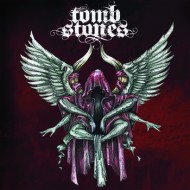
Album Review: Tombstones – Year Of The Burial
Following the unleashing of Volumes I and II, Year Of The Burial is their third album in four years, so they aren’t slow in dishing out slabs of bollock-jangling power and this is like listening to Acid King meets Acid Witch with a good dose of Bongzilla’s weighty grunt thrown in.
With dissonance and sustain applied in biblical amounts, each blissed-out down-tuned chord strike gently warps and twists but never quite reveals itself. The qualities of that mile-thick buzz are best heard in the opening long down-strokes of ‘Egypt’, a track that sidesteps from an epic crush into a stone-cold driving groove.
Whether they’re zoning out for the slow burns like ‘Quintessential’ and ‘Unveiling’ or gently chugging along for the rollers like ‘Sabbathian’ or ‘Silent Voice’, that buttock-clenchingly deep buzz rumbles ever onwards; the unstoppable force. It’s a sound that just seems to improve exponentially the higher you wind the volume up. Set it to “deafening roar” if you want to really rattle your windows.
If you suddenly become aware of someone shouting at you, it’s probably not Mrs Haggis from No. 74; rather, it’s the lead vocalist. Sounding like he’s standing alone at the back of some vast cathedral, Bjørn-Viggo Godtland’s cries out to the rafters, summoning forth any and all evil spirits from their hiding places. His crystal-clean wails are strangely stark against such a mucky foreground, and you’d probably be able to understand him, if it weren’t for the lavish amounts of reverb that have been applied. Recorded live in an Oslo studio in the midwinter, it’s the little indiscretions and that sudden contrast that leaves you feeling, wonderfully, like you’ve stumbled on a forbidden, gothic black mass.
Somewhat disappointingly, the tracks do all seem to blur into each other after a while, but the stoner swagger of the title-track is a solid attention-grabber. It steps up the pace to awaken the guitars from their reverie and, as they cough out malignant riffs, Godtland drops pitch to a sneer and spits forth black wads of dread. Venomous and bristling with murderous intention, it’s a vaguely-cosmic, grim venture into yet more dark corners.
At a miserly 39 minutes, it does feel a little short. It takes that long to settle into the sluggish pace of the songs, so all too quickly you stumble on the classic denouement, ‘Sabbathian’. It features a steadily hammering chug-and-chant that carves its way through, predictably sourcing the creator of heavy music for one last heavy-lidded, disembodied ramble down the dark path. Strangely, it’s the perfect finale for an album that, by beginning slowly and ending with plenty of bang, serves as a fitting tribute to glorious doom in all its multiple forms.
Also online @ Ave Noctum = http://www.avenoctum.com/2012/04/tombstones-year-of-the-burial-soulseller-records/
Tuesday, March 27, 2012
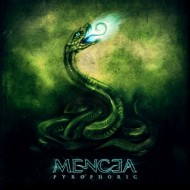
Album Review: Mencea – Pyrophoric
Since their formation in 2008 they’ve been diligently marrying Meshuggah’s mathematical nous to Gojira’s bludgeoning walls of noise. Their debut, Dark Matter, Energy Noir, gave us our first taste of the robust, bass-loaded power that these Athenians were capable of, and offered plenty of food for thought at a time when bands of this ilk were a little thinner on the ground. Now, with this sophomore effort having to go the extra mile to impress, they’ve decided to produce, mix and master the album themselves, opening up the mix to allow for a heightened sense of melodic drama. So, with Pyrophoric offering us a new vocalist and drummer, as well as much wider access to their full range of moods, have they maintained enough of their raw grunt to really stick it to the man?
Well, with the opening arpeggio of “Phosphorous” walking smack into Vlasis Ziouvas’ barking, guttural vocal and a cascade of bottom-end chugging, they prove well capable of the feat. Behind the picture of rage they are painting here, there is plenty of filling and framing taking place as sweeping keyboards build up the layers to paint an expansive portrait of light and shade.
“CCC” may drag their Gojira-worshipping side to the fore as Bertrand Rothen lays down a pummelling rhythm, but it soon gives way to a brittle, yet beauteous Textures-esque soundscape. Following up, “Elders” picks up the baton and runs further with it, digging harder into the groove to hit you with aural images of what can only be described as an army of faceless robots marching into some futuristic machine-on-man battle.
Mencea manage to jumble their component parts to create real m-e-n-a-c-e by injecting darkness into much of what they do as they go sniffing around a black metal vibe. It lurks deep down in so much of the album, forever threatening to grind any standout hooks into dark smears. It’s there in “Hounds” yanking down hard on the track’s jangling, industrial electronic touches, and it’s there again in the wild twists of “Beheading”. Here amidst unsettling swarms of guitars, which thread their way through a plethora of disparate sections into the title-track’s swagger and kicker of rolling toms and sibilant guitar, the band hit a late creative peak. Closer “The Dead”, with its vein-popping Cavalera-esque bludgeoning, is a feast fit for a king.
With 8 tracks skipping by in 36 minutes, the album is a couple of songs shy of being the full enchilada, but it still packs enough of a meaty kick to give your brain matter a good shaking for a while. Consider this: the other feature of a pyrophoric substance is that it can produce sparks when struck and considering the smothering, warm production on show here, at no time, do Mencea quite manage enough of those sparks to truly set the world on fire. Don’t get me wrong, this is one spicy meatball but, once they have properly roughed up their edges to find the kind of ear-scraping menagerie of sound that some of their peers have managed, they’ll truly be a force to be reckoned with.
Also online @ Ave Noctum = http://www.avenoctum.com/2012/03/mencea-pyrophoric-indie-recordings/
Monday, March 5, 2012
Album Review: Meshuggah – Koloss (Nuclear Blast)
For a band that’s birthed a whole genre of wannabes I’m clearly in the minority here. It’s exactly this level of adoration that adds extra pressure to each Meshuggah offering as they strive to stay ahead of the game. One glance at seventh long-player Koloss shows they aren’t afraid of going the extra mile to please. I mean, just look at that album art. It’s all a bit reminiscent of some of Tool’s more-innovative covers with its mind-bending 3D digital rendering. Stare too long at the image and your brain begins to hurt. That took Luminokaya Lab a whole nine months to create so could feasibly contain the entire World Wide Web within its multitude of brassy squiggles! So, if Koloss can cause pain on a visual level, how does the album stack up sonically?
Well, “I Am Colossus” is typically pin-point accurate and easily as deeply-furrowed as Nothing’s “Stengah”. As an opening track, it’s a beast. Instantly, they concentrate on one rumbling chord and ping it repeatedly you, loading everything into the steady, syncopated rhythm whilst Jens Kidman meshes his monotone, scorched earth vocal to it. Meshuggah are sending out a clear message of intent. “Palm-mute this, you mothers… JUN… JUN… JUN… JUN… JUN JUN…”. The guts of it are so deep that when the guitars let loose, the strings are dropped so low, you need to strain to hear the changes. It’s skull-crushingly heavy.
“The Demon’s Name Is Surveillance” is a speed-freak, light on its feet next to the elephantine “I Am Colossus”. The whirling vortex created by the continuous double-kick of Tomas Haake drills ever downwards. He’s back with more pummelling crush for “Swarm” which will make your skin creep. Behind the thunder drums, the crawling guitars go batshit mental to recreate the sound of a billion insects screaming out of the sky to poison and devour you. You won’t forget this one in a hurry, already a future classic, and as such it eats Machine Head’s recent insectivorous offering, “Locust”, for breakfast.
These are the kind of tracks we expect from Meshuggah; it’s when you dig deeper that you begin to find their mixed bag of tricks. There’s the Primussian slapped funk of “Don’t Look Down” which gets a harder, dirtier make-over for “Break Those Bones Whose Sinews Gave It Motion.” Check out that spiralling solo and those semi-distant atmospherics on the former, or that trippy, warbling guitar on the latter and tell me these psychos don’t pay attention to their surroundings.
“Behind The Sun” finds them stretching each note, grinding them into a murky wall of sound, generating a backdrop that sounds as complex as their cover appears. The band appear to be sucking up a doom/black metal quality to go with their vindictive death metal patter and they save some of that primordial darkness for “Demiurge”. However, be warned, this one’s a real howler of a track if you’re seeking a similar spark. It’s so lacking in charm you may as well listen to the sound of your own heartbeat through a stethoscope for six minutes instead.
And that’s Koloss in a nutshell. For every blinder, you get a duffer. So, whilst “Marrow” lurches and energises with its pinged guitar slaps overwhelming alongside clean, scrambling solos and fuzzball chugs, you get the bafflingly, mighty attack of “The Hurt That Finds You”. With tightened snare and bags of crunch, it’s a song so sharp it hurts and yet it’s all for nothing when it seems the destination is Nowheresville.
Judging it from afar, it’s easy to spot the dirge-like hammering and prolonged sections of extreme technicality of Nothing running through Koloss, and yet the band still find time for the kind of dark, mesmeric groove and changes of tempo that you’d associate more readily with obZen. And yet, there’s something new here; something infinitely more enigmatic; a dangerous edge bordering on a barren, post-apocalyptic atmosphere. Whether that is something that will inspire their legion of admirers remains to be seen but, considering how the metal scene has so easily fallen back in love with mood-metal, I can’t see it hurting them.
There, and I didn’t use the D-word… not even once.
Also online @ Ave Noctum = http://www.avenoctum.com/2012/03/meshuggah-koloss-nuclear-blast/
Friday, February 17, 2012
Album Review: Drawers - All Is One
Drawers are a band who, amidst the trend for those one-word, pluralised bandnames and the resurgent craze for atmospherics and big riffs, are in danger of not getting picked up. It’s clear from, “All Is One”, their debut album about a sailor’s journey to meet his nemesis, that the band have sucked up many different flavours of sludge and stoner metal to produce a hard, smothering sound that’s heavy enough to suffocate.
They start aggressively with both “Capuut Mortem Ocean” and “Black Queen” ripped with the grumbling guitar tone of High On Fire and enamoured with a touch of the dark power of Purified In Blood. “Grey Sailor” piles some of Corrosion Of Conformity’s hardcore feistiness into the mix, dissecting the rhythmic groove into spasming sections. Mostly though, you’ll be hearing plenty of the low-keyed progressive fury of Crowbar and Down, especially in tracks like “Ivory Lighthouse”, “Red Ballet” and “Muddy Smoke”, both in the Anselmo meets Windstein vocal and the weight of dissonance, dissolving the chugs into a singular sound.
Tracks like the short-but-sweet “Blue Keel” and the more expansive “Silver Hand” dig down into cleaner waters adding another brief layer with a more pinched, proggy quality a la Baroness or Isis. “Silver Hand”, in particular, is a winner having retained the driven punch built up from previous tracks to offer a taste of both worlds. Another cracker is the raw power-play, “Golden Adieu”, which simply refuses to cede ground to allow you room to breathe.
With quite a few recognisable influences up front and centre, the task of projecting their own stamp on the project becomes increasingly more important as the tracks roll by. Sadly, by “Purple Ride” and “Electric Seat”, Drawers have succumbed to towing the stoner metal line, mimicking Down almost to the last detail in an attempt to suck up some of their signature, grime-slicked, deep Southern groove, wobbling along the same path, facetiously mimicking their bow-legged gait.
It’s odd that an album whose song-titles feature an array of colours should seem so undeviating, but it’s an album that undoubtedly has an enormous heft to it. It’s for this reason that, despite its lack of variety and tendency to copycat, fans of any of the aforementioned bands should get a kick out of this. For the rest of you, as it stands, if your detector gets one whiff of these Frenchmen right now, it will simply short-circuit and Drawers will find themselves sliding back down to the bottom of that haystack.
Also online @ Ave Noctum = http://www.avenoctum.com/2012/02/drawers-all-is-one-slow-burn-records/
Sunday, February 12, 2012
Album Review: Fading Waves - The Sense Of Space
Well, The Sense Of Space tries a bit of everything, opening gently with fluctuating ambient pop, before exploring the wilds of post-rock and into the chaotic worlds of progressive, doom and death metal. As the album progresses, you can hear the tracks rebounding off a series of different markers; influences that prove just how deeply Maximuk is affected by his own emotional response to music.
The elegaic introductory piece, “Air”, scuffs up the dust of Renfro, Hammock and Cloudkicker, whilst “Flashes” (featuring the distinct, lilting vocal of Anastasia Aristova wending its way around shifting patterns) marries Mono’s sense of drama to the ethereal melancholy of Katatonia. You can almost hear the gearbox grind as they yank the stick and find a progressive metal punch to match the roaring cries of Alexey Morgunov. It’s No Made Sense meets Russian Circles via Isis. Then, the foot comes back off the gas as “Perforate The Sky” and “Through The Veins” drift into view, gurning and posturing as they infliltrate the more driven realms of Pelican and The Ocean.
There’s a damaged quality to the way Morgunov’s screams have been set back in the mix, with the scaling, hollow electrics brought forward to leave the rest fighting for attention in the middle. Each instrument is given its own degree of dissonance which adds dimension, granting the music this fascinating spatial quality. Sadly, the songs themselves are far less of a fascination; development is there but, when it does occur, it’s at an agonisingly slow pace.
One oddity I wasn’t quite prepared for is the higgledy-piggledy nature of the album. Although the concept of “air, senses of flight and endless space” seems easy enough to comprehend, the implementation of it is far harder to slot into place. Each chapter here, every soundscape, seems to come from other stories, other concepts – call me ignorant, but I certainly struggled to accept The Sense Of Space as a single work of art – its more musical crazy paving! The songs also feel overly lengthy, grinding their way down blind alleys, scrambling frantically at sheer walls. Fading Waves are clearly adept at creating invasive music, music that’s emotionally-draining, but apparently struggle to maintain a decent level of consistency. So, whilst I’m delighted to say this album flies it’s flag with pride, and is still worth a listen, it’s definitely a step backwards. I fancy a return to those hit-and-run tactics they seem so good at.
5/10
Also online @ Ave Noctum = http://www.avenoctum.com/2012/02/fading-waves-the-sense-of-space-slowburn-records/