Reviews Coming Soon

Album Review: TBA
Showing posts with label drone. Show all posts

Thursday, November 3, 2016

Album Review: Nadja - The Stone Is Not Hit By The Sun, Nor Carved With A Knife

Coming just 5 months after their last album release, Sv, one does wonder quite how Nadja achieve such a level of productivity. I mean, what the hell? Do they live in a recording studio? Do they just live jam this stuff? Yes, it’s basically a 3-track drone-cum-noise album, but it still needs to show ingenuity and progression. Well, with this particular pair of inquiring minds and their safe hands, I’m confident they can still steer it to a satisfying conclusion. Can they?

Well, there’s definitely some progression here. More melody than before, some interesting warm tones and FX tweaks. But I’m getting ahead of myself. That mysterious album title – what gives? Well, it comes from a runic inscription on a Norwegian gravestone – the Eggja Stone – which actually provides some of the lyrical content on the record. And the tracks?

“The Stone” is loaded with elephantine potency. It twinkles like splintering glass falling upon its top layer, and sinks down to the alien, sub-aqueous thunder of metal under extreme pressure. After ten minutes, spasms of electric guitar kick in to set up the whirring, bass-heavy clank of some vast industrial machine. Blasts of steaming hiss squirt as if from pin-holes as ethereal voices whisper non-sequiturs and pistons drive the beast towards a semi-melodic, melancholic middle-section before returning to the melee.

“The Sun” is the lightest, most appealing prospect I’ve heard from Nadja for a good few years. With rich, ambient tones and emotive, spiralling stringwork, this plays like an ambient, post-rock track not too dissimilar to something from the back catalogues of Palms or OSI. There are vocals that whisper around the edge of your lobes, without ever taking root inside your ear canals. They are sung as if from behind some parallel dimension. There are waves, there is a beach and a sun and someone is talking close to your ear. It’s unsettling, and even more so when the whole image begins to dissolve into a dark malevolence of phantom-like white noise and subterranean crush. A wall of sound, sprawling, crawling and devouring all.

“A Knife” is far less ambitious than its compatriots. It’s a mixture of atmospheric, ambient drift, vibrant distortion and bristling fuzz and forms a 22-minute amorphous journey through a skyscape of sound.

Ultimately, each movement owns the space in which it exists, each differing in character, each stamping its authority upon the listener. Fans of drone and ambience will find these new worlds excitingly moreish. Is there enough to warrant repeat journeys? Considering its mammoth 79-minute runtime, maybe not for a while but, hell, we’re glad we visited.


Also online @ Ave Noctum = http://www.avenoctum.com/2016/10/nadja-the-stone-is-not-hit-by-the-sun-gizeh-records/

Wednesday, June 8, 2016

Album Review: Nadja – Sv

Drone, at its most monotone, can drive some wild. It is a beast that dwells beyond the reach of most, existing in a parallel universe to the dark fury of the majority of heavy metal acts; light years from the sugary sweet licks of rock n’ roll. Dip a toe in and you’ll fail to judge the temperature or miss the drag from the tugging swell of what lies beneath. It is music for the slow-movers, the thinkers, the heavy-lidded.

Nadja are masters of this particular genre and this 41-minute single-track album is a true work of art. Aidan Baker & Leah Buckareff have combined the elemental with the industrial and set it to the bruising grind of dark electronica.

An eerie opening constructs itself a sub-aquatic world with an electrical buzz and an mechanical hum that builds to a visceral crescendo. By five minutes the bass rumble and harmonic nuts and bolts have begun to lock into place. At seven and a half minutes the percussive elements have steadily begun to fizz and click into life. At nine minutes the steady morphosis is ebbing and flowing. The whole has become an unstoppable locomotive riding the rails, chuntering and chittering with gritty signs of life. Deeper in the sounds have begun to fully combine – here, the electronic beat drives ever onwards and the sub-level bottom-end rattles the ribs. As the mind empties and the focus becomes absolute, “Sievert” lords it as dance music for the undead.

Thirty-three minutes down and the switch-up occurs, changing its angle of impact to open up the rhythm and create space. Here, it is like riding the back of a vast, lumbering beast. The drums come into focus and the music’s black grip tightens. Dread takes over and the slow degradation of the world Nadja have created shows its first cracks. The crust snaps, time patterns and effects warp and reality begins to leak back in. That space you’ve been staring at on the wall for the last half-hour is no longer your focal point as Baker strikes the single piano key that breaks the spell.

Summing up, Sv is experimental drone that slowly warms to its task before worming its way inside and reconfiguring your heartbeat, your pulse, your brainwaves. Helpless, you’ll dance to its multi-layered echoing vibe over and over.


Also online @ Ave Noctum = http://www.avenoctum.com/2016/05/nadja-sv-essence-music/

Friday, February 6, 2015

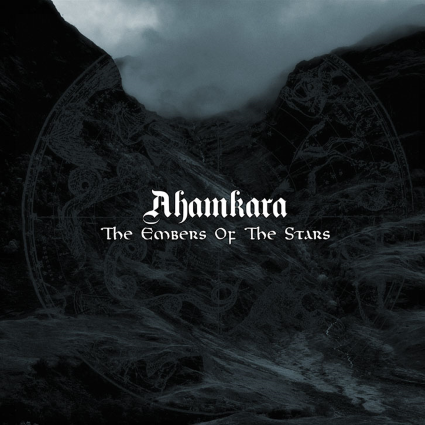
Album Review: Ahamkara – The Embers Of The Stars

Perhaps their moniker is a reference to Hindu philosophy or, less likely, the dragon-like creature in the massively multiplayer first-person shooting videogame Destiny. One thing is for certain, Ahamkara sure know how to get under your skin.

They are Newcastle-Upon-Tyne duo, multi-instrumentalist Michael Blenkarn (The Axis of Perdition, Wodensthrone) and vocalist Steven Black and for their first trick, they have produced a debut album that combines the qualities of dark ambient, drone and second-wave black metal with varying degrees of success.

Within the four tracks, all stretching their way past the ten-minute mark, Ahamkara draw strength from the classic black triad of raw production, extended sections of pummelling double-kick and resonating shrieks to impose a sense of death, dread and the afterlife upon proceedings. What marks out their music though is the glowing underbelly of warm, atmospheric layers. They use soft progressions, ethereal synths and colour the piece with thick, resonant basslines.

Opener “Midwinter’s Hymn” casts you out on the open Arctic tundra with only the caterwauling of a wraith for company. Black’s vocal comes as if from the netherworld, distant and removed from the body of the instrumentation. Eventually, the howling winds calm and the track begins to stretch out into evocative passages of guitar and synth. With all four songs fused together by the elemental sounds of nature – running water, lapping waves and rushing wind – there is an elegant, organic theme running along the spine of the music.

 On the downside, there are some instances where the rosier tones bring about an odd clashing between the harsher edges and rich body. Nowhere is this more noticeable than within the strands of “On The Shores Of Defeat” where the harmony between the two begins to collapse. Happily, the visceral minor chords of “Lamentation Of A Wraith” return you to the dark side and drip-feed you a series of orchestral, even symphonic, affectations to build the concept of being within an immense space. At this point they drop their mesmeric trump card, “To Invoke The Stars Themselves”, and cut you loose to drift through the vasts of space; to meet your tormentor; to complete the journey and free your inner demons.

At its nadir The Embers Of Stars meets its inherent failings head on and at its zenith it becomes something far more conducive than the sum of its parts. Certainly, fans of Emperor, Arcturus, Anathema, Enslaved or Ulver should all be able to draw strength from the monumental aesthetics on display.


Also online @ Ave Noctum = http://www.avenoctum.com/2015/01/ahamkara-the-embers-of-the-stars-nordvis-bindrune/

Monday, June 16, 2014

Album Review: Twinesuns – The Leaving

Being true to themselves is clearly of the utmost importance to a band like doom drone specialists Twinesuns. Check the first paragraph of their biography and you’ll find the following line screaming at you – “We wanted to break free from all these rules that dominate heavy music today”. It follows then that if you spin their record, The Leaving, you’ll notice a lack of drums or vocals, the structural irregularities in their songwriting, the lingering repetition and the error-strewn nature of their live eight-hour recording. Simply put, they are unafraid to scramble our noggins a little.

And scramble them they do. You’ll feel the insane levels of distortion and earth-shattering vibrations bursting from  “Thor” Ohne’s powered-up bass cabs impacting as a series of punches to the gut. Whilst C.’s baritone Telecaster and mournful E-bow do battle with wild feedback that will set your teeth on edge, you’ll hear a range of bleak effects, loops and tones that will have you on your knees, crushing invisible oranges in Twinesuns’ vast, post-apocalyptic wasteland. If you survive all that, there’s always guest moog-meister, Renzo, to finish you off.

No matter how original they may consider themselves they still follow the basics of the genre. They give it plenty of run-time to allow for their spine-tinglingly torpid pacing and throw in a mass of cyclical patterns to brand the riffs onto the listener’s memory banks. In fact, it is their slavish dependency upon these basics that ultimately mark them out as a less palatable alternative to their droning brethren.

With only five tracks to sift through, there is a surprisingly distinct lack of variety and ingenuity. Sporting naggingly over-simplified structures, the songwriting has a tendency to merely resort back to the same dominating and domineering gruntwork put in by the drop strings. The last two tracks, and in particular, the anomalous and uninspired 3-note repeater “Like My Father Before Me…”, play like two ends of the same infinity-bothering jam. On the plus side, the closer “Die Drie Gesichter Der Furcht” spreads its wings a little wider adding a new level of melancholic resonance with an earthy, throbbing pulse and an echoing, ethereal sawing that could only come from somewhere deep underground.

Certainly, the DIY spirit is kept alive here and fans of Sunn 0))), Earth, Sleep, Khanate, Eagle Twin and GYBE! should find some crumbs of comfort in their raw authenticity, robust core and grasp of the powerful concept that less is, so often, more.

Also online @ Ave Noctum = http://www.avenoctum.com/2014/06/twinesuns-the-leaving-hummus-records/

Monday, January 13, 2014

Album Review: Murmur – Murmur

After plunging the depths with their raw, feedback-abusing, drone-heavy and, at times, utterly inaccessible debut album, “Mainlining The Lugubrious”, this Chicago quintet have pulled back their black metal curtains and allowed in a little more light for their sophomore self-titled.

They have undoubtedly veered towards more of an intensive drone and psych experience, with only suggestions of their former Nachmystium and Burzum stylings shining through. Expect plenty of rhythmic anomalies, staccato attacks and even a little touch of punk nous thrown in to the mix. Tracks such as “Bull Of Crete” and the hellish dirge-into-mayhem of the two-part “Zeta II Reticuli” and “King In Yellow” form the bloodied fists of malcontent. It’s like finding the atonal nadir where These Arms Are Snakes’ vicious howls meet the avant-garde lunacy of Kong.

Retaining their love of ambience, you’ll discover amidst the dying paroxysms, dark bleatings and discordant noise, fresh shoots bursting forth from the dangerously jagged 11-minute monster, “Al-Malik”, and the soulful Latino flourishes of “Recuerdos”. Elsewhere, the album is only memorable for its lack of hooks, curiously liquid segueing between tracks and inconsistent tonal patterns.

What does ring true is their choice of bonus track. If Murmur’s ultimate fetish hadn’t been obvious before then the closing cover of King Crimson’s “Larks’ Tongues In Aspic, Pt. 2″ will nail that thought into your mind. Faithfully performed (though without the original’s kitsch instrumentation or warm blue tones) it seems a shame they neglected to insert as much of their heroes’ gnarly groove or deap-seated psychoses into the rest-of the album.

Also online @ Ave Noctum = http://www.avenoctum.com/2014/01/murmur-murmur-season-of-mist/

Thursday, September 5, 2013

Album Review: Osoka – Osoka

Little of it seems to reach our Western senses, but there really is a veritable hotbed of doom and drone down in the remote and impossibly vast country of Russia. Maybe it’s the humidity of the cities or the often subarctic climate that has inspired bands like Scald, Crepuscularia, Mental Home, The Morningside, Wine From Tears, Abyssphere, Burial Shades, etc. (the list is seemingly endless), but the numbers seem to be growing by the day. Together, they form an unbroken front of mood-makers that all take refuge in creating their own dark, sweeping soundscapes. Joining their countrymen now is Rostov-On-Don’s Osoka. They have set out to feed their populace on aching, sub-sonic, sludgy doom drone and complement it with strong, ritualistic chanting.

For this second album of Osoka’s, the band find a powerfully-resonant tone to their liking and absolutely refuse to budge throughout. There are moments in the duo of opening two-key droners where the silky-smooth vocalisations become almost viscous, sticking around long after they’ve finished. Essentially, the vocals are employed as an extra instrument, so there is a tendency for this to feel all too much like an album without a voice. However, that fact doesn’t reduce the bearing that the messianic chanting carries. There truly is a sense of it melting the music it touches. Either that or it harnesses the power to melt grey matter. Osoka resist the urge to throw in any harsh tones here – that comes later. These early moments are all about becoming one with the music.

Moving forward, there is the subtle kink of “Отец” or, in English, “Father”. This one provides sustenance with a numbing series of chugs that phase together to create a warm, buzzing sensation. Then, perfectly-titled, “Освобождение” (“Release”) is all about catch-and-release guitar strikes – from palm-muted crunch to resonant, open vibration and back into hold. The listener becomes the yo-yo at the end of the string. Senses are toyed with and discarded. Then, lurking at the end is “Река” (“River”). Once the full force of it hits you, trust me, you’ll stay down. A proper whitewater ride, it carries the determined force and labyrinthine qualities of Isis and the heaviosity and dynamic range of Khanate. At the five-minute mark it becomes irresistibly metallic and impossibly oppressive.

What you’ll find with Osoka is that if you don’t give everything over to absorbing the music, it will test your patience and perseverance to the full. However, let this beast burst your dams and it may just be the one to crack your internal depth gauge. Catch-22. For those with a strong constitution for conformist trance-inducing drone, perhaps those that survived last month’s occult Dark Buddha Rising release, there is still plenty to admire in this single-minded atmospheric, unsurprisingly minimalist music. Nurse, it’s time for my vodka. на здоровье!

Also online @ Ave Noctum = http://www.avenoctum.com/2013/08/osoka-osoka-slow-burn-records/

Friday, June 14, 2013

Album Review: Dark Buddha Rising – Dakhmandal

An altered state of consciousness, is any condition which is significantly different from a normal waking beta wave state. There’s plenty of ways to achieve this, through sensory deprivation, psychotropic drugs or yoga, even by hiring the services of a thing called a derrenbrown. Someone once told me that focusing intently on the tempo of Cannibal Corpse’s specific brand of death metal, a tempo that usually spins at 200-250 beats per minute, once sent him into a trance-like state.

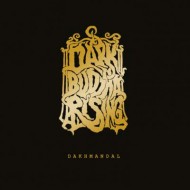
Finland’s Dark Buddha Rising definitely dabble a little in aural psychedelia and a lot in rhythmic mantra to achieve their altered state of mind and this fifth album of theirs, Dakhmandal, definitely proves its working for them. With tracks titles reduced to single letters (one assumes “D”, “K”, “H”, “M”, “N”, and “L” spell out the consonants of the album) and a plain album cover, there is no other artistic invasion of your own journey through the album other than the gentle shifting of their insistent, mesmeric drones.

With “D” setting the tone by slowly presenting layers deep enough to hide a planet in, from distant forest sounds and far-off, hollow ironmongery to front-of-house metronomic bass and piercing full-frontal feedback, the first, big impression is left for “K” to make. You needn’t worry because as much as it can, staying within the confines of the big concept, it makes a real spectacle of itself. Opening up with crushing bottom-end supporting dark, mysterious, incantations it moves through several phases of doom-laden crush before suddenly slacking 6 minutes in. Here, you can actually pick up the sounds of a bong being fired up – the rough clicks of a zippo, the pipe inhalations and accompanying bubbling – as the stoned vibe rolls onwards. When the vocal re-emerges, the deep chants have, understandably, been transformed into mad, half-choked, ravings in some scathing Goblin tongue.

There is no doubt that their are dark, occult forces at work here within Dark Buddha Rising’s elephantine doom-drone – think Ghost on morphine. “N” burns with a fire that threatens to overwhelm as it gently morphs around a mile-thick chant that sounds like it comes from the throats of a coven of hooded giants. Loud enough to move the earth with enough low-end to invade the sub-conscious, then vehement and wild enough to send your brain into spasms. This is music not of this world. Even when they’re playing it straight there’s a nihilistic black magic at work. “M”, for instance, is basically the sound of Depeche Mode playing over a howling gale – melancholic, down-tuned strings spiralling into and around the hungry spout of a tornado. Yet, before the rhythm can begin, you have to endure the opening horror film moments of a discordant Hammond organ. Nothing is straight-forward here and anything goes.

So Dakhmandal definitely comes with a warning. If you happen, like me, to find yourself walking around the streets of your hometown, headphones in position, throwing strange hand-shapes, eyes drooping, muttering under your breath, all of which should get you some pretty strange looks, do stop listening. Dark Buddha Rising’s latest, no matter how gloriously trance-inducing it may be, is pure evil and as such it should be restricted to small amounts and is definitely for personal consumption only.

Also online @ Ave Noctum = http://www.avenoctum.com/2013/06/dark-buddha-rising-dakhmandal-svart/