Reviews Coming Soon

Album Review: TBA

Wednesday, June 27, 2012

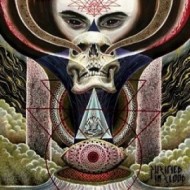
Album Review: Purified In Blood – Flight Of A Dying Sun

It was I that hailed Under Black Skies, Purified In Blood’s sophomore album, as 2010′s best, calling it “crepuscular, bellicose, demented, swaggering, invasive” but, ultimately, “consummate”. In my mind, it blew away the competition that year, and I’ll stand by that opinion today. So, two years, down the line, one vocalist down and with a fervent desire to return to the raw potency of their Reaper Of Souls debut, have the band managed to retain the black magic that still gets me so hot under the collar?

Well, they’ve attempted to get around the loss of Glenn “Reaper” Rasmussen (who does make a brief showing for the track “Iron Hands”) by cramming in a few guest spots. Drummer Anders Mosness uses his Kvelertak connections to convince their frontman Erlend Hjelvik to rip into “Mot Grav” and Siberian throat singer Albert Kuvezin lends his extraordinary, never-ending rumble to the introductory “The Absolute”. Otherwise, it’s all down to Hallgeir Enoksen who, to be fair, has an absolute beast of a vocal that more than stands up to scrutiny. More than anything it’s this man’s nail-gargling roar that so endeared to me to the band in the first place.

“Storm Of Blood” is ripped with it, Enoksen digging out fury to go with the sort of drum battery and rotational guitar grot you’d associate more with the hammer and anvil stoner attack of High On Fire or the crust-covered ‘core of Black Breath. When the crush returns for “Mind Is Fire” (the thrash attack and vocal patterning on the chorus oddly reminiscent of Sylosis’ “Reflections Through Fire”) it’s even more powerful. Even that though is not the heaviest thing on the album. That honour goes to the galloping, blocky crush at the four-minute mark of the title-track; check it… it’s an utter mind-bender.

One reason for this increase in brutish weight requires a glance at the men responsible for twiddling the knobs. There’s few safer pairs of hands than those of Jacob Bredahl and Tue Madsen and they certainly haven’t impeded any of the thunderous intensity that the band have managed to knock out here. When they dial it down a notch and inject some driven groove they manage to produce the album highlights. Tracks like the throbbing neck-snappers of “Void” and “Iron Hands” come closest to matching the addictive peaks that Under Black Skies reached. Hjelvik brings along his black n’ roll spikes, and with “Mot Grav”s added thrash licks, the band dig out a real powerhouse.

Other than those rutted monsters though, the band are found to be rather wanting. At times, it is Ådne Sæverud’s frantically whining Hammond organ or Sander Loen’s wild, disconnected solos that are to blame as they succeed in derailing PiB’s chug-worthy building blocks; at other times it is the speed and noise-worshipping, a desperate search to raise the raw and inject the heavy, that has negated the neck-snapping cool of their sweetest rides. Although they manage to fish out several interesting minor chords, some swathed entirely in black, for long periods they seem to entirely forgo their fondness for structural build and plaster over any potential breaks in sound, ditching the chance for barbed hooks or sharp licks, to create yet more bulging angst and all-encompassing heavy. Worst of all, with only eight tracks to play with and running times trimmed, we get fewer changes of direction and a stingy 35-minute total.

Despite these flaws though, I simply can do nothing other than stringently insist that you try this on for size. Okay, it’s not the game-changing album of the year that their 2010 effort so obviously was, but it’s still got big, bushy chops on it and enough shades of black to make it worthy of your undivided attention. It will certainly be interesting to see how much of an impact they make on the scene this time and, more importantly, in which direction they will head with their next release.

Also online @ Ave Noctum = http://www.avenoctum.com/2012/06/purified-in-blood-flight-of-a-dying-sun-indie-recordings/

Friday, June 22, 2012

Album Review: The Elijah – I Loved I Hated I Destroyed I Created

Can you begin to imagine what a combination of ambient and screamo might sound like? Perhaps a combination of hardcore and shoegaze? I think my brain just got knotted trying to pull the two concepts together. And yet we know there are bands out there, right now, attempting to meld the two concepts into one. In fact, I have one here in front of me. They are the UK’s and they are in the business of carefully creating softly, shuffling, rangy pieces, only to pepper them with vicious, derisive howls in an attempt to drive their true intentions home. Their music is mind-bogglingly vast. If you were to describe any band as epic it would be this band. Rather than merely listen to their songs, you live them. But is the gap between polished smooth and hacked rough just too wide to suck you in; to keep you hooked?

cite influences like ’ control of classical and electronic ambience and the experimental post-rock of but, more pertinently, the combination of feather-light touch and slap in the chops instantly draws comparison with and and, to an extent, and .

Recorded in an abandoned country mansion in Shropshire, the band have utilised the structures’ natural reverb; the music reaching deep into those resonant recesses to dredge up a complex, textured and inherently bleak sound which they use to blanket the listener with. Whilst the instrumental beauty of “In Regret” is a track that allows for those many textures to be dissected, with its metronomic sweeping bows and harsh, hammering strings, the album’s heart and soul lies in the vocals. They sit atop this multi-layered wall of gently-shifting emotion like bricks and mortar on concrete foundations. Dan Tomley is the screamer, providing the blocky, vein-bulging angst, whilst Mike McGough is the crooner, the binding agent, smothering the cracks with a dark, sweeping sorrow.

Back to that question and here we are being sucked in by “In Misery”. Closing your eyes it’s easy to picture a turbulent, boiling surface of a horizon-filling ocean. When the moment arrives for Tomley’s roars to cut in they come without apology – “I can barely breathe, I can barely speak”, he falteringly croaks. Yet here, surrounded by gut-wrenching pain, they feel integral. Tracks like “In Death” and “I Hated” benefit similarly with “The thought that I have torn the smile from your pale-skinned face” being a barbed lyric that will worm its way in deep. However, throw those screams into direct conflict with McGough’s subtle hues, as they do at the very peak of “I Loved” and those foundations begin to sink, the cracks reappear and their is a sudden loss of cohesion between each element. The levels become overloaded and the listener can find thereselves overwhelmed as the basic instinct for “fight or flight” is triggered. That takes some getting used to, but those who stick with this can learn to stay hooked and possibly even love this. I’ll admit, I ran away like a little girl and it was a while before I crept back from behind the couch to press the “play” button once more.

Ultimately, it’s not the aggressively maudlin content or the clashing vocals that irk the most, it’s the repetitious nature of the tones and hues that leaves somewhat of a bad taste in the mouth. have produced a debut album with sharp claws and hackles that are quick to raise during its darkest, most volatile moods. All well and good but, by my reckoning, they need to show a little more control and a touch more ingenuity if they are to stand out from their peers. Prepare accordingly.

Also online @ The NewReview = http://thenewreview.net/reviews/the-elijah-i-loved-i-hated-i-destroyed-i-created

Mini-Album Review: Twin Atlantic - Free


Where Biffy Clyro took a career to hone their sound, Twin Atlantic have nailed it at their second attempt and their album “Free”, with it’s rough edges and unctuous core, hellishly addictive riffs and bitingly honest lyrics, delivered in Sam McTrusty’s thick Glaswegian brogue, are radio-rock’s secret weapon.

A small piece I wrote for TLOBF's Scottish Album Of The Year Award 2012 - also online here.

Thursday, May 31, 2012

Album Review: The Melvins – Freak Puke

If ever there was a band with a tentacular reach it would be The Melvins. Attributed with kicking off the sludge scene in the early ’80s, the number of gnarly bands who will have been influenced by them by now must be in their thousands. With the full Melvins line-up still forging ever onward, founders vocalist/guitarist Buzz Osborne and drummer Dale Crover have taken a side-step for Freak Puke to team up with bassist Trevor Dunn (Mr. Bungle, Tomahawk, Fantômas). The album cover attributes the artist as being The Melvins yet, as I understand it, the project has been cringingly-monikered Melvins-Lite, which sounds like some dodgy can of fizz. The music they are hammering out appears to follow the pattern of most Melvins material with plenty of familiar ground being covered, so don’t worry about taking any wild leaps of faith here.

Dunn’s enigmatic stand-up bass is the project’s twist and he’s there at every turn, be it helping to drive the track addictively forward with groovy finger-circling patterns or merely playing the fool. He gets to show off his range for the track ‘Baby, Won’t You Weird Me Out’ as Buzz and Dale stick him up front and centre. Initially he’s let loose with the bow, wrenching it across his instrument like he’s trying to saw it in half, but soon enough he chooses to tug at his strings which unites the trio so can they have a good old jam together. This sets the pace and establishes the album’s true direction.

With Buzz offering up sludgy, scathing guitar lines and Dale letting loose his pounding stickwork we’re marched neatly into these gritty verses and melodic, harmonised choruses. Dunn slots in sweetly, occasionally powering up with dissonance, injecting untold depth for a few bars or walking his way high up the fretboard. With the band offering up a real mixture of stylistic content there’s that sense of boundless abandon that usually frequents Melvins albums. There are doses of gunge-streaked, heavy-lidded blues for killer tracks like ‘A Growing Disgust’ and the Paul McCartney & Wings cover, ‘Let Me Roll It’, there’s a spot of doom and gloom about ‘Holy Barbarians’ and, oddly, the 10-minute shoegaze-rock-freakout of ‘Tommy Goes Berserk’, and there are licks of splatter’ n’ roll that ignite the gobby title track and the monstrous ‘Leon vs. The Revolution’, where Buzz steps up to the plate by ramping up his vocal to the point of disintegration. They have never been a band that you can trust to conform and that’s just how we like them…

…up to a point. They’re always prepared to go one step further than I, for one, wish they would, and here they make an attempt to obliterate the structures with a few experimental surprises. There’s the disconcertingly realistic, splitting wood effect, the rebounding cornball vocal samples and the maddeningly frequent blasts of feedback. These all pale into insignificance next to the moments when they hand the baton over to Dunn to seek out tuneless, cosmic anomalies with his bowed-string action (he gets the troublesome ‘Inner Ear Rupture’ all to himself); that’s everything from churning out deep, long whale sounds to the sound of a thousand crawling insects. Novel or novelty? I’d suggest a bit of both.

If Melvins-Lite really was a beverage, it would be loaded with guarana to boost you for prolonged bouts of rocking out. Of course, there’d be side-effects, some of which would most likely include paranoid delusions or the odd wild flashback – the point is it would definitely come with a Governmental health warning attached. Naturally, I’d be the one clearing the shelves; chugging it down like it was going out of fashion.

Also online @ TLOBF = http://www.thelineofbestfit.com/reviews/albums/the-melvins-freak-puke-91041

Tuesday, May 29, 2012

Album Review: Ihsahn – Eremita

’s “Rainbow In The Dark”, ’s “The Loneliness Of The Long-Distance Runner”, ’s “One”; from metal’s first tentative footsteps, bands have sung songs, constructed albums and gifted themselves names based around the theme of isolation. Having completed his “A”-trilogy, comprising (The) Adversary, AngL and After, now turns his attention to the subject and, unsurprisingly, he appears to have rediscovered a connection to his muse, Friedrich Nietzsche.

Over the years, the presence of the influential German philosopher, the self-professed “hermit of Sils-Maria”, has been keenly felt, littering ’s work as both solo artist and frontman. The album title alone (Eremita being Latin for “hermit”) would have been enough to tip us off, but the man himself is there, upside-down, on the front cover. Most tellingly, though, it is the emotion-doused content that seals the deal.

As a solo artist, has always been quick to seek the input of others and this time round he has called on the assistance of guitarist Jeff Loomis (ex-), drummer Tobias Ørnes Andersen () and teased vocal performances from his wife Heidi S. Tveitan (), Einar Solberg () and . Also, it’s no surprise to see Jens Bogren (, ) on mixing duties again as had admitted to having trouble getting the sound he wanted without him – “Originally my plan was to mix it myself, as I did with the first two albums, but I just had to throw the towel in and get Jens to do it”.

With After having broken new ground with its delicate touch and ornately progressive, open construction, Eremita notably takes a couple of large steps backwards into the shadows. “There’s some full-blown black metal stuff on there”, warns . “There’s some jazz-influenced stuff and there’s some progressive stuff. There’s some really fast stuff and some really dark stuff.” The lyrical content is definitely both dark and oppressive, matching the conjured bleak and forbidding soundscapes. With ’s paint-stripper-gargling larynx regularly seeing action we get lycanthropic pained howls that come direct from his tortured soul. It all begins to hark back to some of ’s final outpourings. In this morbid place, the jazz saxophone plays less of a significant role in the chaos – instead, the returning Jørgen Munkeby chooses to languish within; to merely dot the i’s and cross the t’s of the hermit.

Of his guests, surprisingly it is , naturally eager to repay ’s own guest spot, who seems to have made the biggest of impacts on the man here. The throbbing pulse of “The Paranoid” and more intuitive moments of “Introspection” echo parts of Devin’s own Deconstruction. The former track’s deep groove and enigmatically rotating lyrics – “the shame feeds the anger feeds the shame feeds the anger feeds the shame” – could even mark it out as the debauched, blacker cousin of “Juular”.

Eremita is a transformational album that can turn from sullen acceptance, of the kind that afflicts both “Catharsis” and the ugly, horror-movie synth melodramatics of “Grief”, to become something more approaching a grim determination for “Something Out There” and “The Grave”. Then there is the lunatic element; tracks such as the desperately posturing and over-reaching “Departure” and the far more-likeable “The Eagle And The Snake” that hammer in a whole host of twisted shapes; strong, angular changes both oblique and acute. The pair are mazes that you will constantly find yourself getting lost in. The absorbing and wildly meandering guitar solo and blasts of discordant sax that lurk in the latter are the mere cherries on top.

Comparing Eremita to his last release, has said it is “not as joyful” and “a lot more claustrophobic” and it is most certainly both those things. Predictably, it’s an album that craves its own isolation. So lock the door, slam on the cans and buckle up. It’s one wild, nightmarish ride that Nietzsche, himself, would no doubt have begrudgingly approved of.

Also online @ The NewReview (with video preview) = http://thenewreview.net/reviews/ihsahn-eremita