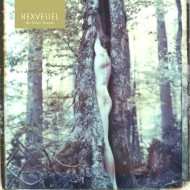
Hexvessel love trees. It’s quite clear that the “Temple” in
the title of their sophomore album is referring to all things nature
and, in particular, the life cycles of those tall, knotty skyscrapers
themselves. Mat McNerney and his “Death Magicians” have moved on from
their Dawnbearer debut and are taking their mystical folk music
into some pretty dark, haunting places and on trips that may (or may
not) have involved prolonged episodes of mushroom-munching.
There’s still a strong acoustic folk vibe going on with big plays
coming from sax (“Woods To Conjure”), violin and piano (“Wilderness Is)
and even didgeridoo (“Elegy To Goyahkla”), but they also unveil moments
that will see you referencing black metal, and a decaying velocity that
wraps its outstretched arms around the genre of doom. The opening,
wildly self-indulgent, spoken passage outlining the glory of “Heaven And
Earth Magic” sets the more solemn tone whilst passages of crystal
clear, eulogising vocal plugged with stronger harmonies, particularly
noticable in “His Portal Tomb” set one in mind of the work of Neil
Hannon (The Divine Comedy). They are rich in melody and travel lightly
along a gentle cadence. Around them is layered the sort of music that
could be described as possessing a certain Beatles-y charm.
In and out of the subtle shades of potency, those that evoke the
music of Ihsahn and Opeth comes something else. Tracks like the
10-minute “His Portal Tomb” and the 13-minute “Unseen Sun” that see the
band happily ringing in the changes with warm, fuzzed guitar cracking
out those metallic elements. They, in turn, ignite the doom fuse for
those that didn’t even realise it was there all along. More twists await
in the form of the cabaret wake-up call of “Are You Coniferous?” and
the addictive, Levellers-esque ceremonial melodies of “Sacred Marriage”.
Ultimately, though, there is just so much music here that fails to
capture the heart in the same way that a small portion of the songs do.
It’s always a disappointment to hear so much falling short of hitting
the mark that the standard-bearers set. The opening groundwork, so
grindingly laid out, is just too weak to support the grit that the back
end of the album displays. There’s way too many pompous passages of
spoken word; poetic and thought-provoking, for sure, but completely
energy-sapping. The fact they’ve covered a track (“Your Head Is
Reeling”, one of the album’s better ones) by a band called Ultimate
Spinach speaks volumes about them. Hexvessel’s exploration of the
connective possibilities of their humble folk music is certainly
impressive and No Holier Temple is a definite step forward but they need to stop sucking the life out of their music.
Also online (with extras) @ Ave Noctum = http://www.avenoctum.com/2012/09/hexvessel-no-holier-temple-svart-records/
Reviews Coming Soon
Friday, September 14, 2012
Tuesday, September 11, 2012
Album Review: Dharmata – Dharmata
Aaah, West Palm Beach, Florida. With sun, sea and sand as far as the
eye can see, it’s easy to see why it has taken local alt-rockers Dharmata
five years to polish off their debut album. What teasers they have
released over the years have received plenty of regional radio airplay,
scored stagetime with bands such as 10 Years, Nonpoint and Filter, and caused a certain Benji Webbe’s ears to perk up. Not only has he been bigging them up and brought his band, Skindred, over to gig with them, but he’s also had a hand here in co-producing the album.
Certainly, the songwriting, whilst being predictably structured, is full of hooks and catchy anthems, so it’s easy to see why Radio Land has picked them up. Plenty of the tracks are full of bounce and there are some neat rhythmic cuts and riff bursts dotted about to suck you in. Combine that with Jay Slim’s crisp, ostentatious and assured clarion call of a vocal, which has a pure, old-school rock quality, and you’ve certainly got potential. Listening closely, it’s almost like they’ve got their stylistic sights set on hitting the point where Seether overlap with Nonpoint. The trouble though is that somewhere along the line they’ve ended up sounding more like Nickelback mocking Five Finger Death Punch mocking One-Way Mirror.
Tracks like “Outside The Lines” and “Strength In Numbers” are classically strong, inherently catchy and breezy enough to suck us in. It’s easy to forget that underneath those vocal barbs, it’s all a bit bland with soft edges and very little bite. The cotton-wool, dressed-up production, of course, doesn’t help. Those responsible souls have left us with dampened drums, warm guitars and a reverberating bass that smothers as it thrums. The vocal is the only thing we can actually fall back on and even that has had too many of its rough edges sandpapered. We end up looking to tracks like “Do It Again” and “The Awakening” to buck the trends and, firstly, inject some grit and vitality into the mix, and secondly, break-up the rigid verse-chorus-verse shapes and repetitious lines. The former track leans hard on its tub-thumping patterns, nu-metal post-production tweaks and rapped bridge for inspiration whilst the latter explores a few darker tones whilst hinting at something excitingly symphonic.
Undoubtedly, there’s a definite lack of ambition shown here; it’s all a bit too safe. The crueller souls amongst you might suggest throwing acronyms like AOR or MOR at them to see if they stick. “Love Kills” is about as nasty and rangy as Jay Slim gets but, as an album highlight, it’s most certainly worthy of mention. We get growls, an octave drop and even the odd snarled passage that make it through his usual high-register drifting. Just those few cracks in that bland veneer he’s selling shows he’s been holding back on us. Also, listen out for some smart little touches in “Monster” – that sudden break into a bass solo, the short bursts of double-kick and the hints at wordplay. Oh, and let’s not miss out the vicious 5FDP-esque stabs of drum and guitar that swirl around “The Way”. As is often the case, don’t stick around for the chorus; it’s just more of the same. You can harmonise all you like, fellas, over-familiarity and drab production has scuppered your ship.
They may be about ten, some might suggest twenty years too late to the party, but Dharmata have absolutely got a knack for penning a solid tune. The first two songs are proof of that and the back-half of this debut shows they do actually have the character to take these skills to the next level. If they cut back on the gutless, over-repetitious filler (“Where Do We Go”, I’m looking at you) and sharpen up the production they could really have something saleable. Surf’s up, fellas!
Also online (with samples) @ The NewReview = http://thenewreview.net/reviews/dharmata-dharmata
Certainly, the songwriting, whilst being predictably structured, is full of hooks and catchy anthems, so it’s easy to see why Radio Land has picked them up. Plenty of the tracks are full of bounce and there are some neat rhythmic cuts and riff bursts dotted about to suck you in. Combine that with Jay Slim’s crisp, ostentatious and assured clarion call of a vocal, which has a pure, old-school rock quality, and you’ve certainly got potential. Listening closely, it’s almost like they’ve got their stylistic sights set on hitting the point where Seether overlap with Nonpoint. The trouble though is that somewhere along the line they’ve ended up sounding more like Nickelback mocking Five Finger Death Punch mocking One-Way Mirror.
Tracks like “Outside The Lines” and “Strength In Numbers” are classically strong, inherently catchy and breezy enough to suck us in. It’s easy to forget that underneath those vocal barbs, it’s all a bit bland with soft edges and very little bite. The cotton-wool, dressed-up production, of course, doesn’t help. Those responsible souls have left us with dampened drums, warm guitars and a reverberating bass that smothers as it thrums. The vocal is the only thing we can actually fall back on and even that has had too many of its rough edges sandpapered. We end up looking to tracks like “Do It Again” and “The Awakening” to buck the trends and, firstly, inject some grit and vitality into the mix, and secondly, break-up the rigid verse-chorus-verse shapes and repetitious lines. The former track leans hard on its tub-thumping patterns, nu-metal post-production tweaks and rapped bridge for inspiration whilst the latter explores a few darker tones whilst hinting at something excitingly symphonic.
Undoubtedly, there’s a definite lack of ambition shown here; it’s all a bit too safe. The crueller souls amongst you might suggest throwing acronyms like AOR or MOR at them to see if they stick. “Love Kills” is about as nasty and rangy as Jay Slim gets but, as an album highlight, it’s most certainly worthy of mention. We get growls, an octave drop and even the odd snarled passage that make it through his usual high-register drifting. Just those few cracks in that bland veneer he’s selling shows he’s been holding back on us. Also, listen out for some smart little touches in “Monster” – that sudden break into a bass solo, the short bursts of double-kick and the hints at wordplay. Oh, and let’s not miss out the vicious 5FDP-esque stabs of drum and guitar that swirl around “The Way”. As is often the case, don’t stick around for the chorus; it’s just more of the same. You can harmonise all you like, fellas, over-familiarity and drab production has scuppered your ship.
They may be about ten, some might suggest twenty years too late to the party, but Dharmata have absolutely got a knack for penning a solid tune. The first two songs are proof of that and the back-half of this debut shows they do actually have the character to take these skills to the next level. If they cut back on the gutless, over-repetitious filler (“Where Do We Go”, I’m looking at you) and sharpen up the production they could really have something saleable. Surf’s up, fellas!
Also online (with samples) @ The NewReview = http://thenewreview.net/reviews/dharmata-dharmata
Thursday, September 6, 2012
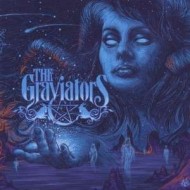
Album Review: The Graviators – Evil Deeds (Napalm Records)
Sweden’s trickle of 70′s revivalists is rapidily becoming a flood, as
following fast in the footsteps of bands like Witchcraft, Graveyard and
Burning Saviours come more worshippers like Horisont and, voilà,
The Graviators. Described in their PR flyer as coming from “deep in the
woods”, it is no surprise to hear their music sounding so angry, nay,
feral; more-stripped down than several of their blues-loving forbears.
If Graveyard were, say, the bleary-eyed bongheads of this expanding
retro scene, then The Graviators would be the wide-awake tearaways
spray-painting Pentagram and Black Sabbath symbols onto buildings.
Take the 2:43 of “Morning Star”. It’s a rip-roarin’ blazing rocker of a track, slicked with Johan Holm’s gnarly basslines, Martin Fairbanks’ thick, fuzz-covered riffing and Niklas Sjöberg’s scowling vocal that rises up and up, ending in a howling falsetto. At other times, during say “Feelin’ Low”, they seem impelled to explore the more Sabbathian realms of old school doom. They linger upon each note to turn the pace into a lollop. They reach a depth and breadth of undertow that begins to congeal around you leaving you mired (by the album’s end, naturally) in the Saint Vitus-worshipping sedentary plod that “The Infidel” becomes. It forms the quicksand that has secreted itself around your legs, slurping and burping all around.
Whilst there’s little new to be found in tracks like “A Different Moon” and “Häxagram”, there are other highlights to be found. Check out the form of “The Great Depression” with its rising-and-falling, walked riff and undercurrent of blues, and “Evil Deeds” which flits about whilst remaining leashed to it’s repeating chorus like a paranoid-afflicted, ADD-sufferer. Oh, and do keep an ear pinned back for the glorious little touches of Hammond organ and Wurlitzer piano (like those in the otherwise overwrought “Presence”) as supplied by Petrus Fredestad.
The one snag in the music (that irksome devil which threatens to stick his trident in their balloon) is Sjöberg’s insipid, reed-thin, chicken-squawk of a vocal which works in direct opposition to the fat licks that surround it. It is the equivalent of pitting a featherweight boxer up against three sumo wrestlers – he’s going to make a hell of a racket while the big boys trundle about after him, but that poor sod is eventually going home in a fucking ambulance. Put it this way, if you liked their debut album and haven’t grown weary of Sjöberg’s output by the close of this follow-up album, then you never will; in which case, I salute you.
Also online (with extras) @ Ave Noctum = http://www.avenoctum.com/2012/09/the-graviators-evil-deeds-napalm-records/
Take the 2:43 of “Morning Star”. It’s a rip-roarin’ blazing rocker of a track, slicked with Johan Holm’s gnarly basslines, Martin Fairbanks’ thick, fuzz-covered riffing and Niklas Sjöberg’s scowling vocal that rises up and up, ending in a howling falsetto. At other times, during say “Feelin’ Low”, they seem impelled to explore the more Sabbathian realms of old school doom. They linger upon each note to turn the pace into a lollop. They reach a depth and breadth of undertow that begins to congeal around you leaving you mired (by the album’s end, naturally) in the Saint Vitus-worshipping sedentary plod that “The Infidel” becomes. It forms the quicksand that has secreted itself around your legs, slurping and burping all around.
Whilst there’s little new to be found in tracks like “A Different Moon” and “Häxagram”, there are other highlights to be found. Check out the form of “The Great Depression” with its rising-and-falling, walked riff and undercurrent of blues, and “Evil Deeds” which flits about whilst remaining leashed to it’s repeating chorus like a paranoid-afflicted, ADD-sufferer. Oh, and do keep an ear pinned back for the glorious little touches of Hammond organ and Wurlitzer piano (like those in the otherwise overwrought “Presence”) as supplied by Petrus Fredestad.
The one snag in the music (that irksome devil which threatens to stick his trident in their balloon) is Sjöberg’s insipid, reed-thin, chicken-squawk of a vocal which works in direct opposition to the fat licks that surround it. It is the equivalent of pitting a featherweight boxer up against three sumo wrestlers – he’s going to make a hell of a racket while the big boys trundle about after him, but that poor sod is eventually going home in a fucking ambulance. Put it this way, if you liked their debut album and haven’t grown weary of Sjöberg’s output by the close of this follow-up album, then you never will; in which case, I salute you.
Also online (with extras) @ Ave Noctum = http://www.avenoctum.com/2012/09/the-graviators-evil-deeds-napalm-records/
Saturday, August 25, 2012
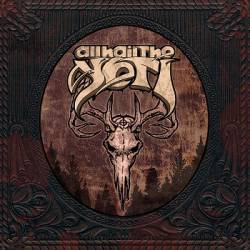
Album Review: All Hail The Yeti – All Hail The Yeti
These Sasquatch-obsessed metalheads are based in sunny Los Angeles
rather than the wilds of some wintry country and that is, indeed, rather
baffling. Only a mug would believe these songs were written on the
beach and their PR blurb leads me to think I’m probably right, labelling
them as “the band that turned their backs on their Hollywood homes”.
Naturally, there’s still a tendency to assume this monstering about is
just all a gimmick to garner attention but the band stick to their
subject with dedication and go about their frightful task with plenty of
enthusiasm.
They switch between referring to the beast himself in both the third-person (to great effect) and the first-person, and manage to ramp up the tension by digging up and relaying the fables that follow the sightings. There are plaintive roars, chunky riffs and barked lyrics like “Nothing human could be that fast / Was it the monster that crossed the path?” (from the bludgeoning opener “Deep Creek”), “Don’t turn around!” and “He’s come back to take what’s his (your head)” (from the stoner riff worship of “Axe Murder Hollow”) or “Fee-fi-fo-fum / I smell the blood of everyone” (from the pounding thrasher “Suicide Woods”).
The switch up from shoulder-roll to chugfest, which (when you think about it) was always going to lead inexorably towards a wholesome, fist-pumping groove, is magnetic. By hook or by crook, the source of their mojo lies somewhere between the balls-out, whisky-swigging, rock-a-doodle doo antics of Hellyeah, the stoned Southern wallowing of Down, the malignant metalcore of Unearth and the monstrous sludge that Eyehategod sling about.
When they’re not swinging on the lighter, grungier choruses of “When The Sky Falls” and “I Am Wendigod” (presumably they are there as a tool to shuffle the pack), they are digging down into your most primal of fears by mixing in a few meaningful samples, including the spookiest of cinematic scenes across “The Weak And Wounded…” or slowing the pace for its soul-mate “After The Great Fire”. Those cleaner vocals do give the album added dimension, yet, as they stand, they detract from the overal impact. Listen to the opposing vocal forces within “Bloodguilt” (trying to marry Connor Garritty’s impressive, unhinged roars to anything else must be an impossible task), or even the subject matter of “Ruby Ridge…” though and suddenly you’ll realise they are more than just a one-dimensional, flash-in-the-pan act.
They still manage to grasp hold of that combination of morbid fascination and crushing fear, those emotions which walk hand-in-hand with the unknown, by beginning and ending fast and hard. However, for a while, they lose it mid-album, finding that fight-or-flight pressure point slipping through their fingers. This is a debut, remember, so I’d imagine that they still have plenty left in the tank; bigger fish to fry, as it were, than we’ve heard so far, and they have plenty of time left to iron out those creases (like that bizarre, interminable and frankly ludicrous 15-minute swamp and campfire loop at the end of “Jesus Cradle”). Do keep your eyes peeled for All Hail The Yeti – they have the talent to stick around like the tales of the mystical creature they so idolise.
Also online (with extras) @ Ave Noctum = http://www.avenoctum.com/2012/08/all-hail-the-yeti-all-hail-the-yeti-afm-records/
They switch between referring to the beast himself in both the third-person (to great effect) and the first-person, and manage to ramp up the tension by digging up and relaying the fables that follow the sightings. There are plaintive roars, chunky riffs and barked lyrics like “Nothing human could be that fast / Was it the monster that crossed the path?” (from the bludgeoning opener “Deep Creek”), “Don’t turn around!” and “He’s come back to take what’s his (your head)” (from the stoner riff worship of “Axe Murder Hollow”) or “Fee-fi-fo-fum / I smell the blood of everyone” (from the pounding thrasher “Suicide Woods”).
The switch up from shoulder-roll to chugfest, which (when you think about it) was always going to lead inexorably towards a wholesome, fist-pumping groove, is magnetic. By hook or by crook, the source of their mojo lies somewhere between the balls-out, whisky-swigging, rock-a-doodle doo antics of Hellyeah, the stoned Southern wallowing of Down, the malignant metalcore of Unearth and the monstrous sludge that Eyehategod sling about.
When they’re not swinging on the lighter, grungier choruses of “When The Sky Falls” and “I Am Wendigod” (presumably they are there as a tool to shuffle the pack), they are digging down into your most primal of fears by mixing in a few meaningful samples, including the spookiest of cinematic scenes across “The Weak And Wounded…” or slowing the pace for its soul-mate “After The Great Fire”. Those cleaner vocals do give the album added dimension, yet, as they stand, they detract from the overal impact. Listen to the opposing vocal forces within “Bloodguilt” (trying to marry Connor Garritty’s impressive, unhinged roars to anything else must be an impossible task), or even the subject matter of “Ruby Ridge…” though and suddenly you’ll realise they are more than just a one-dimensional, flash-in-the-pan act.
They still manage to grasp hold of that combination of morbid fascination and crushing fear, those emotions which walk hand-in-hand with the unknown, by beginning and ending fast and hard. However, for a while, they lose it mid-album, finding that fight-or-flight pressure point slipping through their fingers. This is a debut, remember, so I’d imagine that they still have plenty left in the tank; bigger fish to fry, as it were, than we’ve heard so far, and they have plenty of time left to iron out those creases (like that bizarre, interminable and frankly ludicrous 15-minute swamp and campfire loop at the end of “Jesus Cradle”). Do keep your eyes peeled for All Hail The Yeti – they have the talent to stick around like the tales of the mystical creature they so idolise.
Also online (with extras) @ Ave Noctum = http://www.avenoctum.com/2012/08/all-hail-the-yeti-all-hail-the-yeti-afm-records/
Tuesday, August 21, 2012
Album Review: Scott Kelly And The Road Home – The Forgiven Ghost In Me
Whether you are digging down to the heart of one of his
multitudinous, yet always nefarious, music projects, tuning in to
discover what he’s currently promoting via his co-owned internet radio
station, vicariously living through the bands he’s signed up to his
co-owned record label, Neurot, or eating up every one of his
blogged words of wisdom, you’ll quickly discover Scott Kelly is a man
who isn’t afraid to expose and promote his true feelings. U.S. Christmas
frontman Nate Hall never said it better when he spoke of Kelly earlier
this year: “Only a true artist would be so willingly and completely
exposed; so intensely focused on truth, redemption and healing; so in
tune with the song he has always heard inside.” Ladies and gentlemen,
here we have a bona fide living music legend.
Of Kelly’s third solo opus, The Forgiven Ghost In Me, Hall has said “With another collection of sparse, introspective songs, Kelly delves even further into a personal, private space that he occupies fully and solely. His path has been a narrow, dark and difficult one, but… Kelly shows that his strength and vision has endured it all.” That’s quite a build, then, for what is essentially something so, well, “sparse”.
Here, his music, created with the help of friends Noah Landis and Greg Dale plus guest spots from Jason Roeder and Josh Graham, is centred very much around his deep, time-worn vocal performance and semi-acoustic guitar, with only a smattering of atmospheric touches and odd incision of other instruments popping up every now and then. There is no drumbeat here, just Kelly’s internal sense of pacing, which unsurprisingly varies from a wary snake-like slither to a laid-back, metronome-munching, elephantine slog through the undergrowth.
His weary West Coast drawl and desert-dry croak chew around “A Spirit Redeemed To The Sun” as rapidly we re-acclimatise ourselves to the way he feels around each note very deliberately. It’s one of the few brighter, more uplifting moments in what is essentially a pretty intense and downbeat album. The messages come pouring thick and fast from the guts of the man; here, he is a burst piñata of emotions. “I washed the blood from my hands / I’ve forgiven myself in my soul” leads to “In a field of death, screaming at the wind / My desires reach and hold me” for the oppressively painful crawl of “The Forgiven Ghost In Me”. By the time Landis’ gurgling dirge melts into the dark tones of “Within It Blood”, Kelly is conjuring images of “ravens” drowning and “demons” being brought on to the stage.
We are soon eagerly cutting ourselves on “the blade of the Reaper” as he submerges us in the album highlight “We Let The Hell Come”; a track that stirs the blood as he stretches his vocal. It is all polished off eloquently with the simplest yet most powerful of riffs. Keep an ear out, too, for the colour-soaked and spine-tingling “The Fields That Surround Me”. Roeder’s subdued drums and buoyant cymbal sweeps kick-start a slow build through to brusque synth and guitar fills. “The watcher watching me”… creepy.
With The Forgiven Ghost In Me, Scott Kelly takes us on yet another dark, brittle, and emotional journey. Hearing him slowly running through his personal neuroses, one by one, past the all-seeing-eye of Neurosis, is a strange, immersive experience. The strange tones and textures, those that initally seemed so impenetrative, then so lacklustre, can quickly become all too familiar and, in turns, magically accessible, so that by the album’s end (and this is for those with an open mind) he has absorbed you, purged his and your mind and, in the process, begun the cleansing process.
Also online (with album preview) @ The NewReview = http://thenewreview.net/reviews/scott-kelly-and-the-road-home-the-forgiven-ghost-in-me
Of Kelly’s third solo opus, The Forgiven Ghost In Me, Hall has said “With another collection of sparse, introspective songs, Kelly delves even further into a personal, private space that he occupies fully and solely. His path has been a narrow, dark and difficult one, but… Kelly shows that his strength and vision has endured it all.” That’s quite a build, then, for what is essentially something so, well, “sparse”.
Here, his music, created with the help of friends Noah Landis and Greg Dale plus guest spots from Jason Roeder and Josh Graham, is centred very much around his deep, time-worn vocal performance and semi-acoustic guitar, with only a smattering of atmospheric touches and odd incision of other instruments popping up every now and then. There is no drumbeat here, just Kelly’s internal sense of pacing, which unsurprisingly varies from a wary snake-like slither to a laid-back, metronome-munching, elephantine slog through the undergrowth.
His weary West Coast drawl and desert-dry croak chew around “A Spirit Redeemed To The Sun” as rapidly we re-acclimatise ourselves to the way he feels around each note very deliberately. It’s one of the few brighter, more uplifting moments in what is essentially a pretty intense and downbeat album. The messages come pouring thick and fast from the guts of the man; here, he is a burst piñata of emotions. “I washed the blood from my hands / I’ve forgiven myself in my soul” leads to “In a field of death, screaming at the wind / My desires reach and hold me” for the oppressively painful crawl of “The Forgiven Ghost In Me”. By the time Landis’ gurgling dirge melts into the dark tones of “Within It Blood”, Kelly is conjuring images of “ravens” drowning and “demons” being brought on to the stage.
We are soon eagerly cutting ourselves on “the blade of the Reaper” as he submerges us in the album highlight “We Let The Hell Come”; a track that stirs the blood as he stretches his vocal. It is all polished off eloquently with the simplest yet most powerful of riffs. Keep an ear out, too, for the colour-soaked and spine-tingling “The Fields That Surround Me”. Roeder’s subdued drums and buoyant cymbal sweeps kick-start a slow build through to brusque synth and guitar fills. “The watcher watching me”… creepy.
With The Forgiven Ghost In Me, Scott Kelly takes us on yet another dark, brittle, and emotional journey. Hearing him slowly running through his personal neuroses, one by one, past the all-seeing-eye of Neurosis, is a strange, immersive experience. The strange tones and textures, those that initally seemed so impenetrative, then so lacklustre, can quickly become all too familiar and, in turns, magically accessible, so that by the album’s end (and this is for those with an open mind) he has absorbed you, purged his and your mind and, in the process, begun the cleansing process.
Also online (with album preview) @ The NewReview = http://thenewreview.net/reviews/scott-kelly-and-the-road-home-the-forgiven-ghost-in-me
Subscribe to:
Posts (Atom)