Reviews Coming Soon

Album Review: TBA
Showing posts with label graveyard. Show all posts

Monday, November 28, 2016

Album Review: Asteroid – III

The “reactivation” of Swedish trio Asteroid, following a two year hiatus, has quickly led to the release of a seven-track third album rather unsurprisingly called III. Mostly we are dealing with the standard fayre of chunky swathes of fat fuzz over a groovy shuffling beat interspersed with thick, meaty riffs and walking solos. Like a slumbering Graveyard or Horisont, this is inspired retro; an evocative step back into the crackling bliss-buzz of 70s rock n’ roll.

“Pale Moon” has a recycling topline riff that buzzes about like a bee trapped in a bottle. It’s a total earworm but, by the third run-through, not in a good way. It’s a blessed relief when its steady disintegration into white noise is finally complete. “Last Days” swings a little more; a loose-limbed slice of Americana with a sweet, folky hue.

Robin Hirse’s emotive vocal wraps itself lazily around the rhythmic backline drawing you temptingly into each track. His lyrics are often dark – “Death will come, he always does / for each and every one of us” – complementing the melancholic tones that lurk within the music. For “‘Til Dawn” he gnarls up his delivery to match the bass-boogie and old-school riffery. For “Wolf & Snake” he bristles as his vocal drops in the mix and takes on a powerful, cracking quality to it. Solid, intense and heady at every turn, the groove makes this a sure-fire stand-out.

With the tracks sliding off the bat, chilled, smooth and easy. it’s a bit of a shock when “Them Calling” hits. Suddenly the music gets urgent, driven with menacing mantras and demonic choral chanting. Warnings such as “Like the pain of a rusty chain around your neck / I’ll make damned sure that you never will forget” quickly make you realise we have strayed from the true path. Rather brilliantly, the metallic tang of steel invades the chords and the distortion and overdrive begin to shatter our repose.

III is a cracking little step back in time with a nice twist in the tail. It’s sadly a tad short at 35 minutes and besides a couple of tracks it fails to bring anything especially new to the table. Having said that it’s spectacularly solid and funnily enough makes for a great driving album.


Also online @ Ave Noctum = http://www.avenoctum.com/2016/11/asteroid-iii-fuzzorama/

Wednesday, November 7, 2012

Album Review: Graveyard – Lights Out

Of the multitude of vocalists out there, some have been coerced through circumstance to put their singing voices into action, some seem just-plain deluded and some have true talent for the art form. Of those talented ones, many have started shaky but have put in the practice, improving over time, and a few were just born great singers. Joakim Nilsson is absolutely at the top of the pile of this latter bunch. His unstressed vocal is full, creamy and as smooth as silk and when he rips into a sequence, his delivery becomes wonderfully croaky and dry; as rough as tree-bark. without Nilsson is unthinkable. Without him they’d merely be an empty glove and on this latest album never has the band needed his skills more.

Once more, they’ve recorded entirely in analogue, a process which allows them to capture both the hedonistic, throbbing, fuzzball rock and the introspective heart, soul and blues of the 1970s. Band drummer Axel Sjöberg has spoken of the Lights Out concept as representing “a feeling that we have that these times that we live in are strange times, where no one really sees anything straight or the way they are.” Taking that on board, the deep-brown smudge on black artwork is inevitable considering the theme, but it is still a poor effort when you consider the crushingly dynamic beauty of their debut and sophomore offerings – a dull Rothko to their previous takes on Da Vinci and Michaelangelo. Musically though, it’s an ideal that certainly comes to stunning fruition.

The influence of modern stoner/sludge bands lurk heavy here on Lights Out more than ever with the guitars wound back to create a flabbier, moodier and weightier dynamic. For “The Suits, The Law & The Uniforms”, for instance, the chugging strings get so fat that they end up slurping and burping their way across the surface of the track. The fairly formidable, menacing vibe that is created by them allows the frontman room to really shine and he doesn’t let the side down, indignantly howling out his barbed lyrics.

Lights Out‘s running order creates yet another roller-coaster ride with the rockers fairly whizzing down the steep slopes of “An Industry Of Murder”, “Goliath” and “Seven Seven” and plodding laboriously back up through the drowsy blues of “Slow Motion Countdown”, “20/20 (Tunnel Vision)” and “Hard Times Lovin’” – the latter being a dark, moody gem of a track where Nilsson has never been closer to ’ Jim Morrison and his foreboding croon.

If “Seven Seven”, a hare of a track that sounds oddly like it was written as a slow number only to be played at double-time, were viewed as a career weak spot, then the album itself would still qualify as a career highlight. There are just too many moments of virtuosity for it not to. Killer material like the perfect pacesetter, “An Industry Of Murder”, which jinks in and out of top gear, diligently feeding air raid sirens and a mind-melting set of cosmic washes into the hungry maw of the builds that wind the thing back up to speed. Or “Slow Motion Countdown”, a song with a soft, melancholic sway that shows off Nilsson’s lyrical genius and impeccable range to its fullest climaxing in the hook of “When the flame turns blue not even you will lead us through”. Or “Goliath” that pulses with Rikard Edlund’s big, bassy punch. The thing works through sheer force of intent – “They are trying to sell slavery as a dream to chase” – and every one of those fruity riffs is deliberately positioned to throw the listener into a headspin.

Before you even reach the velvet flow and dual vocal dynamite of closer “20/20 (Tunnel Vision”), you’ll already be aware that have concocted something truly special – an album that can rub shoulders with their startling debut effort. Three albums to be rightly proud of – can this band do no wrong? Not, it seems, as long as they have Joakim Nilsson – the godlike vocalist who, time after time, can turn water into w(h)ine.


Also online (with album samples) @ The NewReview = http://thenewreview.net/reviews/graveyard-lights-out

Thursday, September 6, 2012

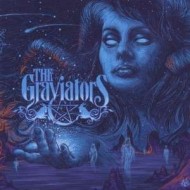
Album Review: The Graviators – Evil Deeds (Napalm Records)

Sweden’s trickle of 70′s revivalists is rapidily becoming a flood, as following fast in the footsteps of bands like Witchcraft, Graveyard and Burning Saviours come more worshippers like Horisont and, voilà, The Graviators. Described in their PR flyer as coming from “deep in the woods”, it is no surprise to hear their music sounding so angry, nay, feral; more-stripped down than several of their blues-loving forbears. If Graveyard were, say, the bleary-eyed bongheads of this expanding retro scene, then The Graviators would be the wide-awake tearaways spray-painting Pentagram and Black Sabbath symbols onto buildings.

Take the 2:43 of “Morning Star”. It’s a rip-roarin’ blazing rocker of a track, slicked with Johan Holm’s gnarly basslines, Martin Fairbanks’ thick, fuzz-covered riffing and Niklas Sjöberg’s scowling vocal that rises up and up, ending in a howling falsetto. At other times, during say “Feelin’ Low”, they seem impelled to explore the more Sabbathian realms of old school doom. They linger upon each note to turn the pace into a lollop. They reach a depth and breadth of undertow that begins to congeal around you leaving you mired (by the album’s end, naturally) in the Saint Vitus-worshipping sedentary plod that “The Infidel” becomes. It forms the quicksand that has secreted itself around your legs, slurping and burping all around.

Whilst there’s little new to be found in tracks like “A Different Moon” and “Häxagram”, there are other highlights to be found. Check out the form of “The Great Depression” with its rising-and-falling, walked riff and undercurrent of blues, and “Evil Deeds” which flits about whilst remaining leashed to it’s repeating chorus like a paranoid-afflicted, ADD-sufferer. Oh, and do keep an ear pinned back for the glorious little touches of Hammond organ and Wurlitzer piano (like those in the otherwise overwrought “Presence”) as supplied by Petrus Fredestad.

The one snag in the music (that irksome devil which threatens to stick his trident in their balloon) is Sjöberg’s insipid, reed-thin, chicken-squawk of a vocal which works in direct opposition to the fat licks that surround it. It is the equivalent of pitting a featherweight boxer up against three sumo wrestlers – he’s going to make a hell of a racket while the big boys trundle about after him, but that poor sod is eventually going home in a fucking ambulance. Put it this way, if you liked their debut album and haven’t grown weary of Sjöberg’s output by the close of this follow-up album, then you never will; in which case, I salute you.

Also online (with extras) @ Ave Noctum = http://www.avenoctum.com/2012/09/the-graviators-evil-deeds-napalm-records/

Friday, May 18, 2012

Album Review: Horisont – Second Assault

Somewhere along the 250km of roadside that connects the Swedish cities of Örebro and Gothenburg, they must have discovered some manic tear in the space-time continuum. It’s just one theory to make sense of the two cities’ rapidly-expanding retro scene. Combined, they are able to boast an array of hirsute bands like , , and – the subject of this review. Each of those are successfully selling their own individual recipes to the same flashback-inducing space-cake. The crazy, tie-dye-wearing fans that are mopping it up can be found swinging their flares like it’s the Seventies all over again.

’s biography describes their sound as being “heavily influenced by 1970s hard rock groups like , , and ”; indeed a mouthful, which their wonderfully self-deprecating Facebook page sums up for us as “New Wave Of Swedish Old Man’s Rock”.

As you delve through Second Assault, their sophomore album, you’ll certainly pick up plenty of the aforementioned influences as well as some that they don’t acknowledge. On the magnificent “Crusaders Of Death” you’ll get a big hit of laid-back blues, echoing the shuffle of bands like and , whilst the very first spin of the opener “Time Warrior”, had me jumping to the conclusion that they’d merely reworked ’s “Speed King”. Most certainly, the band’s mark is branded deep onto its surface.

With so many different influences running side by side, the songwriting is a bit of a rocky road. There are clearly some tracks that hit you harder than others. The hearty groove on “Watch Them Die” grabs you by the nuts, but the title-track is a little too dull and the chaotic structure of “Spirit” merely leaves you a bit dazed and confused. At different moments my nostrils burned with pungent whiffs of ’s prog, the sheer power that lurks within and even some hints of early- thrown in for good measure.

Axel Söderberg’s vocals are naggingly high-pitched and urgent and take some getting used to. The production keeps them crisp and crunchy so that they stand shoulder to shoulder with the scuffed, pitching riffs and tight, wild leads of guitarists Charlie Van Loo and Kristofer Möller. Sadly, it’s partly this abrasive clarity of sound that ends up being the album’s Achilles heel. The tracks stab at you like insect stings, each taking their influence from a different source.

The multi-directional approach, with the guitar tone changing with each track, means there isn’t a stylistic grab that binds them all together (take the muffled connective padding that all ’s tracks seem to tote, as an example of a single-minded style that achieves this), so you’ll find it tough to attach yourself to the whole caboodle. There’s also the fact that the rhythm section is intermittently relegated in the mix by the howling vocal and strings. I, for one, certainly found myself preferring the softer, buzzed-out tracks where the waves of lead abate and the bass and drums pop back to the surface in the way that those little colored buoys do when the ocean becomes subdued.

It’s funny. There is one particular American retro band they remind me of very much and that’s ; another band who suffer from trying to take a little too much from everyone else to throw into the pot without offering enough of themselves. I expected to dig Second Assault a lot more than I did which, despite my misgivings, is by no means a bad album with one or two sweet, rumbling cruisers and incisive cuts but, sadly, ’s bigger picture is a far blander prospect than the emotion-soaked class displayed by some of their rivals.

Also online @ The NewReview (with samples) =  http://thenewreview.net/reviews/horisont-second-assault

Monday, April 18, 2011

Album Review: Graveyard - Hisingen Blues

Looking back through their history it’s not too difficult to find how ’s roots are buried with , the same Swedish doom/stoner band that emerged from. While the latter formed in 2000, it wasn’t until 2006, and a failed project, that the remainder of the group finally came up with a formula that they all truly believed in. Two years later they had released their debut self-titled album and the few who were lucky enough to hear its sultry blues affectations began telling their friends. Now look at ‘em. A Nuclear Blast band (as they have aptly pointed out “a label that’s founded by old school tape traders”) seemingly with the world at their feet.

So how then can a band generating so much interest, basically just be rehashing a music form we long-thought was dead. How can it be that this stone-cold groove of theirs, which a whole generation before us got down to, is suddenly so popular again? Because now it’s no longer so niche. Our heads have been slowly turned by a modern collection of retro-minded bands breathing new life into dusty lungs, reworking vintage riffs, tweaking knobs to recreate the muddy production of their forbears. just happen to be digging up more historical material than others, speeding along a path made that much wider by bands who’ve merely scratched the surface.

By recording Hisingen Blues completely on analog, the Swedes have been able to bring back to life that stripped-back, cotton-wool-muffled 70s vibe that their first album soaked itself so well in. You’ll hear in there the influence of bands like Zeppelin, , Joplin, Hendrix and Sabbath as well as connections to modern-day outfits like , , and and, to an extent, even elements of and .

Like with their debut, it’s easy to lock into the conducting force of lead singer Joakim Nilsson. He has such an impressive range that you’ll hear him swinging through the forest canopy, as he switches effortlessly into Led Zep mode, to deliver a Robert Plant-esque wailing for the pounding opener, “Ain’t Fit To Live Here”, before dipping down into the dense undergrowth, to burble around a heavy-lidded recreation of ’s Eric Clapton for the supremely laconic “Uncomfortably Numb” – the title being a crystal clear nod to . That’s not forgetting, of course, “No Good, Mr. Holden” where he gives us all a real head-trip with a section of psychedelic reverse-track warbling – the conspiracy theorists among us will be loving it now they have something new to play with.

A warning: too long spent listening to the murky meanderings of “Longing” whilst staring at that glorious cover art and you’ll end up right inside that fearsome-looking swamp, floating on that gnarled, precarious log, along with the band. It has to be said that both the song and the artwork are incredibly evocative. Immediately, I get strong whiffs of Sergio Leone’s work from the former and, from the latter, snapshots of creepy flicks like The Deerhunter or Predator. The artist Ulf Lundén apparently created his effect by taking photos of the band up against a green screen. They reveal that a couple of weeks later, he showed them what he had done – “We were astonished by his work, a perfectionist indeed; rich with details, swamp/jungle feeling, weirdness and a lurking evil feel to it.”

Moving on, there are hints of and that bulldozing rhythm of theirs on “Buying Truth (Tack Och Förlåt)” whilst “RSS” will get you fervently nodding along with it’s gentle criss-crossing of and ’s swinging blues. Here, the dense layering of the sludge-spattered guitars – pinpoint accurate; the resounding rumble of the drums – wonderfully mesmeric. The ultimate nostalgia trip, though, is delivered with “The Siren” which wears its flowers, flares and giant collar with nothing but pride – you’ll either find yourself drifting into another dimension of bliss, or doubling-up in fits of laughter. Either way, it’ll floor you. What we have here is music you can seriously grow to love; a solid body of work that is guaranteed to remind you of your father’s record collection like no other band can – and now I’ve suddenly led out that hulking pink elephant from the corner of the room, it’s up to you whether you choose to acknowledge that as fact or not.

Also online @ The New Review = http://thenewreview.net/reviews/graveyard-hisingen-blues

Thursday, January 1, 2009

Album Review: Graveyard - Graveyard

Graveyard, the perfect Father’s Day gift!

With an insane pattern of dragons and horned beasts within a kind-of drugged-out comic version of Da Vinci‘s ‘The Last Supper’ it’s difficult to know what to expect from just the cover art. Upon playing what’s within though it’s immediately apparent that Graveyard have spent way too long immersed in the psychedelic rock of the Seventies. The blues-folk sensibilities of Cream do battle with the harder edge of Black Sabbath whilst a Gong injection of space rock are the source for all on offer here.

Lead singer Joakim Nilsson’s vocals take surprising shifts with an awesomely impressive range. They sashay from Chris Cornell’s yelped cries on ‘Lost In Confusion’ to Eric Clapton’s lazy vocal on ‘Blue Soul’. With lashings of hushed bass and warbling, bluesy guitars and rhythmic drums Graveyard plant us firmly back in time. Memories of my childhood burst into view; of my father’s record collection and his particular affection for that era. If you took Cream’s ‘Strange Brew’ and placed it in the middle of this album you simply would not notice.

Hell, how do you criticise something that’s been done so well but is so lacking in imagination? Tell you what, if you’re my Dad and you’re longing for another album to add to your collection, then go out and buy this. You’ll love it for many, many years until the next time all this comes around again.