Reviews Coming Soon

Album Review: TBA
Showing posts with label post-metal. Show all posts

Friday, December 18, 2015

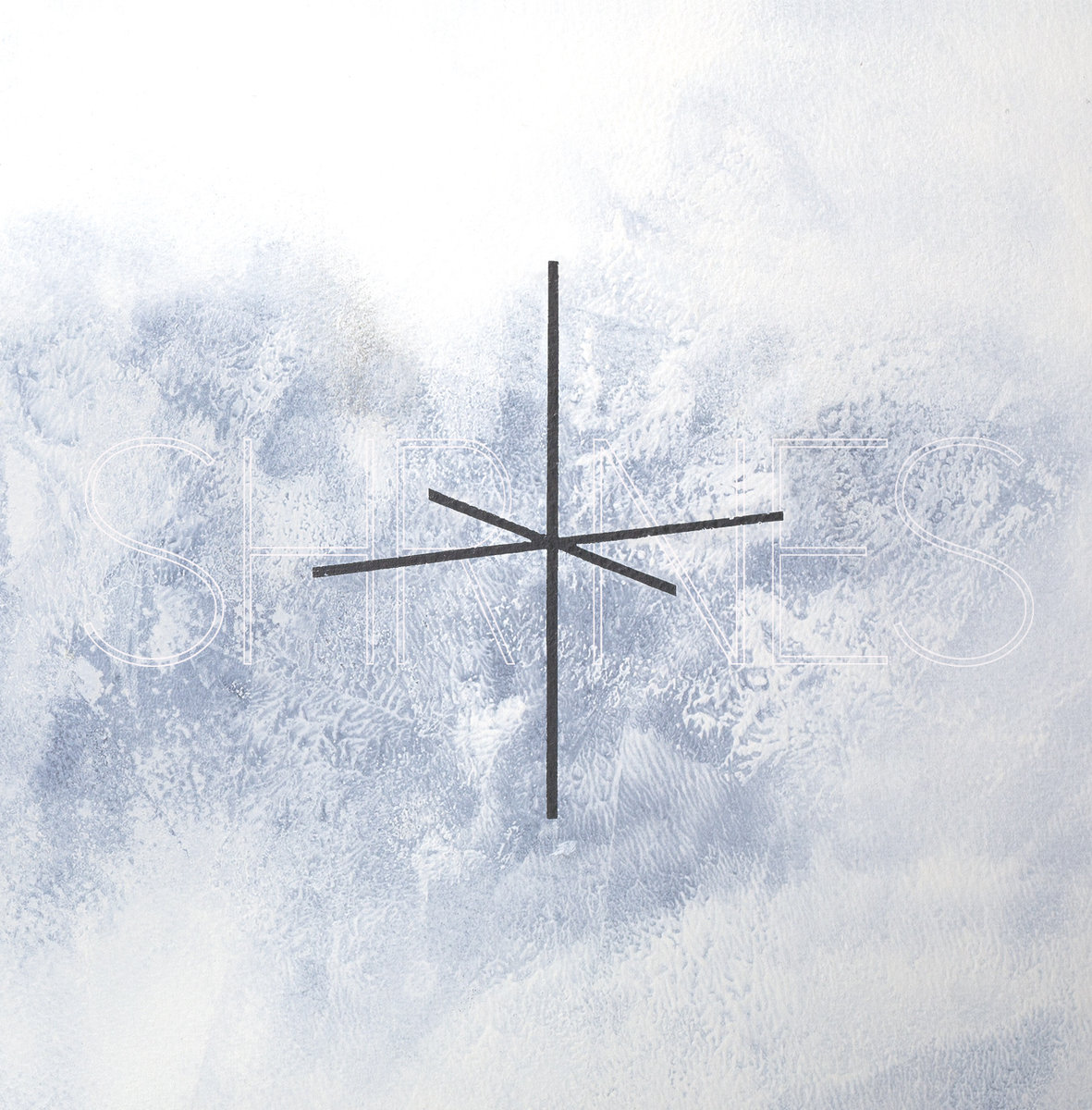
Album Review: Shrines – Shrines

Blackened death with hints of post-metal, proto-punk, and occultism, London’s Shrines are nothing if not inventive. Their combination of emotion and rhythm paints a series of visceral sounds splattered with bright phrasing. Raw and uncompromising it reeks of their lust, self-loathing and comes loaded with the explosive aggression of their inner punk.

The first run-through of this experimental debut will have you scratching your head whilst marvelling at their adaptability. Allow the collision of soft melodics and brutalistic rhythms to wash over you and you’ll start to feel the dark concept begin to snag your mind. You’ll suddenly feel like the essential cog in their machine; the key to connecting the dots.

From the all-consuming introduction of rattling double-kick and ritualistic chanting that encompasses “Ariadne’s Thread” through to the otherwordly moaning and jagged rise-and-fall blitzkrieg that forms “Truth”, this debut album is one wild rollercoaster ride of genre-crossing that pitches and tosses you along whilst sneaking attacks from every conceivable angle. The jagged rhythms, slo-mo chugs and exploding cosmic experimentalism of tracks like “The Drowned” and “Eternal Return” feel like some bizarre Vreid / Wolves In The Throne Room / Mastodon musical collision.

In stark contrast, the majestic 6-minute centre-piece “Of The Wolf” is the key to the piece. Working like a finger to the lips it is dramatic, incisive and other-worldly. Inevitably it is the key that opens the door into understanding the band and the album. Without it the the thing wouldn’t have a mooring.
If drummer Daniel Blackmore is the tormenting villain of the piece then vocalist Sam Loynes (Voices, ex-Ackercocke) is equally as divisve. He switches between smooth melodics, antagonistic roars and pig squeals with apparent ease. Check out “Multitude Of Sin” for his full range – it is one track that really has fun bending genre boundaries. Staid, dyed-in-the wool, anodyne? Shrines are not.

It does feel slightly dissolute as a complete work and tends to ties itself in knots when simplicity is called for. However, when the backline tightens up, it provides the perfect canvas for the musical theatrics and vocal gymnastics to really make an impression.

Listen here: https://apocalypticwitchcraft.bandcamp.com/album/shrines

Also online @ Ave Noctum = http://www.avenoctum.com/2015/11/shrines-shrines-apocalyptic-witchcraft/

Friday, December 4, 2015

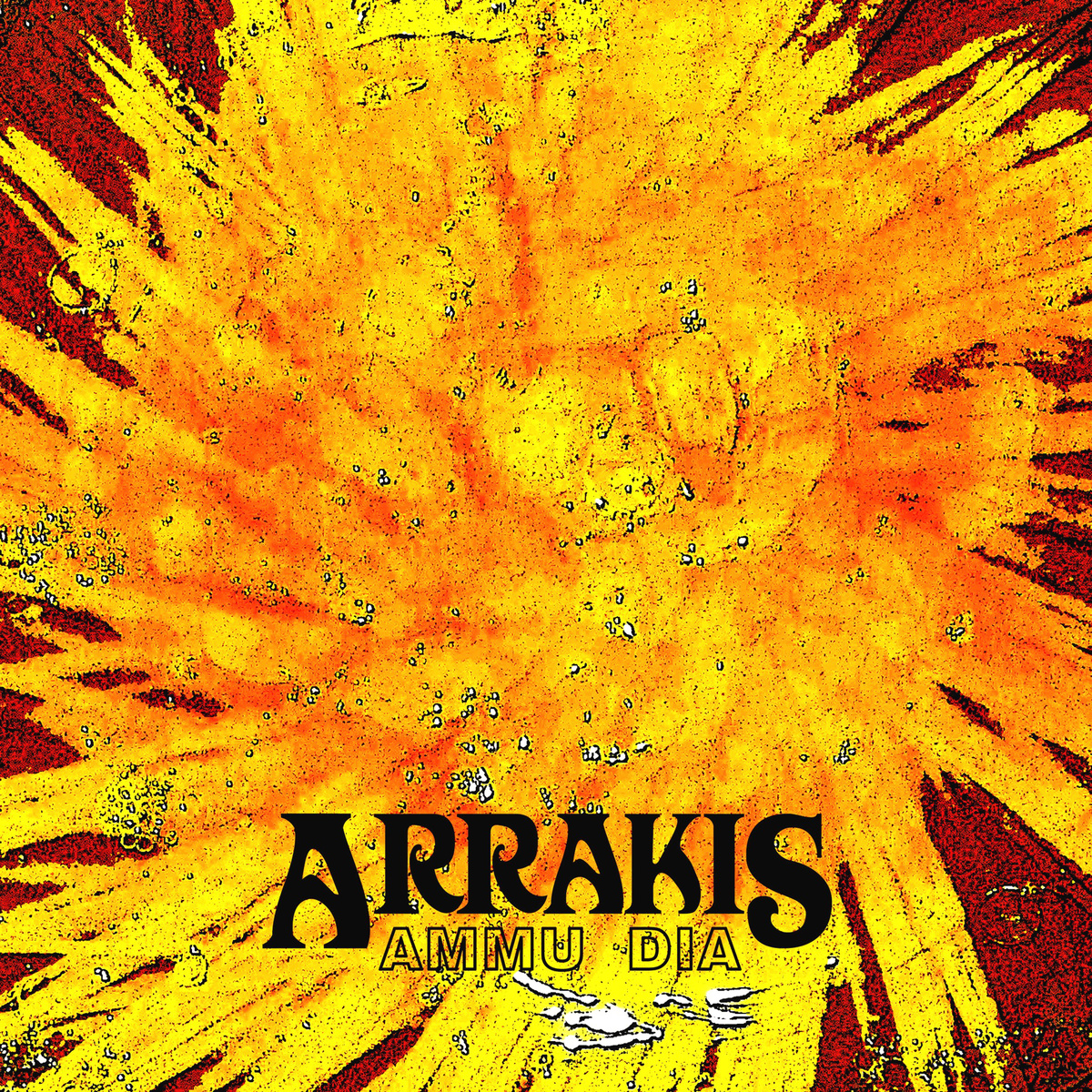
Album Review: Arrakis – Ammu Dia

Instrumental metal isn’t necessarily everyone’s cup of tea but it’s most certainly a genre that lends itself to emotional abandonment. And with post-metal burgeoning, it seems everyone’s at it these days. Another for the melting pot, Greek three-piece Arrakis formed late in 2012 with the intention of creating the ultimate stoner experience. None of these messy lyricisms for them, just pure, pounding rhythms, heaps of distortion and cyclical riffs into which the listener can blithely stagger and drop out.

Recorded live in the studio, Ammu Dia shows promise but lacks punch. Roughly produced, its consequently loaded with honesty and raw power, yet is somewhat imbalanced and has plenty of niggling inaccuracies. Thematically lacking also, the album relies all too often on mere stringwork to discover the heart and soul of the tracks, rather than by using layering and soundscaping to dig into the emotional bedrock. Bands like Russian Circles or Red Sparowes are masters of both, whilst Arrakis attempt to fuel a different fire. They are more about the riff and the head-down groove. Only the final few tracks, and in particular, both “Noema” and the 12 paper-thin minutes of “Diplomacy?” even attempt to draw a little introspection from the listener.

With just the single lead guitar forging ahead to mingle with the battering kit and gutsy bass there’s little room for string interplay and, as a consequence, the big bloated monsters of one-dimensional “Audium” and the anomalous “Aztec” create nothing but a swathe of flat noise, losing what little craftwork there is in the muddy production and heaving dissonance. One recognisable touchstone lurks as “Oppose” tips its hat to the dark patterning and simplistic doom of both St. Vitus and Black Sabbath.

As a jam in a live setting with their chords blasting through chests, Arrakis have the tuneage to really make bonces bounce, but with so little to offer in this crudely-produced recorded format they are unfortunately just more of a racket.


Also online @ Ave Noctum = http://www.avenoctum.com/2015/10/arrakis-ammu-dia-sr/

Thursday, August 6, 2015

EP Review: The Bridesmaid – Grayson

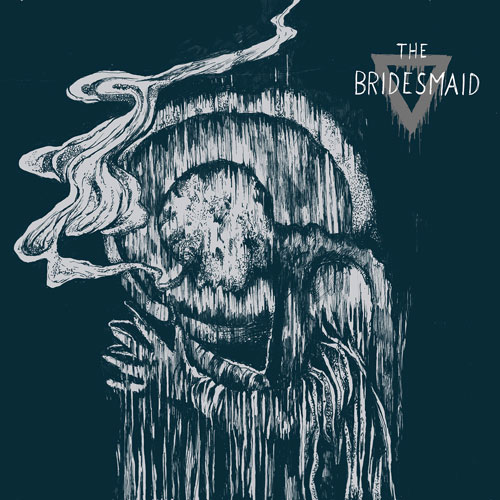
Someone wiser than me once said “You can’t judge a book by its cover”. Ignoring such wise council, I find myself pre-judging the latest disc to land on my disc. Robert Høyem, who has also created art for bands like Sahg, Heksed and Kampfar, has conjured a really beautiful cover to accompany this EP from London-based instrumentalists The Bridesmaid. Picturing a religious figure lost deep in prayer it glows with an eerie presence. Mimicking the effect of woodcut art, his subject matter is all very suggestive of something spiritually ominous, possibly with black metal overtones lurking within and, if not that, then certainly music with an extreme, penetrative construct. The reality is a propulsive sound that, at times, dips its toes into emotionally soothing waters.

The track-titles suggest connections to the names of explorers of continents, rivers and even outer space. The tracks, however, struggle to marry up to my hypothetical concept (try the We Lost The Sea’s deeply-moving “A Gallant Gentleman” if you like the idea and require closure) so I realise I must stop. Diving back into Grayson then with an open mind then… Opener “Oates” crackles into life and slowly builds drawing on warm glossy tones, much like those that colour Skyharbor’s latest single “Evolution”, before releasing into “Ives” which heads deeper into the darker, choppier waters of other instrumental post-rockers like Russian Circles and Pelican. Here the yawning, melancholic backdrop stands in contrast to the driven groove which never quite allows it to get away or develop organically.

Happily, “Aldrin” does offer some evolving panic and heavy action before releasing into a sweet, repeating series of keyed strokes. Only here does it feel like any instrumental lead role is being taken to replace the absence of vocal colouring. The pattern of riffs visit several touch points and eloquently guide the listener along through a strong sequence of shoegaze and post-metal. “Ballack” follows suit in grinding out a darker path without ever quite finding its voice. And therein lies the problem with Grayson as a whole. It doesn’t engage or challenge the listener beyond those initial bursts.

Of course, I understand now why I felt a compulsion to create meaning within. Unguided, experiencing this EP felt like walking into a stranger’s room full of strange objects and even now, after the tenth play, it feels like a record without a mooring. It’s the lack of a lead element that has cast it adrift. Perhaps their future works will feature enough running time to invite true introspection and perhaps then a connection to the contents will follow more naturally.


Also online @ Ave Noctum = http://www.avenoctum.com/2015/07/the-bridesmaid-grayson-sr/

Friday, May 22, 2015

Album Review: Secrets of the Sky – Pathway

With Secrets Of The Sky’s sophomore effort they really have thrown caution to the wind, tweaking their delivery and content to fully realise an album with one continuous, free-flowing storyline. It picks up from the very point where their scintillating debut, To Sail Black Waters, left us. Thus, after the rigours of an ocean-bound journey, we find ourselves tramping from the shore along the Pathway which leads down into echoing caverns where cackling witches lie in wait to torture and burn the emotions from us.

Thus, with something akin to the storytelling of Agalloch, Anathema or Alcest whilst drunk on Sabbathian doom and Opethian melancholy, the Californian quintet unveil an opus with cold, bleak beginnings leading to later forays into their harder, darker material.

Now, 13 tracks for a band like SOTS would indicate a complete change of tack. It is with some relief, then, that once you’ve got past the superb concept of having seven short, tension-building, feeder sound recordings then you’re left with a mere six full-lengths to pore over. Yes, it’s a gimmick to separate one type from the other but at least they don’t hide them behind complex titles, opting for simple Roman numeral formatting instead.

Following the introductory crashing of waves upon a shoreline (which also neatly bookends the album), they serve up “Three Swords” and our first taste of Garett Gazay’s clean vocal, which rises from amidst a swathe of minor keys, starting at a whisper, continuing through to strident song and finally into his more recognisable blackened shriek and roar. Initially the light, melancholic tone can make the clean vocal feel tentative, weak and, dare it be said, tuneless and at times overtly preachy. It’s hard to ignore the way they baby-step you into the album with dull, cyclical phrases such as “lying on a river” (from “Three Swords”), or “love this [life]” and “I don’t care anymore” (from “Another Light”) but they are balanced by the simple joys provided by the shrewd folk metal crunch of “Angels In Vine” and the brilliantly dark split-delivery of “Garden Of Prayers”, with the latter-half subtly hinting at the enigmatic delivery of Palms’ Chino Moreno.

Echoing footsteps upon a stone path, via the obstacles of trickling water, inhuman chuntering, industrial clanking and mantra chanting, have somehow led us inevitably to a roaring fire and the gloriously-consuming, black-edged “Fosforos”. It’s the signal for all-hell to let loose and the change of pace and instant freedom that comes with it is palpable. The chugs become more fervent and the screech and roars unhinged as the flames lick around our feet. Then, with a final flourish they power home their masterpiece, “Eternal Wolves”, which effortlessly combines the album’s constituent parts to create a single, unforgettable microcosm that positively glows from within with sweeping builds, chiming threads and poisonous barbs right through to that final guillotine moment.

There’s no doubting the sonic shift from the threatening, gritty malice of their debut to something more subtle, mournful and introspective. In its final moments, the picture is revealed in glorious monochrome. There are also definite bonus points here for ignoring the usual charade of tracklisting the heavier material up front, and thereby adhering to the ‘journey’ and the gradual unveiling of the concept. Consequently, the album flows beautifully through all of its rises and falls. Sure, it isn’t without its weaknesses, but it’s a Pathway I’d heartily recommend you walk.


Also online @ Ave Noctum = http://www.avenoctum.com/2015/05/secrets-of-the-sky-pathway-metal-blade/

Tuesday, April 7, 2015

Album Review: Oceanwake – Sunless

Oceanwake are Luvia, Finland’s finest and purport to play “arctic experimental metal”. Sunless, their follow-up to debut Kingdom, proves this to be an intriguing amalgamation of Katatonia’s black doom, Enslaved’s dark heart and ISIS’ brooding post-metal.

From the off, there is an assault of haranguing aggression that very quickly collapses into extended lighter passages of soft, mournful melody. This heavy-soft approach is supported by atmospheric, echoing vocals that segue from a deep, barrel-chested roar into melodic, mournful wails. Both styles are presumably attempts to lock into the crush-to-croon vocal gymnastics of ISIS’ Aaron Turner and Bryant Clifford Meyer and both styles tickle the interest without wholly fulfilling such an imposing brief.

Undoubtedly, the band intend to live or die by “The Lay Of The Coming Storm” because, at 15 minutes and so lethargically paced, it’s quite a ball and chain to throw at the listener off the bat. Lurking beneath all these bleak, harmonic minors the album’s odd construction continues to drop drum parts and underscore the weightier passages with shimmering melodics.

The band do hit their stride as they grow into “Parhelion” and “Avanturine”. The former provides a Machine exhilaratingly crushing finish of growled lyrics, “All we are is dust / Scattered to the ocean”, and the latter provides a shot in the arm with a classy sequence of powerful riffing.

Having undergone a 13-month construction process from conception to post-production, with the band recording at the wonderfully named Chamber of Isolation & the JonneMusic Studio, all whilst under the watchful eye of Korpikaani frontman Jonne Järvelä, it is something of a surprise to find weaknesses in the production and frailities in the album’s sense of direction, pacing and flow.

This undemanding album does need its own space to shine but it still suffers from too many disparate structures and just not enough invention. Whilst their peers explore the extreme depths of tone and texture, Oceanwake carry their listener far more than they engage them. Undoubtedly, Sunless is a solid album but, taken at face value, you’d expect “arctic experimental metal” to chill you to your core.

Also online @ Ave Noctum = http://www.avenoctum.com/2015/03/oceanwake-sunless-vicisolum/

Friday, March 6, 2015

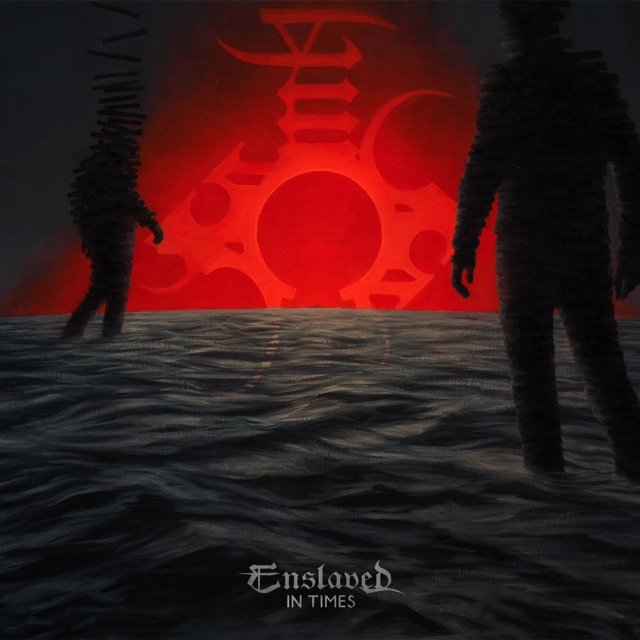
Album Review: Enslaved - In Times

When it comes to product, the genre-hopping beast that is Enslaved rarely fail to deliver on quality. Over the years, in spite of their evolution from Norwegian extreme metal to blackened progressive rock, they have produced album after album rammed full of jaw-dropping music. In Times will be their 13th studio long-player but this time they have to cope with the effect of following their masterpiece, RIITIIR. Can they live up to the inevitable expectation?

Interestingly, nods to their vitriolic metal roots abound as do the references to Norse legend but there is something else, something more malleable to the vagaries of modern life – or, as guitarist/composer Ivor Bjørnson puts it, “the songs are the resounds of grandiose altered states and mundane tiny micro-events”. Undoubtedly, the fat has been trimmed, making it a far more focused animal than RIITIIR. It is more energetic, more aggressive and gets in and out faster. Although there are plenty of heavy beats employed, making this a drive-dominant album, it is still deeply-layered but less stylised.

Diving in, we get the dark roars and menacing anguish of “Thuriasz Dreaming”. Bursting out of the progressions come quirky, moreish repeater riffs and vocal licks. The incredible “Building With Fire” provides something a little warmer and feels even sleeker with its fast rhythm gifting it a strong battle metal quality. There are chugging gallops, piston-like double kicks and driving, rock structures. Like a wheel, the hub of the chorus with its hooked lick feeds the spokes that inch their way down exploratory passages before returning.

Further in, there are oblique cuts and segues in rhythm, tone and structure and at times you have to check to see if the track hasn’t skipped. Underneath and meshing the tracks together there are additional connective sounds which tend towards either industrial, reverential or organic. To achieve them they even went so far as to set up a mobile recording studio deep in the Norwegian woods of Bergen. Keep an ear out for the sounds of metal being worked by a crackling forge.

The ominous rumbling and scowling vocal of “One Thousand Years Of Rain” feeds into complementary clean harmonies that pick their way around the ominous lyric “their Winter is closing in”. From chanting Viking anthems we are presented with the startlingly bright and enchanting melody of “Nauthir Bleeding” with a mid-section that leaves you standing absolutely miles from where you came in. Time and again, Enslaved achieve this whilst keeping an impeccable sense of flow. The title-track offers up their division of vocal styling as verses are scowled at you, leaving the soft, rounded harmonies to pick up the chorus. There’s full use of minor keys and a crushing example of pinged top-end bass. Closing the album, the heavily-layered majesty of “Daylight” comes with choral builds and strong echoes of Devin Townsend’s epic structuring, tones and textures.

With In Times, it’s easy to imagine the total freedom that the band exercise when it comes to songwriting. It is this unrestricted vision coupled with an enviable ability to invent and explore that has made their music so affecting. Some of you may conclude that this album represents a step forward or backward from RIITIIR, but most will feel it is their prerequisite step to the side. Yes, it may be more of a grower album, but it bears the potential to be yet another Enslaved classic.


Also online @ Ave Noctum = http://www.avenoctum.com/2015/03/enslaved-in-times-nuclear-blast/

Friday, September 12, 2014

Album Review: Steny Lda – Beloe Bezmolvie

The infinite joys of throwing Russian track titles at Google Translate and watching it explode is tempered somewhat by the bleak, monosyllables that emerge from it. Lumps of wording like “Stern Wind”, “Ice Storm, Ball Above Earth”, “In Black Sun Rays” and “Endless Snowy Expanses, Illuminated Radiance, Eternally Cold Stars” still resonate despite their cumbersome quality.

It’s no surprise then to discover that the PR blurb professes this to be a thematic work exploring “the power of cold, its northern and Antarctic nature, and the grandeur of eternal winter”. That thought is drilled home by the album inlay of snapshots of sailors fighting raging seas and glacial locations. Obviously, it’s something of a disappointment then to discover the music feeling so luke-warm. The seemingly endless, subtly shifting synth backdrops are austere in tone but the string work is rich, plump and vibrant and the drums patter along at an untaxing, gentile pace.

Swimming in the same post-metal waters as bands like Russian Circles, Isis and Red Sparowes, Beloe Bezmolvie (or White Silence) opens up with “Fordevind”, a wave-battering crush that confusingly shares its space with calm waters and soft surf. There’s also something enigmatically graceful about the 11-minute “Ledjanoj Shtrom…”. From an opening, almost balletic, emotive riff to the 3-minute directionless, warbled ending the whole ensemble mimics the piece-by-piece joyful storytelling of Russian Circles when their theme demands that they be venturing into the dark, forbidding spaces of Cult Of Luna.
 
Wonderfully, just as you think the album has run adrift, the wreck breaks on these twin glacial outcrops – the blunt death metal of “Svincovo-Serye Oblaka…” and the doomy “Drejfujushhie V Tumane Ajsbergi…” Here, the beast finally roars and beneath all the clamouring, the crafty score finally reveals its blackened soul.

It’s intriguing that Sterny Lda seem to have no problem with emotion when it comes to dishing out the hard and fast tracks – “Beskrajnie Snezhyne…” and “Soprovtilenie…” are both songs that successfully kick up a storm. However, when they need to apply a more delicate touch to extract a different emotion they do struggle – You’d hope that conveying the psychological torment of the bleak and the endless wastelands of the Artic might be something to get your teeth into, yet “Holod Zemli” is frustratingly a somewhat toneless, sluggish and ultimately hollow attempt when compared alongside that of others.

Some good, some bad and something of a sheep in wolf’s clothing then, but ignore the theme, look deeper and you’ll still discover plenty to get your teeth into.

Also online @ Ave Noctum = http://www.avenoctum.com/2014/09/steny-lda-beloe-bezmolvie-slowburn/

Wednesday, August 13, 2014

EP Review: Raum Kingdom – Raum Kingdom

This half-hour dip into the doom-soaked, post-metal world of Irish upstarts Raum Kingdom provides us with a brief glimpse of their combined passions for the music of Tool and Cult Of Luna. Much of the EP here is reliant on pounding out thick walls of dissonance and roaring vocal but this down-tuned, crushing doom comes infused with some interesting progressive anomalies.

Setting their stall out early with a couple of simply-constructed, similarly-toned, head-bobbers (one rampant, one more sedentary) is nothing new to fans of this kind of forlorn doom-mongering but throwing a third bitch-slap in the same approximate key just to show off a new trick is rather over-egging the pudding. Created to impose their love of a good apoplectic rant, the anti-”I have a dream…” speech that constitutes “Cross Reference” rather renders the preceding track (the comparatively dull, unoriginal “Barren Objects”) somewhat redundant.

It’s also a bit of a shame that when the vocals drop below a roar they do begin to get lost in the mix; the whole becoming weak and undefined. You have to completely submerge yourself in this music to locate much of it, so a decent rip and sound system will be required here. Most certainly it is worth the effort to catch the potential housed inside the monstrous bruisers “Wounds” and “These Open Arms”. Here, the impassioned barks of “These wounds are all for you” and “Where… are… you?” demand repetition – they could be live gems those. Correspondingly, the final track, “This Sullen Hope”, where the vocal lifts to mid-range and rises to create sweet melody, is just glorious. A fair comparison would be to those abundantly volatile, heart-breaking sounds being tossed around by loveable Belgian game-changers Steak Number Eight at the moment – I can think of no finer complement to give than that.

Several bits to rave about, a few bits to keep quiet about then. Any future album will sure make for an interesting listen.

Also online @ Ave Noctum = http://www.avenoctum.com/2014/08/raum-kingdom-st-sr/

Monday, April 28, 2014

Album Review: Pet Slimmers Of The Year – Fragments Of Uniforms

What’s in a name? Having formed in 2008 you’d imagine that, had this Peterborough post-rock unit called themselves Fluvial or Miasma Theory [insert your own evocative sobriquet here], you’d imagine that they’d have been gracing a major label a lot sooner than January of this year. Instead, having consulted Schott’s Almanac “annual awards” section, they plumped for the odd, yet alerting moniker of Pet Slimmers Of The Year. It may not seem a fit match for their music, but it always guarantees a chuckle.

Formed from the ashes of prog-metallers A Thousand Fires, they have taken their time writing, touring and building contacts and now, with a little help from their producer, Devil Sold His Soul’s Jonny Renshaw, they feel finally ready to drop this immense debut album on us. It’s a work that combines the abundant colours and rich vastness of Pelican’s layering and the melancholic tones and industrial fervour of Russian Circles. This of course is all mere groundwork emotion when compared to the way that the music both leaps out of the speakers at you and yet also slips so deftly into your subconscious. Honestly, the album sounds more like finding the middle ground between the twin majesties of Isis and Junius. Time and again you’ll hear these behemoths emerging from the gloom like two ships drifting inexorably towards each other through dense fog.

Following the gentle echoing groundwork laid by “Arterias”, they ramp up the layering, establish a solid groove and throw in some Russian Circles-esque skiddy strings for “Gathering Half The Deep And Full Of Voices”. Next up, they establish their range. No sooner has “Tides” taken us floating up into the ether and offered a featherlight touch none to dissimilar to that exhausted by Devin’s Ghost, then they drop us down into the black, boiling ocean of “Mare Imbrium”. It is here amongst the crush of the waves where they find their artistic zenith. As menacing as the mid-section of The Ocean’s Pelagial, as visceral as Isis’ Wavering Radiant, the surges of power and dark purpose take us crashing through every trough and every peak.

As a mainly instrumental band, they do use vocals sparingly (on tracks 1, 5 and 8) and merely as a soft, emotion-soaked extra instrument and one can’t help but feel slight disappointment at a trick missed. Most certainly, you can only imagine the extra dimension that an Aaron Harris-type earth-splitting roar could add to the mix. Instead, they err on the side of shuffling their way through the songs which offers the worrying potential of finding themselves lost within the absolute swathe of post-everything miserabilists out there. “Days Since I Disappeared”, for instance, wallows too long in its own melancholia and comes within a raw scream from taking them down that well-traveled road. Of course, they seem quite capable of saving themselves from this potent threat by stirring in songs like “Churning Of The Sea Of Milk” (clearly the bastard son of Isis’ “Not In Rivers, But In Drops”) and “La Tormenta” (another riotous stormer with a strong early grip and a broken, edgy quality).

Although the flow of the album is exceptional, Pet Slimmers do need to find more variation from somewhere. They seem at their most comfortable when they are offering up pounding gristle to chew upon. It’s only in these heaviest moments that their music seems to come alive. In the long run though, this classy trio have still managed to produce something exciting and beguiling. Fragments Of Uniforms is a magnificent, mouthwatering long-player and I for one will be desperate to see how this all translates to the live arena.

Also online @ Ave Noctum = http://www.avenoctum.com/2014/04/pet-slimmers-of-the-year-fragments-of-uniforms-candlelight/

Wednesday, October 30, 2013

Album Review: Pelican – Forever Becoming

“In a chronically leaking boat, energy devoted to changing vessels is more productive than energy devoted to patching leaks” – Warren Buffett.

It’s certainly a nifty quote that seems to sum up how instrumental post-rockers Pelican have handled the loss of guitarist Laurent Schroeder-Lebec. Rather than lament his undoubted songwriting talent, they have decided to sink their teeth into a whole new sphere of attack and, aided by the faultless integration of Dallas Thomas and his love for the big, brassy riff, they have dragged their sound out of the doldrums and into the kind of powerful groove-mongering that ignited fellow Chicagoans Russian Circles‘ career.


Forever Becoming, Pelican’s fifth full-length, is an album full of surprises. It seems that, somewhere along the line, expectations of it pre-release had fallen and, judging by the flurry of mediocre reviews that have been rushed out so far, it has been sorely underestimated post-release. There’s no doubting that perceptions of the band will have changed in line with their new artistic direction, but considering the album has to be listened to as a whole to be fully appreciated and will probably perform most admirably in the live arena, it seems a bit too early to be nailing it to a cross.

Oddly, their previous efforts have all featured strongly in their recorded formats, but have never shaken souls when performed. The reason for this may be that each one’s lighter touches and deeper level of atmospheric layering can so often get lost in the sound-desk, the roof cavities or the ether. Combine that loss with their music’s expansive drift and their “heads down” approach to performance art and you can imagine the fleeting impression they make on the less ardent fan. That will all change now that Forever Becoming has dropped – its almighty bottom-end and relentless groove will snap necks and burst chests.

The tour-de-force, ‘Deny The Absolute’, is nothing less than a conveyor belt of riffs. One after another after another, the guitar patterns cycle and build, each welding itself to the track’s backbone – a combo of surprisingly uncomplicated drum thunder and an equally compelling bassline that grinds and fizzes throughout. Together this all creates a series of wall-to-wall grooves that will swallow everything in its path. ‘The Tundra’ sucks up a little piece of High On Fire‘s sludge-packing inferno and breathes back a bitter rancour that ditches itself into a swaggering rut that rumbles forth down a doom-ridden path into gritty feedback. ‘Immutable Dusk‘ flexes more stoner muscle pitching bass-loaded menace and winding aggression into a series of warmer tones that rapidly completes their reformation into a confident position of power.

What’s most impressive about all this is that they haven’t just sandblasted their former attack to achieve this razor-sharp edge. They have blended the new with everything that has made their albums so eloquent in the past, beefed up on the parts that needed bolstering, tightened their focus and produced an album that flows from track to track with a silken elegance. Gone are the zig-zag of emotions and the song-by-song paucity. No, you can simply lose yourself in the basal journey of Forever Becoming and emerge out the other side believing it to be one single thread. As an example, the eight-minute two-tiered multi-coloured wanderlust of ‘Thredony‘ clashes heads with ‘The Cliff’ which in turn touches base with the motivational bliss of ‘Vestiges‘ in such a way that you would hardly notice the dip between the threesome.

When they do back off, we get the album bookends. Polar opposites, opener ‘Terminal‘ offers a soft foray into the darkness, backed by a hefty heartbeat of falling tom strikes whilst the stunningly rich, glorious tapestry of closer ‘Perpetual Dawn’ provides wave after wave of warmth and euphoria to bathe in. They form the preface and appendix to the book that you simply can’t put down. Once you turn that page, absolute absorption in the rhythmic drive and mind-expanding layering is not an option. It’s the aural equivalent of having all your pleasure receptors firing off at once. They haven’t showed anything like this kind of combined dexterity, determined pacing and gut-deep fury before.

Enforced change can be such a difficult process, so the initial human reaction is to fear the unknown, to err on the side of caution. Pelican, however, have laughed in the face of such dithering and have grasped their opportunity with gusto, swapping their elegant sailing boat for a stonking great powerboat and, boy, ain’t it a beaut. With turbos like the one on this bad boy, they really are ready for lift off. Keep your eyes peeled for those end of year lists – judging by its sleek lines and almighty wake, Forever Becoming should feature strongly.

Also online @ Heavy Blog Is Heavy = http://www.heavyblogisheavy.com/2013/10/29/pelican-forever-becoming/

Saturday, October 19, 2013

Album Review: Ihsahn – Das Seelenbrechen

“It’s true, some wines improve with age. But only if the grapes were good in the first place.” Abigail van Buren’s quote is especially apt when applied to Ihsahn’s solo career. Having spent his youth blowing us away with metal giants Emperor, he has become ever more legendary since. His thirst for exploring the outer reaches of his beloved black arts has resulted in what is, arguably, his finest material – his A-trilogy, in particular, has resulted in him being equally lauded amongst lovers of the aggressive and more passive ends of the metal spectrum. With last year’s Eremita and now, Das Seelenbrechen, his latest album, it seems he has really been throwing caution to the wind so you’d better buckle up for this.

Translated as “the soul breaking”, the title refers to Nietzsche’s thoughts on the self-destructive nature of humanity, so it’s no surprise to find it continuing where his Nietzsche-inspired Eremita left off. What’s new here is the all-consuming darkness that he, in tandem with Leprous’ Tobias ØrAndersen, have managed to generate in Ihsahn’s Norwegian studio. What they have created is a series of sprawling, almost cinematic soundscapes that seem as organic as they are industrial. With all but the minimalist of jazzy overtones dropped and fearless songwriting employed we get a vast array of crepuscular tones that seem to drag you deeper and deeper into the pervasive shadows of the man’s bottomless imagination.

As a consequence, progression through the album isn’t as straight-forward, as on previous ones, with a real hotchpotch of ideas thrown at us. It is a zig-zagging journey that takes us from the vitriolic black death of “Regen” and “NaCl”, past the jarringly smooth trip-beat of “Pulse”, down the drum avalanches of the “Tacit” twins before we are finally dumped in the slow-moving lakes where “M” and “Sub-Ater” reside. Along the way we find ourselves experiencing his usual combination of scathing and hushed vocal, but here it is all threaded through a mixture of effects with battering drums and guitars and it is definitely not the unerringly cohesive experience that we may have been used to. Certainly, the doom-laden “M”, the noisome “Tacit 2″, the industrial wasteland of “See” and the disconcertingly unconnected build of “Rec” feel out of place here – like random, unfinished thoughts that cry out for more than just the weird loops and patterns they hang off.

There’s still plenty that does fit this abominable construction of Ihsahn’s and monsters like “Regen”, “NaCl”, “Sub-Alter” and even the panic-stricken rumble of “Tacit” will burrow in deep, blotting out the light, forcing introspection upon the voyeur. There’s so much here that feels like it could have burst forth from a future Opeth if they had stayed the path. This is them but taken to a whole new level of macabre.

Ever since the completion of After, it feels a little like Ihsahn has struggled to find a solid direction and Das Seelenbrechen, coming just a year after his last, certainly seems a trifle lost. His songwriting prowess cannot be doubted, so perhaps he has just rushed his thought processes this time. It’s a small error of judgement that you wouldn’t usually associate with a man of his experience. The wine may, indeed, be a little corked this time round but it doesn’t mean its vintage isn’t shining through.

Also online @ Ave Noctum = http://www.avenoctum.com/2013/10/ihsahn-das-seelenbrechen-candlelight/

Tuesday, October 1, 2013

Album Review: Secrets Of The Sky – To Sail Black Waters

Most debut albums tend to be rough-and-ready and recorded in a day by the lead singer’s dodgy Uncle Frank who happens to own a beat-up old eight-track. Well, perhaps not quite that punk, but they do usually veer towards being more of a “bish-bash-bosh” affair  – they certainly don’t usually take eight months to record and emerge with the kind of sprawling, cinematic layering that To Sail Black Waters features – three cheers for engineer / producer Juan Urteaga’s (Testament, Machine Head) patience and perseverance. But then everything about Secrets Of The Sky is unusual.

They hail from Oakland, California yet have been signed by Italian record label Kolony Records who have been specialising in “recruiting lost souls since 2008″ (their roster includes artists based in far-flung fields such as Australia, Andorra and Jordan). SOTS consist of six members, half of whom contribute with multiple instruments – their lead vocalist, for instance, also plays keyboards and violin. Most mind-boggling of all is the music itself which draws on a wide range of inspirations and still manages to intricately weave these genres together to create something truly fresh and exciting.

Best described as an atmospheric, doomy, subversively black, richly progressive and bollock-janglingly heavy metal band, they mostly meander across the exploratory black paths of Enslaved and Ihsahn but don’t seem afraid to thread unusual sonic touches that evoke the output of artists like Vangelis, Giorgio Moroder, Cult Of Luna, Isis, Opeth and Agalloch. The monstrously huge and intricately-layered production is ocean-deep and rich with the multi-part vocals proving the vital finishing touches. It’s a rare thing to find 5 different forms of vocal attack yet here Garett Gazay treats us to his room-shaking roar, a gravel-toned scathing, an emotion-tugging clean and a menacing whisper. The fifth comes completely out of the blue – a haunting crystalline chanting; an emotional clarion call that will draw tears.

Wading through we get an “Echo Beach”-riff and an oblique Machine Head-esque lick that both shake up the stormy wilderness of “Winter”. A crushing triple-guitar death rattle opens “Decline” but this soon shifts into a strong folky vocal sequence. Constantly shifting, it’s not long before we get a burst of something wholly more epic, almost Bladerunner-esque, as a proggy twin-synth set kicks in. Elsewhere, we get the hearty dark tones of “Sunrise”, a pitch black doom skewed by a switch-up into a softer shoegaze motif.

Star of the show is the 11-minute “Black Waters”. With a title like that how could you not expect to hear Opeth in this, yet here Secrets Of The Sky fearlessly dive into their subject matter of death with real abandon and without restriction. A whispered vocal over plinking minor chords gently pad their way into what turns out to be a dangerously-deep groove – necks will snap. This is the belly of the beast and it will grip you like a vice, carving you open for that heart-wrenching finish.

With surprises at every turn you’ll continually find yourself expecting this wildly original album to jar you by twisting the knife too much and yet these four songs, no more are needed, flow like a dream, drawing you further and further below the surface. It is a debut like no other and marks these Californians out as real forgotten heroes. They may have slipped through the major label net the first time but that won’t happen again now that this behemoth of a record is finally ready to drop.

Also online @ Ave Noctum = http://www.avenoctum.com/2013/10/secrets-of-the-sky-to-sail-black-waters-kolony-records/

Tuesday, May 7, 2013

Album Review: The Ocean - Pelagial

Written to be consumed and performed as one singular piece of music, Pelagial is a fascinating concept album that tells a tale of life in the big blue. Songwriter Robin Staps’ plan, to begin at the surface of the ocean and sink the listener steadily through the five pelagic depth zones, could have led to a simplistic 53-minute soundtrack going “glug, glug, glug”. However, unsurprisingly, he has quashed what could have been viewed as a gimmick by fully realising and integrating the notion, with individual tracks able to work both as standalone songs and also as part of the all-encompassing whole. As a consequence, this means drinking in the immensity of the ocean / The Ocean is not a task to be taken on lightly – repeated listens are essential to gauge just how deep this beast goes.

It is not by chance that you can sense the increasing depth, pressure and diminishing light as you progress through the album. “My original plan was to write a stepless musical progression, like a continuous colour blending from white to black”, says Staps, “but I soon realized that it could not be that linear.” The need for soundman Jens Bogren to create 288 separate audio tracks is proof alone of what a complex task this was to try and smoothly patch the entirety together. Consequently, there are plenty of overlapping glugs after all, as well as bubbles, babbles, sloshes and groans and the journey is not a direct path downwards.
 
The rippling wash of the introductory “Epipelagic” is dappled with light; emerging sounds that range from wind chimes to a distant oriental orchestra. A gentle movement into the mesopelagic and a bowed cello for “Into The Uncanny” drops away to finally reveal the waves of electrics. For a while, we swim through this and the bathyalpelagic zones; rocky, hard waters with fist-pumping anthems and catchy riffs. “Impasses” hits hardest with a strong undercurrent of post-metallic crush driving us deeper. Already, Loic Rossetti’s screams are raining down and the jaws are dropping at the manic tapping and rhythmic patterning.

A sudden drop-off into the black-edged death rattle of “Disequillibriated” is the first point where the oppressive crush becomes apparent as The Ocean raise their metal flag and rage without remorse. It is also the marker where the lineal process downwards also becomes fragmented. “Boundless Vasts” offers a fresher wider vantage point which “Signals Of Anxiety” leaps upon as an opportunity to introduce the perception of size and pressure. Our tiny sonic diving bell suddenly seems minute in these immense waters. The layering of the music is impressively thick here in the abyss with the echoing choruses taking the spotlight. There are washed-out melodics and lightness of tone to contend with here and these do contrast, jar even, when placed against a backdrop of bass-loaded bottom-end.

A depth marker further, the hadopelagic, serves as an oddly buoyant build into the finale and feels a little frivolous – these twinkling, disjointed precursors seem anomalous, almost rushed pieces, acting as little more than padding. The final depth gauge markers, demersal and benthic are, as expected, monstrous beasts. “Cognitive Dissonance” is full of sudden hammering, panic-stricken chugging and twin roars that squeeze and squeeze until “The Origin Of Our Wishes” slows heartbeats with a pounding, dissonant doom that claws at bodies; snatching lives. Sound the death knell. Davy Jones’ Locker has taken us.

It is perhaps true that this project could just have easily been flipped on its head and taken the listener on a steady rise to the surface. It certainly would have roused the listener from the off with a hefty opening salvo and also produced an uplifting finale. One would imagine that the band’s proggier side could have flourished a little more overtly than this version’s obvious propensity for overdosing on metallic power. Given time though, it is clear that this shoe fits and The Ocean most definitely stretch themselves to plug the gaps. The ride may not be the smoothest but, undeniably, this Pelagial is still a conceptual masterpiece with genius to be found in both its shifting, beguiling, expansive post-metal wash and in those thick, dark brushstrokes that produce such thunder throughout.

Also online @ Ave Noctum = http://www.avenoctum.com/2013/05/the-ocean-pelagial-metal-blade/

Tuesday, April 30, 2013

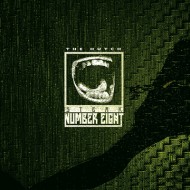
Album Review: Steak Number Eight – The Hutch

In 2007, when they had an average age of 15, Steak Number Eight were already winning band competitions. Four years later, still mostly teenagers, they released their first debut album, All Is Chaos, and watched the plaudits rain down upon them. It was always going to be this way that their 2013 sophomore effort was going to be their make-or-break album. Probably the name for their practice room or some hilarious Belgian in-joke (rather than a house for Mr. Bunny or Lonesome George), will The Hutch, this ma-hoo-sive 71 minute-long album (81 mins, if you buy the “bonus track-included” vinyl) be a hare or a tortoise?

Straight out of the traps, Sn8 tear lumps out of your ears with razor-sharp, angular attacks. First comes the battering squall of “Cryogenius”, then the hardcore-fuelled single “Black Eyed”. Combined, they form an ultra-violent Feed The Rhino / Converge / Poison The Well-esque alliance with screaming choruses and menacing links with plenty to offer the heart, yet little to offer the brain. However, no sooner has their tornado blown out, than out pops “Photonic”. Its complex tonal switch-up to something infinitely darker and quietly foreboding is utterly mesmeric. With a repeating line of “one of you is going to die” rattling around your skull, it plays on that classic horror-movie schtick of fear, worthlessness and false hope.

Here, the band have quickly settled down into what could best be described as a determined pacing. It is this sort of speed where they flick a switch and begin to pay mind to the smaller details. It is undoubtedly, what they do best – All Is Chaos proved that and things are no different here.

From this point forth, you’ll start hearing luminescent flourishes à la Torche, Isis-rich thundering and cherry-picked moments from the entire Baroness’ discography. There are slack-jawed, clean vocals, thick, rotational riffs and dark melodious washes to drown in. Constantly shifting, the band weave in new elements; layering up as they progress. The post-metal, Mastodonic meandering of the sublime “Pilgrimage Of A Black Heart” feeds the muscle of “Exile Of Our Marrow”. Before you know it, they’re piling malcontent upon disillusionment; sharpening the visceral ‘core edges for “The Shrine” and “Slumber”. These sudden, thrusting, sharp stabs finally relent to reveal a Tool-esque wasteland for the masterful “Ashore” and the brain flips once more.

How these young men can show such restraint for the entire 9:30 of “Tearwalker” is beyond me. It’s basically a one-key rolling maul of tones and textures; a track with unbelievable depth that might just literally floor you. If not, it will certainly glue you to the spot. It demands one of your greatest vacant, middle-distance stares. Are you prepared for that kind of intensity, because Steak Number Eight sure are? This is not only their “coming of age” album, it is a deal-maker, an organic masterpiece and, with a worldwide release pending, it should is going to propel them onto the biggest of stages.

Also online @ Ave Noctum = http://www.avenoctum.com/2013/04/steak-number-eight-the-hutch-indie-recordings/

Monday, April 22, 2013

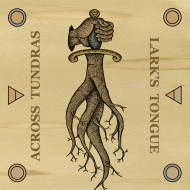
Album Review: Across Tundras/Lark’s Tongue – Split LP

All too often, partnerships on split records can often conflict creating as much disharmony as complementary noises. That’s not always a bad thing, as the range of contradicting, experimental connections inside can often portray an intriguing and more complete whole. In this instance, however, there is plenty of concord and, consequently, plenty of opportunity for further exploration. Combined, these two have even managed to play inside the pentagonal borders of what we, the press, might refer to as grunge, shoegaze, drone, post-metal and stoner.

This blissed-out middle-ground is first marked out by the wonderfully-titled Across Tundras, a trio hailing from Tennessee who Cavity Records have described as both “vintage psychedelia” and “panoramic country crush”. The track “Low Haunts”, propped up by an anarchic four-and-a-half minute warbling wash of pedal effects (rather like an orchestra clearing its throat) steps up with a lush, organic kind of Americana that warms the very cockles of your heart. If The Rolling Stones ate mushrooms and space-cake instead of snorting all that coke and speed, they’d have sounded pretty much like this. Hell they even say it themselves. Interesting, then, that the line “Like a rolling stone” pops up in “Crux To Bea” which throws more chugging groove into the mix enabling them to drift into grittier corners. Never static, they eventually tumble into an effusive style of stripped-back, heavy-lidded blues that echo artists like Dan Auberbach and Dead Confederate.

Completing the morphing progression, Illinois-dwelling Lark’s Tongue (their moniker clearly paying homage to King Crimson) head deeper into the cosmos to haul down a droning wall-of-sound backdrop à la Hawkind into which they weave a tapestry of lush melodies à la Slowdive. Haul on the volume for the book-ending chorus of “Follow Your Night” to fully appreciate the obliterating crush and then drop out for complete immersion as the LP’s highlight, “Aluminium”, kicks in. The vocal harmonies locked within are stunningly beautiful and meld serenely into the thunderous riffage that rains down upon the listener.

As a split four-tracker this may, on the face of it, seem like a frivolous purchase, but at 33 minutes it offers pretty good value for money. Honestly, you’d be hard-pressed to find another split as thematically-explorative, emotionally dense and gloriously satisfying as this one.

Now streaming @ Bandcamp = http://cavityrecords.bandcamp.com/album/across-tundras-larks-tongue-split

Also online @ Ave Noctum = http://www.avenoctum.com/2013/04/across-tundraslarks-tongue-split-lp-cavity-records/