Reviews Coming Soon

Album Review: TBA
Showing posts with label instrumental. Show all posts

Wednesday, October 12, 2016

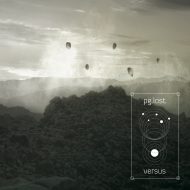
Album Review: pg.lost – Versus

Having previously written music with effect-saturated vocals, the Swedish quartet have gone for instrumental, more synth-driven pieces this time around, apparently due to Kristian Karlsson’s (bass, vocals) recent heavy touring schedule playing keys with Cult of Luna. Guitarist Gustav Almberg has commented that “I guess this has helped us to take the band into a bit of a new direction sound wise“.

Richly-layered, warm and emotive the album opens on the thumpingly heavy “Ikaros”. The synth fizzes, the drums pulse and the guitar fires off arpeggios to keep the whole piece drifting along. There’s short snatches of something akin to 80s computer games lurking in there too all leading to the maniacally crazed sandstorm finish.

Moving through the driving thrust and distorted bass of “Off The Beaten Path” we alight at the oblique Giorgio Moroder-esque synthetic wash, poppish dynamics and cinematic trickery of “Monolith”. Here, the music begins to stab and test the listener to create a force that unites the pacier groove of the kind displayed by Station-era Russian Circles with the dark tones and blackened crush of the sorely-missed ISIS.

It does become apparent as you dig deeper that the subtlety of this particular instrumental album often means the music slips into classic rhythmic shapes (four-four beats, elongated stretches without rise, fall or melody, etc.). In these moments, you’d usually find lyrics or instrumental solos. Here, pg.lost have resiliently left their music undeveloped and, yes, uncluttered as it is, each piece is given room to breathe. It’s certainly a matter of taste whether you buy into that styling though. I have to confess I crave a more developed, instantaneous instrumental sound but that’s just me.

Stretching 7 songs over a 53-minute runtime, the band certainly rely on the listener taking time out to appreciate the music. Those with short attention spans need not apply. It’s just too easy to freewheel past the gentler or more simplistic tracks like the title-track or “Deserter”.

Happily they do like a good rumble to finish up so you’ll probably be shaken awake for the stark, bristling ambience of “A Final Vision”. It’s a joy that is every bit the equal of the wonderful, naturalistic flow that If These Trees Could Talk seem to generate so effortlessly.

At the end of the day, despite its impressive dynamic range and lush sonics, it doesn’t really add a great deal of new ideas to this rapidly-expanding genre. Despite that, it’s still a thoroughly solid addition from a record label that is getting a habit for polishing rough diamonds.


Also online @ Ave Noctum = http://www.avenoctum.com/2016/10/pg-lost-versus-pelagic/

Friday, December 4, 2015

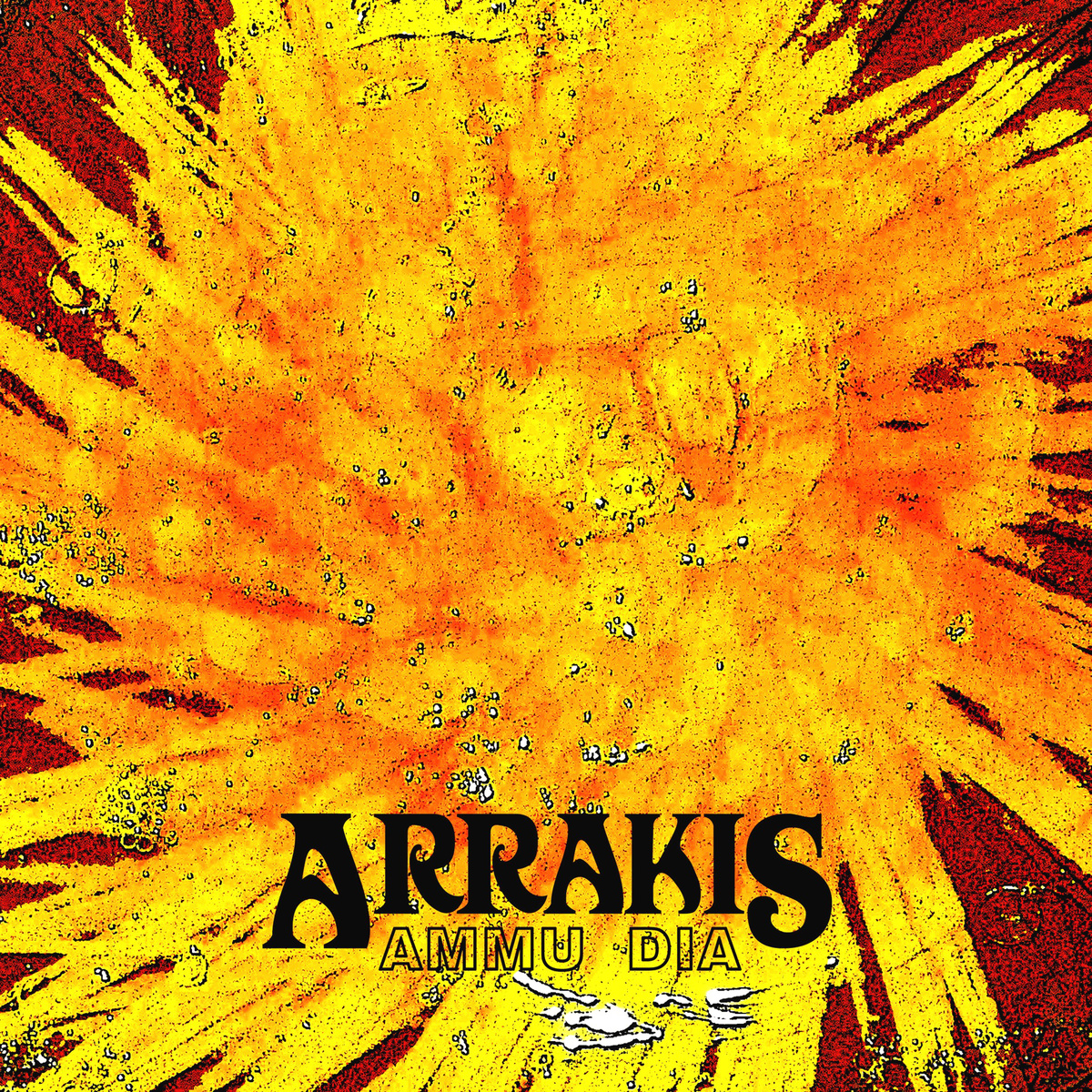
Album Review: Arrakis – Ammu Dia

Instrumental metal isn’t necessarily everyone’s cup of tea but it’s most certainly a genre that lends itself to emotional abandonment. And with post-metal burgeoning, it seems everyone’s at it these days. Another for the melting pot, Greek three-piece Arrakis formed late in 2012 with the intention of creating the ultimate stoner experience. None of these messy lyricisms for them, just pure, pounding rhythms, heaps of distortion and cyclical riffs into which the listener can blithely stagger and drop out.

Recorded live in the studio, Ammu Dia shows promise but lacks punch. Roughly produced, its consequently loaded with honesty and raw power, yet is somewhat imbalanced and has plenty of niggling inaccuracies. Thematically lacking also, the album relies all too often on mere stringwork to discover the heart and soul of the tracks, rather than by using layering and soundscaping to dig into the emotional bedrock. Bands like Russian Circles or Red Sparowes are masters of both, whilst Arrakis attempt to fuel a different fire. They are more about the riff and the head-down groove. Only the final few tracks, and in particular, both “Noema” and the 12 paper-thin minutes of “Diplomacy?” even attempt to draw a little introspection from the listener.

With just the single lead guitar forging ahead to mingle with the battering kit and gutsy bass there’s little room for string interplay and, as a consequence, the big bloated monsters of one-dimensional “Audium” and the anomalous “Aztec” create nothing but a swathe of flat noise, losing what little craftwork there is in the muddy production and heaving dissonance. One recognisable touchstone lurks as “Oppose” tips its hat to the dark patterning and simplistic doom of both St. Vitus and Black Sabbath.

As a jam in a live setting with their chords blasting through chests, Arrakis have the tuneage to really make bonces bounce, but with so little to offer in this crudely-produced recorded format they are unfortunately just more of a racket.


Also online @ Ave Noctum = http://www.avenoctum.com/2015/10/arrakis-ammu-dia-sr/

Thursday, April 30, 2015

Album Review: Shakhtyor – Tunguska

With “demanding full-time jobs”, these Hamburgers’ often struggle to find time to write, practice and record. And yet here they are with their second album having thrashed out a finished product down at Tonmeisterei Studio with producer Roland Wiegener (Omega Massif, Kodiak, Long Distance Calling). The end result is certainly meaty, but is there something missing?

The instrumental Tunguska opens out with a High On Fire-esque sludge-fuelled attack but soon backs off into meandering doomy passages. Very quickly it becomes apparent that their aspirations stretch no further than hitting a sonic peak and beating their heads against the resultant wall-of-sound until either they or the listener crack. Tracks simply melt into one another as the band vary their attack as little as possible. So close are some of the tracks in style, tone and pitch that you’d almost believe they occupy parts of one almighty whole.

Essentially, the concept of instrumental doom has always been a flawed one. It works, to a degree, if the songwriting is crafty enough and the players and production are of the highest quality. Here, there is merely a sense of being trapped inside one almighty 48-minute jam. Never has a band needed a vocalist more than this lot. They are essentially a combination of Baroness’ sludge and exploratory burble with Kongh’s blackened gnarl and sonic drift – of course, with those bands’ key vocal element removed.

Take “Schlagwetter”, it is the aural equivalent of the M25. It’s cyclical, lane-changing, fast-slow construction irritates to the point of distraction. A certain pleasure could be derived from ramming the volume up to neighbour-bothering levels, with the slow build and crush of “Zerfall” inevitably doing the most damage. Fear not, though, there are tracks that work. “Pechblende”, for the simple reason that it’s shorter running time matches the impact of its sparse content, and “Solaris” which thunders down within a vicious, chug-happy psychedelic groove.

The curse of time may be the deciding factor here then, but there is evidence that, on the stage, Shakhtyor could be quite the band. In the studio, they aren’t a million miles away from making their mark either, they just need to expand their minds and develop their vision. Here’s hoping the boss cuts them a little slack.


Also on online @ Ave Noctum = http://www.avenoctum.com/2015/04/shakhtyor-tunguska-cyclone-empire/

Friday, November 8, 2013

Album Review: Exivious – Liminal

My first experience of Exivious finds me questioning my relationship with metal and my own expectations of metal – at what point does something stop being metal and start being something else? The reason for this self-analysis is due to the Dutch instrumental collective’s attempts to “amalgamate jazz fusion with metal”. Previous attempts to unite the genres of jazz and metal have given us mixed results. From the marmite chaos created by bands like T.R.A.M. via the varied assortment of modern tech, djent and prog bands through to Ihsahn’s own morbid musings and the maniacal black jazz of Shining. Exivious lean far heavier on their jazz leg than they do on their modern metal leg, whilst their Encylopedia Metallum-suggested “death metal” leg appears to have been well and truly amputated. Think T.R.A.M. plus Chimp Spanner plus ambidjent fiend Cloudkicker and you’ll have a rough idea of what Liminal sounds like.

The smooth groove of jazz fusion tends to throw all sorts of spanners into the works and I’m quite willing to sit here and quote 70s jazz groups like Mahavishnu Orchestra or Weather Report at you all day, but as a metalhead writing for a metal website, I feel duty-bound to write with my horned metal hat on, rather than my equally brassy jazz one. What Liminal offers is plenty of accessible rhythmic grooves and overlapping guitar noodling but a vast dearth of songwriting passion. One thing, this type of music has to do is grip you emotionally and it’s missing that vital edge. Tonally, you can switch on and drop out because there is little variation of strength here. All too often, Exivious eschew aggression or, conversely, restraint and, as a consequence, the “starbursts of noise” and “breathless interludes” that they claim to have created are few and far between.

“One’s Glow”, for instance, happily pootles along, seemingly without any particular destination, as an overlapping funk guitar and powerful thumbed bassline providing little more than a backing track. “Deeply Woven” brings with it a slightly chunkier heartbeat that is part-Jeff Wayne’s War Of The Worlds, part-T.R.A.M., providing an opening platform for the lead guitar, then sax, to skiddily warble their way up and down the scales – the result is unsettling jazz that throws you from pillar to post. “Triguna” and “Entrust”, despite struggling to ever fully kick off, show potential and as such are possible growers. The nail in the coffin here, though, is the gut-wrenching key change that lurks in “Open”, which only emphasizes just how clunky the construction is – everything from the insipidly warm riff to the patchwork of chugs.

It’s all rather criminal when you consider that there are beautifully-constructed songs lurking within. “Alphaform”, for instance, is a rhythmically-static and richly-layered, multi-part creation. From the inherently addictive riff that drives it, to the soft-souled breakdown it’s worth checking out. Fans of the stormchasing blockbuster Twister with its Mark Mancina-composed, Eddie & Alex Van Halen-performed end credits will know what to expect. Similarly effective, “Movement” is an expansive, wildly imaginative dream, whilst “Immanent” adds grit and verve with a jagged bottom line and, opposing it, a lead with a mischievous sense of purpose about it. These three are, without doubt, written as straight-up post-rock numbers to offset the braggadocio of their brethren – as such, they divide the album, irreparably, into two separately-impacting halves. Looks like I’ll need both those hats after all!

Liminal, a word that implies an edge or threshold, seems like an ironic title when you consider that the technically-proficient Exivious, in both their post-rock and jazz fusion forms, appear to operate within a confined range. Their music rarely ventures down to the heavier end of the spectrum nor can it be described as a manifestly soft touch. Rather, it consists of a recumbent, middle ground approach to songwriting. Considering other tech-happy, fleetingly ambient bands like Tesseract, Uneven Structure and even Textures (featuring former band member Stef Broks) find room within their structures to bring both the hefty and the ethereal, it seems unusual that an instrumental band, sans vocalist, would not. Hypothetically, they’d have more room to explore these edgier qualities – especially if metal was a desired territory of theirs, right? Laid-back, undoubtedly self-indulgent but strangely intriguing, this may be metal but not as we know it.

Also online @ Ave Noctum = http://www.avenoctum.com/2013/11/exivious-liminal-season-of-mist/

Wednesday, October 23, 2013

Album Review: Russian Circles – Memorial

October is the month when the two leading instrumental post-rock groups right now, Russian Circles and Pelican, will go head-to-head with their album releases. Pelican’s newbie, Forever Becoming, dropped on the 15th and this Russian Circles album will go global two weeks later. With both Chicago bands mining the same rough musical seam, you’d think the two might have clashed sooner, but it has never been an issue previously because of their distinct stylings. However, of late, Pelican’s albums have been heading into the heavier, more groove-laden territory of Russian Circles, whilst Russian Circles have been experimenting with the more emotional layering that was Pelican’s calling card. So with both albums coveting the same aural space, which should you be spending your hard-earned cash on?

Lucky for me that’s a loaded rhetorical question as are the minefield of hypothetical questions that it should inspire someone to ask the pair of them. Thankfully, Russian Circles have many other skills that define them so that if both bands continue on this collision course, they might just miss each other by a whisker. The trio are a band known for their love of earthy grooves and skidding strings. These things are present and correct in this latest release with “Deficit” skidding with the best of them and “Lebaron” showing off more groove than a Massey Ferguson. In the past, they have also had a penchant for the immense, teasing build but that is less of a feature here with only “Burial” approaching anything close to the full crescendo.

What’s changed most notably of all, especially over their last couple of albums, is the number of times they plump for the aching beauty of a soft, multi-layered soundscape. Each one of “1777″, “Ethel”, the tacked-on intro “Memoriam” and it’s elegiac title-track reprise all pull on the heartstrings by evoking images of vast sweeping panoramas; the band plunging us into the heart of a bubbling ocean or pulling us up to gaze upon a torrid sonic vista. All the tracks have been treated to a well-polished production. Brandon Curtis has worked hard with the band to create the effects they wanted and bassist/keyboardist Brian Cook has had a large part to play in the process.

There is a strong synth mark stamped on this album and that has been key to the change of focus for the band. It’s presence has resulted in the peripheral level of introspection that Russian Circles’ instrumentals sometimes evoke being ramped up into an experience that becomes disconcertingly intense as you progress through. The songs will transport you to disconcertingly personal places and moments so that with each new movement, comes a new experience. Focus the mind and “Memoriam” is suddenly nothing more than a slow, two-chord whispering wind, which whips up into a gale as the battlefield of “Deficit” is revealed – the horses hooves, rat-a-tat drums and call to arms are all present and correct.

Likewise, “1777″ has the power to dump you onto Industrial Age streets where a steady bowing sound rings out and pistons pile-drive their way into an eventually seizure. Here, the music has a  more visceral keenness to it with dark, menacing tones. Dig deeper and you’ll discover the desert plains of “Cheyenne”, the ocean swells of “Ethel”, right through to the warbling night creatures that inhabit the title-track, a place where guest vocalist Chelsea Wolfe wanders ghost-like, barefoot and alone.

It is true then, that Russian Circles are no longer pushing back the walls of post-rock acceptability, and also true that their albums don’t bite down as hard as they used to, but it is still definitely true that they wield the ability to compose the most beautiful, thought-provoking pieces of music. They have matured from the band that grabs hold and shakes you, to one that insists on forming the subtle backdrop to your life. There’s something sad about that simple realisation – that Memorial is, to all intents and purposes, a safe, unspectacular album. Let’s hope it doesn’t become their epitaph. They deserve a bolder eulogy than this one.

Also online @ The Line Of Best Fit = http://thelineofbestfit.com/reviews/albums/russian-circles-memorial-139742

Friday, August 10, 2012

Album Review: Ninth Moon Black – Chronophage

Finding a moment for ourselves in this fast-paced, hectic world of ours, amidst the madcap dash to stay ahead of the game, is often pretty hard work. The demand upon us to constantly multi-task means that, when we do get that hour to rest, we owe it to ourselves to embrace it. Holding on to this thought, when we grab for a piece of music, there is something to be said for listening to leisurely, immersive pieces; songs that start with a riff or hook, gently rotate around it, repeating the soul of the track until you fully appreciate it from every angle. One band who live to create such mood music is the instrumental Oregonian outfit .

Their sophomore effort, available as a name your price download via Bandcamp, is an organic, cohesive album – a gently-burning candle that deserves your full attention. The six songs within show an honest, clear train of thought with the tracks often merging into one another; a steady recycling of patterns to form a universal mood. Most consist of a thick, treacle-like sludge, a coming-together of the black arts and the gnarled hands of doom, and all seem to be centred around the two saw-toothed waveforms of the admittedly lengthy 14-minute “Animus Lumino”. They are slow burns that build whilst displaying both verve and emotion.

One thing that will put many off is the restrictive amount of added padding that submerges large chunks of the recording. To maintain a warm, cohesive sound, local producer Billy Barnett (Yob, Cherry Poppin’ Daddies) and mix-master Billy Anderson (, , ) have deliberately kept the more fiery edges well and truly suppressed as the band keep it low and slow – an unpredictable spitting, crackling bonfire this is not. Conversely this means the smaller flickers of brilliance, the intricate layering and changes between movements, are hard to pick out and you do actually have to listen quite closely. Lose focus and you lose half the album. Sadly, it’s like this from the off too; from those generic opening heartbeat footsteps and the eerie psychedelic touches of “Renascentia”, and on into the resultant, understated pulses of “Via Dolarosa”. The crunchy bass/drum dual kicker in “Bestia Devorat Tempus”, like your alarm call, is the point where you’ll suddenly realise just how much you’ve missed so far. With “Numeratio” resorting to type with another dulled, unambitious, slowly-repeating chord structure, it could merely be seen as an alert to your next opportunity to nod off.

So, essentially, with the music smothered, the band, unlike the more effusive, groove-laden or the crisp, bright brushstrokes that , and employ, has rather neglected to demand your attention. With, what amounts to a 6-minute intro and an album that feels almost like a jam that craves the full-stop marks that lyrics so often provide, this could well be an album that ends up being played in the background whilst you flit between jobs. Having devoted so many hours to this opus, determinedly hitting the replay button, I decided that it was actually quite apt that the album should be called Chronophage, literally meaning time-eater (a term I first came across when this beast appeared a few doors down). Whether you choose to see this closing remark as a backhanded compliment or a straight-up affront may just depend on whether you prefer staring at the candle or the bonfire.

Also online @ The NewReview = http://thenewreview.net/reviews/ninth-moon-black-chronophage