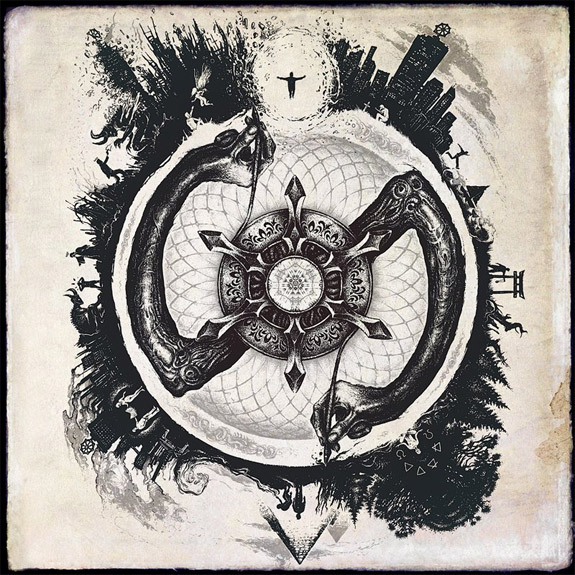
“Well I know what I just said. For those of you who came with us, everything is OK” intones the voice and just like that this sophomore provides the perfect link to their debut and we’re off.
Having shown us just a glimpse of their new wave leanings on their debut album, Servers have expanded this thread now to include a synthetic swagger that tip-toes between the worlds of dark pop and industrial rock. It has made for a cleaner, more vibrant sound. However, their vast grooves are now less impacting having been flattened to create simpler, more accessible structures that seem over-reliant on a singular hook. Is this a dangerous game they are playing here?
Well, the initial tracks like “Spells” and “My Friends Are Enemies” build from solid bases but do begin to crumble at the point of choral release. The slackening of rhythmic bite in the former track, from those rumbling drums loaded with tribal menace, is certainly an odd experience. The latter track is certainly spiky enough, ripped with dark fizz and a groovy electro-buzz but again the choruses feel slack. There’s definitely a need for them to punch more.
Happily, what follows brings the power. Yes, the bitter and twisted “To Hell With You” and the chant and chop of “Bodies In The Ground” set about revisiting the manic splatter of their debut with plenty of grunt and a vitriolic crush instigated by overdriven guitars. This power surge is ably complemented by some of Lee Storrar’s wildest roars. Acting like a shot in the arm it feels like we’re back on track. By regularly switching tempos, Servers take us on an emotional rollercoaster. “Unconditional” goes completely against the grain of the other tracks, picking up from a ponderous quiet verse to instigate a huge kinetic chorus. There’s a sweet orchestral intro to dissect, an addictive vocal hook and a bouncing heartbeat underscore too.
Then when all seems well, the band start meddling with formulaic pop constructions as “Our Lady Of Bad Counsel”, “I Will Make You” and “Codes” hit. The former drags us kicking and screaming back into the past with bursts of synth and a feisty but simplistic rhythm. It even drops in some driven, upbeat, punk-pop elements. Getting specific, “Codes” is just pure Zoolook-era Jean-Michel Jarre. That repeating beat sampled from a short vocalisation, so familiar, so incessant, smacks into lyrics that slowly recount the putrid stench of murder. Then, they find another gear and bring more orchestral and synth backup into the mix to offer an element of power metal.
By the time you hit the dull, blueprint candy of “I Will Make You”, you’ll sense that something made of purest slate-black evil is at play. The band have lightened the music to use as a tool to fool. Those taped interjections you’re hearing come from media broadcasts and interviews and are revelations from the the minds of deranged cult victims and their instigators. Conceptually and lyrically, it’s a pretty damn wicked and the inference is to play off the light music against the dark wordplay. Have they gone in hard enough though? The delivery does seem to fall short and those gentle suggestions feel too weak. Imagine the mayhem they could have created here. Each psychological exploration could have powered the music, exploded eardrums and bitten down harder. Would it be fair to point out this comes on the heels of Periphery’s truly heart-rending MK Ultra-dissection, Juggernaut?
Look, Everything Is OK is… OK. With its hints of nineties grunge and naughties’ alternative rock scenes, it certainly feels like a step backwards from the punch that so marked their debut. It’s shorn of so much of its sparking emotion. It’s poppier, less vicious, superbly aggressive in spots but even those points weaken the album by highlighting those bits that really aren’t. Hell, there is certainly a dark side to it and the more you persevere and the deeper you sink into it, the more visible its intentions become. “The world has gone to shit” screams the PR blurb, so why doesn’t this album feel like a fair representation of that mindset when to do so was clearly the band’s intention?
Also online @ Ave Noctum = http://www.avenoctum.com/2016/08/servers-everything-is-ok-undergroove-records/
Reviews Coming Soon
Showing posts with label periphery. Show all posts
Monday, August 22, 2016
Monday, July 25, 2016
Album Review: Black Crown Initiate – Selves We Cannot Forgive
Pennsylvania’s Black Crown Initiate, like all good Steelmen, know how to
craft good metal. Bursting from the quintet’s take on progressive death
metal, you can hear inspired work from such gargantuan sources as
Meshuggah, Periphery and Between The Buried And Me. They employ a
variety of vocal techniques and splash them across a canvas of technical
heaviosity loaded with richly-layered atmospherics.
If their 2014 debut, The Wreckage Of Stars, was anything to go by, BCI enjoy leaving scars. This sophomore delves deep into the human psyche by laying bare Man’s history of inhumanity, terror, destruction and genocide. It explores such emotions as hatred, lust, self-loathing, pain, loss, hopelessness and sorrow. The suggested end game? A period of serious introspection and self-discovery resulting ultimately in suicidal self-sacrifice. You have been warned – it cuts deep this one.
It also marks a continued exploration of their sound as they delve into their bag of progressive tricks fishing out music with multiple structures and deft segues. The vocal hooks this time tend to come from resplendent cleans rather than explosive death roars and the shaping of the songwriting anchors the BCI ship on firmer, more familiar ground. Which, of course, is not to say it won’t challenge the listener – fans of their debut, in particular should expect the unexpected.
The natural drift of the album allows for their more intense songs to play out first, so you should cover up early. With “For Red Cloud” and “Belie The Machine” punching out mammoth staccato chugs and a barking death vocal they actually echo the majestic, extra-terrestrial battering that the Texan-Maryland trio Of Legends once supplied. The lyrical wordplay agonises to the point of melancholia and keeps on heading ever downwards. Barbarous, addictive rise-and-fall choruses fire home their arrows with pinpoint accuracy. For example, “Our god is full of sorrow / Our god is one of pain”, from the intensely experimental “Sorrowpsalm”, or the brightly-coloured chorus of “We will meet at beginning’s end and start again / Just in time for us to live, we’ll die again”, from “Again”.
These boys write proper songs, not just a jarring collection of words and music, and in a genre like death metal that is a rare thing to find. Naturally, that can be attributed to their technical metal leanings and the willingness to cross multiple genres to create beauty amid the brutality. It brings them more in line with bands like Monuments and The Contortionist, yet even these comparisons don’t do them justice. Take the title-track for example. It’s a simple design with a cyclical structure onto which you can latch. Yet within lies sequencing that progresses through a gentle opening swing of piano and string arpeggio with a matching euphoric vocal clean. The explosive rip into a porcine death growl then allows the bass to bubble to the fore to meet a cushioned power rock solo. It’s organic design is truly disconcerting when you consider each part separately.
They don’t always nail it and some tracks certainly require repeated plays just to unscramble your brain and make sense of the chaos. I mean, on what planet could you find strong hits of Sylosis’ shredding meeting BTBAM’s manic seguing (see “Transmit To Disconnect”) or Skyharbor’s lush choruses folding into the brutalising death of Annotations Of An Autopsy (“Matriarch”)?
Selves We Cannot Forgive feels like BCI’s first true step into the unknown. Here, they have engaged themselves fully in the songwriting process, carving themselves an individual sound by exploring the range of their own abilities. It should see them take ever more confident, inspirational steps as they look ever deeper into their own selves.
Also online @ Ave Noctum = http://www.avenoctum.com/2016/07/black-crown-initiate-selves-we-cannot-forgive-spv/
If their 2014 debut, The Wreckage Of Stars, was anything to go by, BCI enjoy leaving scars. This sophomore delves deep into the human psyche by laying bare Man’s history of inhumanity, terror, destruction and genocide. It explores such emotions as hatred, lust, self-loathing, pain, loss, hopelessness and sorrow. The suggested end game? A period of serious introspection and self-discovery resulting ultimately in suicidal self-sacrifice. You have been warned – it cuts deep this one.
It also marks a continued exploration of their sound as they delve into their bag of progressive tricks fishing out music with multiple structures and deft segues. The vocal hooks this time tend to come from resplendent cleans rather than explosive death roars and the shaping of the songwriting anchors the BCI ship on firmer, more familiar ground. Which, of course, is not to say it won’t challenge the listener – fans of their debut, in particular should expect the unexpected.
The natural drift of the album allows for their more intense songs to play out first, so you should cover up early. With “For Red Cloud” and “Belie The Machine” punching out mammoth staccato chugs and a barking death vocal they actually echo the majestic, extra-terrestrial battering that the Texan-Maryland trio Of Legends once supplied. The lyrical wordplay agonises to the point of melancholia and keeps on heading ever downwards. Barbarous, addictive rise-and-fall choruses fire home their arrows with pinpoint accuracy. For example, “Our god is full of sorrow / Our god is one of pain”, from the intensely experimental “Sorrowpsalm”, or the brightly-coloured chorus of “We will meet at beginning’s end and start again / Just in time for us to live, we’ll die again”, from “Again”.
These boys write proper songs, not just a jarring collection of words and music, and in a genre like death metal that is a rare thing to find. Naturally, that can be attributed to their technical metal leanings and the willingness to cross multiple genres to create beauty amid the brutality. It brings them more in line with bands like Monuments and The Contortionist, yet even these comparisons don’t do them justice. Take the title-track for example. It’s a simple design with a cyclical structure onto which you can latch. Yet within lies sequencing that progresses through a gentle opening swing of piano and string arpeggio with a matching euphoric vocal clean. The explosive rip into a porcine death growl then allows the bass to bubble to the fore to meet a cushioned power rock solo. It’s organic design is truly disconcerting when you consider each part separately.
They don’t always nail it and some tracks certainly require repeated plays just to unscramble your brain and make sense of the chaos. I mean, on what planet could you find strong hits of Sylosis’ shredding meeting BTBAM’s manic seguing (see “Transmit To Disconnect”) or Skyharbor’s lush choruses folding into the brutalising death of Annotations Of An Autopsy (“Matriarch”)?
Selves We Cannot Forgive feels like BCI’s first true step into the unknown. Here, they have engaged themselves fully in the songwriting process, carving themselves an individual sound by exploring the range of their own abilities. It should see them take ever more confident, inspirational steps as they look ever deeper into their own selves.
Also online @ Ave Noctum = http://www.avenoctum.com/2016/07/black-crown-initiate-selves-we-cannot-forgive-spv/
Saturday, January 16, 2016
Album Review: Intronaut – The Direction Of Last Things
Over their last three albums, post-proggers Intronaut have played
things fast and loose. They are known for lurking between the dark
polyrhythmic assault and vaulting angst of Periphery and the lighter,
jazzier tendencies of Between The Buried And Me, but with this latest
full-length they have tightened up the ship and worked hard to a create a
flow to their music.
It’s not unusual to find them stumbling over the gritty hardcore edges that frequent the music of Monuments as they do for opener “Fast Worms”. Its raging chorus sees vocalist Sacha Dunable dishing out roars from behind a dark, powerful series of shreds. With the album constantly returning to themes such as the lunacy that lurks within the modern world, the capitulation of reason and the fragility of the human psyche, they pick some rather tasty, suitably insane lyrics to match.
“The pieces fit together
Like so many arms and legs,
Lifeless, limbless, body rejects”.
“Digital Gerrymandering” follows up on this by laying out its theatrics early with barking, downtuned strings – DJUN-DJUN DJUN. It’s pure Periphery but the artistic flourishes soon melt into complex, flowering structures of dots and splats. Riding around a strong central core, the glowing pop-fusion tech of Intervals and the furious stringwork of Animals As Leaders begins to break through. This abrupt switch from driven fervour to jazz interlude is strange but not, in the least, unwelcome.
The album’s weaker material hurts more when you consider the strong stuff. “City Hymnal” is a particular irksome beast and offers little in the way of direction – when you consider the album title, perhaps that’s the point. In the same vein, munching its way into existence with a literal NOM NOM NOM, “The Pleasant Surprise” is a one-dimensional scrawl of strings which digs away at you with the repetitious lyric “Gaps in the wall”.
Compare those two with the crushing title-track and “Sui Ponticello”. The former comes embedded with the rough-housing djentisms and snarling roars of Meshuggah all tipped into a maelstrom of double-kick and scrawling guitars. It all eventually spills into a hushed bridge; the aural equivalent of being torn apart by rip tides before being spat out onto the tranquil safety of a warm, sun-soaked beach. The latter track, the album highlight, bears a malevolent potency; a tapestry of rising and falling arpeggios, overwrought with taped threats.
With Devin Townsend mixing the squeaky tight production, this was never going to be an issue here. What irks are the peculiar structural anomalies and sense that they really are heading back over familiar territory. Blow me if they aren’t deconstructing here more than they are bringing something fresh to the table.
I must admit it is a surprise to find them boxing themselves into corners and not stamping their own mark on proceedings. It hasn’t stopped them sporting a kaleidoscope of polyrhythms and tones – proof that these LA boys are still brimming with promise. As for that flowing music they were hoping to create, they aren’t quite there just yet. There’s enough about The Direction Of Last Things though to prove one thing – surely it is just a matter of time before they crack the code and create a masterpiece.
Also online @ Ave Noctum = http://www.avenoctum.com/2015/12/intronaut-the-direction-of-last-things-century-media/
It’s not unusual to find them stumbling over the gritty hardcore edges that frequent the music of Monuments as they do for opener “Fast Worms”. Its raging chorus sees vocalist Sacha Dunable dishing out roars from behind a dark, powerful series of shreds. With the album constantly returning to themes such as the lunacy that lurks within the modern world, the capitulation of reason and the fragility of the human psyche, they pick some rather tasty, suitably insane lyrics to match.
“The pieces fit together
Like so many arms and legs,
Lifeless, limbless, body rejects”.
“Digital Gerrymandering” follows up on this by laying out its theatrics early with barking, downtuned strings – DJUN-DJUN DJUN. It’s pure Periphery but the artistic flourishes soon melt into complex, flowering structures of dots and splats. Riding around a strong central core, the glowing pop-fusion tech of Intervals and the furious stringwork of Animals As Leaders begins to break through. This abrupt switch from driven fervour to jazz interlude is strange but not, in the least, unwelcome.
The album’s weaker material hurts more when you consider the strong stuff. “City Hymnal” is a particular irksome beast and offers little in the way of direction – when you consider the album title, perhaps that’s the point. In the same vein, munching its way into existence with a literal NOM NOM NOM, “The Pleasant Surprise” is a one-dimensional scrawl of strings which digs away at you with the repetitious lyric “Gaps in the wall”.
Compare those two with the crushing title-track and “Sui Ponticello”. The former comes embedded with the rough-housing djentisms and snarling roars of Meshuggah all tipped into a maelstrom of double-kick and scrawling guitars. It all eventually spills into a hushed bridge; the aural equivalent of being torn apart by rip tides before being spat out onto the tranquil safety of a warm, sun-soaked beach. The latter track, the album highlight, bears a malevolent potency; a tapestry of rising and falling arpeggios, overwrought with taped threats.
With Devin Townsend mixing the squeaky tight production, this was never going to be an issue here. What irks are the peculiar structural anomalies and sense that they really are heading back over familiar territory. Blow me if they aren’t deconstructing here more than they are bringing something fresh to the table.
I must admit it is a surprise to find them boxing themselves into corners and not stamping their own mark on proceedings. It hasn’t stopped them sporting a kaleidoscope of polyrhythms and tones – proof that these LA boys are still brimming with promise. As for that flowing music they were hoping to create, they aren’t quite there just yet. There’s enough about The Direction Of Last Things though to prove one thing – surely it is just a matter of time before they crack the code and create a masterpiece.
Also online @ Ave Noctum = http://www.avenoctum.com/2015/12/intronaut-the-direction-of-last-things-century-media/
Thursday, January 7, 2016
Feature: Johnskibeat's Best 20 Albums Of 2015
2: Between The Buried And Me – Coma Eliptic (Metal Blade)
Since the birth of his solo career, Thomas Giles Rogers, has strengthened his vocal performance no end and BTBAM are reaping the rewards. With Coma Eliptic they continue to yank the wildest of genres together, everything from polka and bossa nova to death metal. However, what is different this time around is the simplified vision and consequently the interconnectness of each part. The music gently segues together with a single tone in mind. What that does is create continuity within each individual track and across all tracks. The joy of “The Coma Machine” is both explosively progressive and consistently engrossing but its relationship with “Famine Wolf” and to an extent the powerful “Option Oblivion” is undeniable. Even the beguiling dark two-minuter “Dim Ignition” breaks boundaries. In my mind, this is none other than BTBAM at their peak.
3: Periphery – Juggernaut (Century Media)
On release, Juggernaut hit me like, well, a juggernaut. Right smack between the eyes. Rabbit in the headlights. It is a concept double-album which could incite you to violence. It will make you both wince and weep. Even after playing, it will lodge itself permanently in your psyche. The story, told in heart-rendering first-person, will break even the hardest of you. Containing the groove, psychedelia, hardcore and jazz all ripped through with rhythmic conflict and dark lyricism, it truly is an essential piece of psychological musical warfare. You have been warned.
4: Heights – Phantasia On The High Processions Of Sun, Moon & Countless Stars Above (Basick)
Ignore their somewhat erratic output – this is no ordinary side-project. Sharing a drummer with cult post-rockers Tesseract doesn’t count for shit. Yes, getting my hands on this was a case of luck rather than judgement, but that doesn’t alter the impact it has had upon me. It’s an instrumental work of sheer beauty that will see you speeding through the cosmos like a meteorite, pausing merely to marvel over the joy, colour and sparkle that Heights inject into their compositions without ever resorting to repetition; without ever sinking into use of force to get their concept across. Phantasia… is an utter delight from Big Bang to Big Freeze.
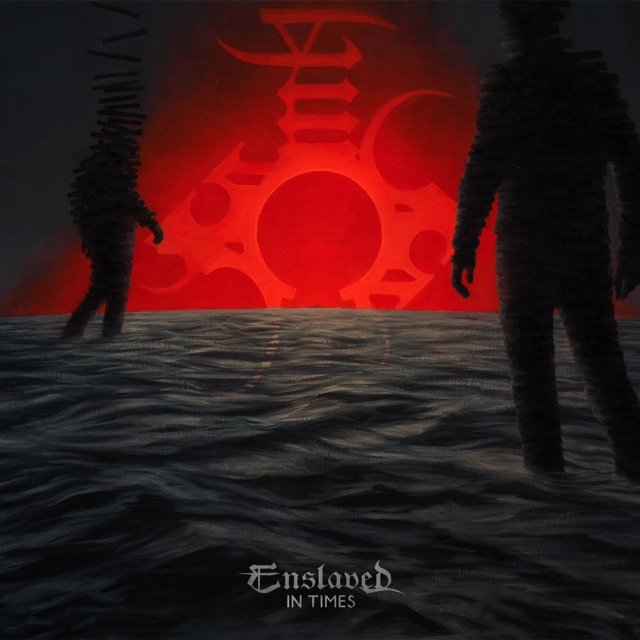
5: Enslaved – In Times (Nuclear Blast)
With their usual unrestricted vision, Enslaved have created a wonderful, drive-dominant, hook-laden album filled with chugging gallops, dark roars and menacing anguish. It is a work that will suck you in then cast you adrift. Replete with invention throughout, the highlight arrives at the album close. “Daylight” is the band at the peak of their powers throwing out choral builds that warm the heart. And it comes all washed through with strong echoes of Devin Townsend’s epic structuring, tones and textures – well, I’m sold.
6: Man The Machetes – Av Nag (Indie Recordings)
Whipping along at a dizzying pace, this sophomore effort from punk n’ rollers Man The Machetes draws its power from revelling in visceral heft. Standout moments come with the stepdown in pace to the crawling lead and sweet rock-a-bye riff on “Tung Luft” and with the crafty, constructive forethought that has gone into the humdinger “Orkenmarsj”. Their time is now; come join in the dance.
7: Acid King – Middle Of Nowhere, Center Of Everywhere (Svart)
Lapping up the echoing majesty of such bands as Monster Magnet and Orange Goblin while sourcing the wild electric fuzz of St. Vitus, Acid King offer up an absolute peach of an album. Live, the tracks are mind-blowingly intense, yet here wrapped up in the smooth dynamics of the studio the music actually becomes even greater than the sound system upon which it plays. Then, just when you thought they couldn’t get more monstrous or distortion-hungry, vocalist Lori goes and twists her tonsils around “Laser Highlights” and take this beast to an even higher plane.
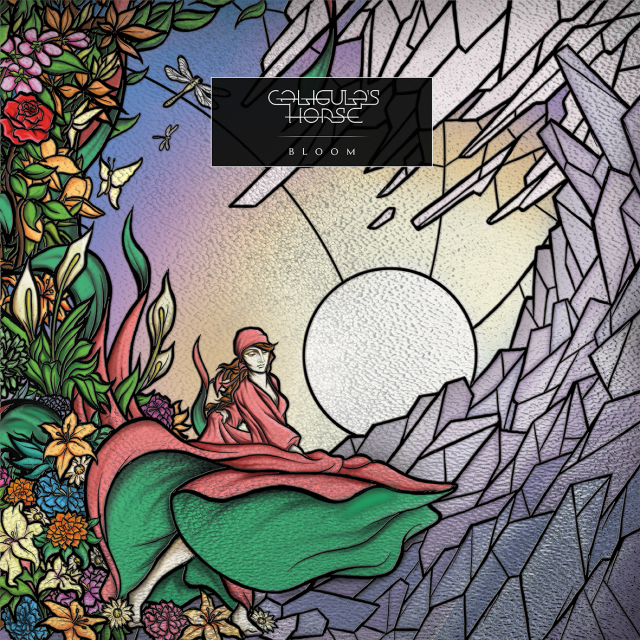
8: Caligula’s Horse – Bloom (Inside Out)
Jim Grey’s vocal is utterly beguiling and here, progressive technicians Caligula’s Horse, have created the perfect vehicle to show it off to its full potential. From elegaic, melodic numbers to big grooves with addictive choruses to malevolent pieces filled with hate-fuelled lyricism. Bloom is riddled with passion – it lets in a little light and a little darkness and is well worth your attention.
9: Wildlights – Wildlights (Season Of Mist)
Riddled with the uplifting braggadocio and enslaving hooks of Audrey Horne’s moxy and Torche’s power-driven post-rock, this startlingly adept debut is emphatically boisterous, consistently driving and engagingly addictive. It is effortlessly light, airy and voraciously catchy. It glows with an inner fluoresence, blazing a trail for others – I urge you to follow.
10: Secrets Of The Sky – Pathway (Metal Blade)
Oozing mournful, subtle introspection, yet bursting with gloriously-consuming black-edged terror and shrewd metal crunch comes something akin to the storytelling of Agalloch, Anathema or Alcest whilst drunk on Sabbathian doom and Opethian melancholy. This Californian quintet strictly adhere to their concept and unveil an opus that feels like a worn pathway to something truly sinister.
11: Intervals – The Shape Of Colour (S/R)
12: The Atomic Bitchwax – Gravitron (Tee Pee)
13: Kontinuum – Kyrr (Candlelight)
14: Steak Number Eight – Kosmokoma (Indie)
15: Arcturus – Arcturian (Prophecy)
16: Bauda – Sporelights (Prophecy)
17: Death Alley – Black Magick Boogieland (Tee Pee)
18: Vattnet Viskar – Settler (Century Media)
19: Ecstatic Vision – Sonic Praise (Relapse)
20: Intronaut – The Direction Of Last Things (Century Media)
Also online @ Ave Noctum = http://www.avenoctum.com/2015/12/albums-of-the-year-2015/
Best of 2014: http://johnskibeat.blogspot.co.uk/2014/12/feature-johnskibeats-best-20-albums-of.html
Best of 2013: http://johnskibeat.blogspot.co.uk/2013/12/feature-johnskibeats-best-20-albums-of_17.html
Best of 2012: http://johnskibeat.blogspot.co.uk/2012/12/feature-top-ten-albums-of-2012.html
Labels:
20,
2015,
albums,
best,
between,
buried,
johnskibeat,
periphery,
sleeping karma
Friday, January 23, 2015
Periphery – Juggernaut: Alpha / Omega
In the beginning, there was Periphery and Periphery was good. They were loud, they were obnoxious and they were untamed. Yet here we stand, a mere 10 years later, gripping a twin album release, safe in the knowledge that it is the stuff of legend. Not only is their third long-player their heaviest, darkest, densest and most mature work, it is also their most emotive, addictive and haunting. Put simply, this is the work that will define their career.
Juggernaut contains a story, one based in fact, that can take you on a journey to spots of tear-jerking beauty before ditching you in the foulest, most soul-destroying of places. The album’s concept has been well-hidden so far and I hate spoiling surprises, so all I’ll suggest is check the track-listing if you want a clue to the full insanity of the project within a project. What unsettles most of all about the themes is the intricate dealing with each slight change in mood of the story’s main character. The humanity and hope within comes across from within the most hopeless and inhumane of situations.
Taken at face value, Juggernaut concerns the slow and relentless onslaught of one man’s mental faculties. Taken as a metaphorical tale, it can be applied to a wide range of subjects including birth, re-birth and death itself. The difference between the Alpha disc and the Omega one, according to guitarist Misha Mansoor, is that the former is “more optimistic” whereas the latter is “pessimistic”. Essentially these are two parts of the same story, one single time-line, but our anti-hero’s experiences ultimately dictate the reason for the split. Running to 82 minutes, it’s an awful lot to be tackling so there is argument that this could have been pared down to a single album by stripping out the few weaker tracks. With so much essential material though, it’s a blessing that they decided to double-up.
Dealing with Alpha first, it’s immediately apparent that the production levels are off the chart. This has allowed for a complete tonal range to shine; from the heavy punch and bruising limbs to the crisp, clean and sharp edges. “A Black Minute” resonates with twinkling strings and psychedelic, echoing keys creating space for Spencer Sotelo’s clean vocals to portray a vision of soft innocence, wonder, hope and even joy. “MK Ultra” presents a far-different side, however, as dark palm-muted butchery and malevolent roars tear into the listener until overload occurs. This blackout is the point where a short, jazzy hit of lift-music is inserted to say more than any white noise, siren or other such sound effect could. Following the storyline, “The Event” is a huge moment. Cleverly, it’s an instrumental and contains nothing more than a tremulous underscore and a steady pattern of single string strikes. Deeper in, Periphery dig out big, infectious hitters with huge choruses. Tracks such as “Heavy Heart”, the poppy licks of “Alpha”, the hardcore-flecked “22 Faces” and the jerking “Rainbow Gravity” all soar. Sotelo’s often nasal delivery can be annoying at times, but because of his flat refusal to dwell for any length of time on one style they lock into the musical flow rather than get under your skin. Here, he dips into his bag of extreme from which he can pull out everything from a guttural moan to an ear-splitting scream and anything in between. Check out “The Scourge” or album highlight “Psychosphere” to experience the sheer glory of his full range. It’s simply a staggering performance delivered with true emotion.
Moving into Omega, following a gut-churning “Reprise” we get another important moment within the tale. “The Bad Thing” marks the point where any semblance of self-understanding, normality, reason and forgiveness dissolves. It is vicious in sonic impact, unrelenting and ripped with dark lyricism. Its companion track, the enigmatic, ambient post-rock of “Priestess”, looks at the same world but attacks it with eyes wide open offering a spirited sequence of layered arpeggios warmed through with a sweet, hooked chorus and effervescent electronic touches. From here we begin the descent in spirit to the anarchic “Graveless” and the monstrous Meshuggah-worship of “Hell Below”. The jazz-flecked closing section of “Omega” offers up one final look backwards before “Stranger Things” give us one of the album’s more experimental moments of enlightenment and reflection, providing a fitting ending on a crushing half.
The precise structuring, degree of detailing and thematic recycling of Juggernaut show just how much careful thought has gone into the long and arduous process that it has taken to finally bring this album to the table. Ultimately though, it’s the emotional pull of the narrative and the rich variety of the music that will decide on the album’s impact. It seems to me that no matter how many times I go through this material, experiencing some of the most radical, deeply depressing, sick and highly disturbing of musical journeys, I still feel like I’ve been put through the wringer anew each time. Both albums are streaming online now so there really is no excuse not to do the same. I urge you to invest in this because the deeper you venture down the rabbit hole, the deeper it becomes. At the point of total immersion you may, just like me, actually feel your heart break.
Full streams are available through the team at Heavy Blog Is Heavy team here: http://www.heavyblogisheavy.com/2015/01/21/periphery-stream-juggernaut-omega-prepare-to-dismantle/
Review also online @ Ave Noctum = http://www.avenoctum.com/2015/01/periphery-juggernaut-alpha-omega-century-media/
Juggernaut contains a story, one based in fact, that can take you on a journey to spots of tear-jerking beauty before ditching you in the foulest, most soul-destroying of places. The album’s concept has been well-hidden so far and I hate spoiling surprises, so all I’ll suggest is check the track-listing if you want a clue to the full insanity of the project within a project. What unsettles most of all about the themes is the intricate dealing with each slight change in mood of the story’s main character. The humanity and hope within comes across from within the most hopeless and inhumane of situations.
Taken at face value, Juggernaut concerns the slow and relentless onslaught of one man’s mental faculties. Taken as a metaphorical tale, it can be applied to a wide range of subjects including birth, re-birth and death itself. The difference between the Alpha disc and the Omega one, according to guitarist Misha Mansoor, is that the former is “more optimistic” whereas the latter is “pessimistic”. Essentially these are two parts of the same story, one single time-line, but our anti-hero’s experiences ultimately dictate the reason for the split. Running to 82 minutes, it’s an awful lot to be tackling so there is argument that this could have been pared down to a single album by stripping out the few weaker tracks. With so much essential material though, it’s a blessing that they decided to double-up.
Dealing with Alpha first, it’s immediately apparent that the production levels are off the chart. This has allowed for a complete tonal range to shine; from the heavy punch and bruising limbs to the crisp, clean and sharp edges. “A Black Minute” resonates with twinkling strings and psychedelic, echoing keys creating space for Spencer Sotelo’s clean vocals to portray a vision of soft innocence, wonder, hope and even joy. “MK Ultra” presents a far-different side, however, as dark palm-muted butchery and malevolent roars tear into the listener until overload occurs. This blackout is the point where a short, jazzy hit of lift-music is inserted to say more than any white noise, siren or other such sound effect could. Following the storyline, “The Event” is a huge moment. Cleverly, it’s an instrumental and contains nothing more than a tremulous underscore and a steady pattern of single string strikes. Deeper in, Periphery dig out big, infectious hitters with huge choruses. Tracks such as “Heavy Heart”, the poppy licks of “Alpha”, the hardcore-flecked “22 Faces” and the jerking “Rainbow Gravity” all soar. Sotelo’s often nasal delivery can be annoying at times, but because of his flat refusal to dwell for any length of time on one style they lock into the musical flow rather than get under your skin. Here, he dips into his bag of extreme from which he can pull out everything from a guttural moan to an ear-splitting scream and anything in between. Check out “The Scourge” or album highlight “Psychosphere” to experience the sheer glory of his full range. It’s simply a staggering performance delivered with true emotion.
Moving into Omega, following a gut-churning “Reprise” we get another important moment within the tale. “The Bad Thing” marks the point where any semblance of self-understanding, normality, reason and forgiveness dissolves. It is vicious in sonic impact, unrelenting and ripped with dark lyricism. Its companion track, the enigmatic, ambient post-rock of “Priestess”, looks at the same world but attacks it with eyes wide open offering a spirited sequence of layered arpeggios warmed through with a sweet, hooked chorus and effervescent electronic touches. From here we begin the descent in spirit to the anarchic “Graveless” and the monstrous Meshuggah-worship of “Hell Below”. The jazz-flecked closing section of “Omega” offers up one final look backwards before “Stranger Things” give us one of the album’s more experimental moments of enlightenment and reflection, providing a fitting ending on a crushing half.
The precise structuring, degree of detailing and thematic recycling of Juggernaut show just how much careful thought has gone into the long and arduous process that it has taken to finally bring this album to the table. Ultimately though, it’s the emotional pull of the narrative and the rich variety of the music that will decide on the album’s impact. It seems to me that no matter how many times I go through this material, experiencing some of the most radical, deeply depressing, sick and highly disturbing of musical journeys, I still feel like I’ve been put through the wringer anew each time. Both albums are streaming online now so there really is no excuse not to do the same. I urge you to invest in this because the deeper you venture down the rabbit hole, the deeper it becomes. At the point of total immersion you may, just like me, actually feel your heart break.
Full streams are available through the team at Heavy Blog Is Heavy team here: http://www.heavyblogisheavy.com/2015/01/21/periphery-stream-juggernaut-omega-prepare-to-dismantle/
Review also online @ Ave Noctum = http://www.avenoctum.com/2015/01/periphery-juggernaut-alpha-omega-century-media/
Monday, November 17, 2014
Album Review: Skyharbor – Guiding Lights
For their first full studio release, Skyharbor‘s two-disc Blinding White Noise created a sonic shockwave that reverberated around the world receiving plaudits at every turn. They made enough of an impact to have their second funded by their fans so they really must have felt the pressure when constructing it. We are therefore delighted to report that this Indian-British combo have knocked it out of the park.
For starters, the album art by Michael De Lonardo is simply gorgeous. The flaring streaks of light and graduated pink shading create the illusion of slow-motion whilst the subject matter plays on the enormity of the subjects lurking within. Most likely taking inspiration from the birth, late last year, of his first child, lead vocalist Daniel Tompkins’ lyrics deal with the rough concepts of birth, re-birth, life choices, death, evolution and entropy. The music matches up working as an exploration of sound and mood, and as such takes them away from the heavy rhythms employed on their début. Here they linger in the twin realms of post-rock and dream pop, reaching out to the ambient qualities of bands like Palms, Oceansize, and Uneven Structure.
Though there is a beautiful flow to the music and an aching search to make colourful connections to what might be termed the modern pop song, they do still indulge themselves in dragging the music away from the standard, more recognisable structures, often dissecting tracks into two or three-part movements. Exploration and dissolute patterning still play an important role in discovering the true heart of each piece. Some then, may say this isn’t heavy enough (there is no Chaos here, no Sunneith Revankar) and typically the syncopation and palm-muted rhythmic undertow has been smoothed and flattened allowing the dream pop vibe to take over. Notably, though, this is not to the detriment of the songs. This change of direction has also freed Tompkins to explore the warm, tones of that sultry vocal of his; he never raises his force of delivery above a semi-anguished cry and he most definitely does not scream or roar. Hell, he even morphs into George Michael when he takes it down to a breathy lilt, something we’ve never noticed him doing before.
The most straight-forward pieces head the cast, with the punchy ‘Allure’ (featuring Periphery guitarist Mark Holcomb) and the quite simply immense rush of ‘Evolution’ still breaking their shackles but hauling themselves back to the spine for the close. In fact, the latter track is worthy of extra special mention for its warm build, gorgeously-layered centre and hellishly catchy verses. The thing is an absolute earworm – a perfect companion piece to BWN’s award-winning ‘Maeva’.
Elsewhere, the multi-part ‘Halogen’ doesn’t shirk away from complete changes of direction with the stunning input of a female spoken and sung vocal (probably Hieroglyph‘s Valentina Reptile who appears on the cracking ‘Kaikoma’) changing the emphasis. For the biggest show of force, head straight to ‘New Devil’. This has a nagging, cantankerous edge to it, with the affected stringwork hinting at an admiration for the work of The Safety Fire. As a neighbour and yet coming from the other end of the scale, ‘Patience’ is a fragile beauty of a piece; sashaying gently; eloquent and enigmatic. Then, to close proceedings, ‘The Constant’ sports input from multi-instrumentalist Plini Roessler-Holgate and slaps on the layers to paint a rich, striking picture of life in constant motion.
When the songs themselves aren’t blowing your mind, it’s the little touches that elevate this album to a different level. From the heavenly choir that sprinkle their “hallelujahs” at the terminus of the title-track to the passage of spoken Japanese that flavours ‘Kaikoma’- they all make their mark. Some of the more self-indulgent tracks require more perseverance – growers like ‘Idle Minds’, ‘Miracle’ and ‘Guiding Lights’ only making their mark after several listens. It’s no use though. No matter how hard you search for dips in quality, there’s no getting past the simple fact that from any angle this is a potential album of the year. Skyharbor have grown-up, fine-tuned and quietly evolved – we are all just struggling to catch up.
Also online @ Heavy Blog Is Heavy = http://www.heavyblogisheavy.com/2014/11/14/skyharbor-guiding-lights-2/
Streaming now: http://music.basickrecords.com/album/guiding-lights
For starters, the album art by Michael De Lonardo is simply gorgeous. The flaring streaks of light and graduated pink shading create the illusion of slow-motion whilst the subject matter plays on the enormity of the subjects lurking within. Most likely taking inspiration from the birth, late last year, of his first child, lead vocalist Daniel Tompkins’ lyrics deal with the rough concepts of birth, re-birth, life choices, death, evolution and entropy. The music matches up working as an exploration of sound and mood, and as such takes them away from the heavy rhythms employed on their début. Here they linger in the twin realms of post-rock and dream pop, reaching out to the ambient qualities of bands like Palms, Oceansize, and Uneven Structure.
Though there is a beautiful flow to the music and an aching search to make colourful connections to what might be termed the modern pop song, they do still indulge themselves in dragging the music away from the standard, more recognisable structures, often dissecting tracks into two or three-part movements. Exploration and dissolute patterning still play an important role in discovering the true heart of each piece. Some then, may say this isn’t heavy enough (there is no Chaos here, no Sunneith Revankar) and typically the syncopation and palm-muted rhythmic undertow has been smoothed and flattened allowing the dream pop vibe to take over. Notably, though, this is not to the detriment of the songs. This change of direction has also freed Tompkins to explore the warm, tones of that sultry vocal of his; he never raises his force of delivery above a semi-anguished cry and he most definitely does not scream or roar. Hell, he even morphs into George Michael when he takes it down to a breathy lilt, something we’ve never noticed him doing before.
The most straight-forward pieces head the cast, with the punchy ‘Allure’ (featuring Periphery guitarist Mark Holcomb) and the quite simply immense rush of ‘Evolution’ still breaking their shackles but hauling themselves back to the spine for the close. In fact, the latter track is worthy of extra special mention for its warm build, gorgeously-layered centre and hellishly catchy verses. The thing is an absolute earworm – a perfect companion piece to BWN’s award-winning ‘Maeva’.
Elsewhere, the multi-part ‘Halogen’ doesn’t shirk away from complete changes of direction with the stunning input of a female spoken and sung vocal (probably Hieroglyph‘s Valentina Reptile who appears on the cracking ‘Kaikoma’) changing the emphasis. For the biggest show of force, head straight to ‘New Devil’. This has a nagging, cantankerous edge to it, with the affected stringwork hinting at an admiration for the work of The Safety Fire. As a neighbour and yet coming from the other end of the scale, ‘Patience’ is a fragile beauty of a piece; sashaying gently; eloquent and enigmatic. Then, to close proceedings, ‘The Constant’ sports input from multi-instrumentalist Plini Roessler-Holgate and slaps on the layers to paint a rich, striking picture of life in constant motion.
When the songs themselves aren’t blowing your mind, it’s the little touches that elevate this album to a different level. From the heavenly choir that sprinkle their “hallelujahs” at the terminus of the title-track to the passage of spoken Japanese that flavours ‘Kaikoma’- they all make their mark. Some of the more self-indulgent tracks require more perseverance – growers like ‘Idle Minds’, ‘Miracle’ and ‘Guiding Lights’ only making their mark after several listens. It’s no use though. No matter how hard you search for dips in quality, there’s no getting past the simple fact that from any angle this is a potential album of the year. Skyharbor have grown-up, fine-tuned and quietly evolved – we are all just struggling to catch up.
Also online @ Heavy Blog Is Heavy = http://www.heavyblogisheavy.com/2014/11/14/skyharbor-guiding-lights-2/
Streaming now: http://music.basickrecords.com/album/guiding-lights
Wednesday, July 23, 2014
Album Review: Monuments – The Amanuensis
Amanuensis – a term used over the years to mean such things as slave,
aide, scribe and secretary. Sure, it’s a bit of a mouthful but then
here’s an album that’s got the depth of flavour, good looks, emotional
pull and addictive qualities to back that hefty handle up.
This sophomore song-driven album has drawn inspiration from the themes and motifs that connected the dots of David Mitchell’s Cloud Atlas novel and, if that wasn’t enough, it also taps into the mysterious Samsara cycle. Guitarist John Browne has described the latter as “the cyclical existence of life that we are all bound to.” Here he goes on to mention that “Chris (Barretto, vocalist) has written an entire story around the lyrics. Maybe that will see the light one day!” Intriguing stuff.
Recorded in Wales, North America and England, the production has been stripped back and recorded live, where possible, and it all comes without triggers and without studio trickery. They’ve also refined that same infectious, rhythmical, progressive groove that so marked out their debut Gnosis. The immediacy of these techniques are there for all to hear. These, of course, are features that are also being picked up by more and more bands now, but it’s a concept that has been around for far longer than Monuments. SikTh’s work has undoubtedly had an influence, but Monuments’ guitarist John Browne, originally with one of djent’s forefathers Fellsilent, is proof of that pedigree.
On the first listen, you’d swear the vocal layers on this thing are infinite. Chris Barretto (ex-Periphery, Ever Forthright) debuts with the band here and his experience and incredible vocal gymnastics lift the album to a whole new level. Throughout “Origin Of Escape” and the epic “Quasimodo” he’s tearing out lumps from your lugholes by firing out elongated roars that he bends into long, base-to-peak crecendos. During “Horcrux” and “I, The Destroyer” he fishes out those bowel-loosening piq grunts of his and for the remainder he’s scraping the skies with a sweet, melodic drift that gently echoes and swirls around inside your skull. On this performance, you’d be hard-pressed to find a better fit for this infectious band.
Playing Devil’s Advocate, you could perhaps find fault with the start-stop end to “Quasimodo” or the powered-down, monastic chanting that forms the soul-sucking closer “Samsara”. Both could be viewed as rather crass stylistic affectations that the album could do without. Also, the tight production does tend to crush the mix together a little too thickly, so you may find that you have to hunt for the big riffs and choral keystones. Certainly the feisty “This is the end of promises made that were never meant to hurt / Forget what I say, I just want to watch you burn!” of “I, The Creator” is a monster hook big enough to keep anyone happy but you might be hard pushed to find another to match it.
The stark reality though is that The Amanuensis takes a burgeoning genre and raises the bar for the rest. Seriously, you’d be hard-pressed to find another modern progressive metal album that could match this for impact. “The Alchemist” is the star track here. It also forms the central axis, directing the flow as it draws the rest of the tracks inwards. It knits the whole concept together; driving with a brutal force powerful enough to level cities yet retains the lightness of touch to draw the eye time and again. There’s even a game-changer in here in the form of “Jinn” with its majestic Eastern elements wickedly-woven into the fabric of the music. This is a completely, crushingly epic goliath of tech and groove; wall-shuddering, space-flooding both by design and in performance.
Also online @ Ave Noctum = http://www.avenoctum.com/2014/07/monuments-the-amanuensis-century-media/
This sophomore song-driven album has drawn inspiration from the themes and motifs that connected the dots of David Mitchell’s Cloud Atlas novel and, if that wasn’t enough, it also taps into the mysterious Samsara cycle. Guitarist John Browne has described the latter as “the cyclical existence of life that we are all bound to.” Here he goes on to mention that “Chris (Barretto, vocalist) has written an entire story around the lyrics. Maybe that will see the light one day!” Intriguing stuff.
Recorded in Wales, North America and England, the production has been stripped back and recorded live, where possible, and it all comes without triggers and without studio trickery. They’ve also refined that same infectious, rhythmical, progressive groove that so marked out their debut Gnosis. The immediacy of these techniques are there for all to hear. These, of course, are features that are also being picked up by more and more bands now, but it’s a concept that has been around for far longer than Monuments. SikTh’s work has undoubtedly had an influence, but Monuments’ guitarist John Browne, originally with one of djent’s forefathers Fellsilent, is proof of that pedigree.
On the first listen, you’d swear the vocal layers on this thing are infinite. Chris Barretto (ex-Periphery, Ever Forthright) debuts with the band here and his experience and incredible vocal gymnastics lift the album to a whole new level. Throughout “Origin Of Escape” and the epic “Quasimodo” he’s tearing out lumps from your lugholes by firing out elongated roars that he bends into long, base-to-peak crecendos. During “Horcrux” and “I, The Destroyer” he fishes out those bowel-loosening piq grunts of his and for the remainder he’s scraping the skies with a sweet, melodic drift that gently echoes and swirls around inside your skull. On this performance, you’d be hard-pressed to find a better fit for this infectious band.
Playing Devil’s Advocate, you could perhaps find fault with the start-stop end to “Quasimodo” or the powered-down, monastic chanting that forms the soul-sucking closer “Samsara”. Both could be viewed as rather crass stylistic affectations that the album could do without. Also, the tight production does tend to crush the mix together a little too thickly, so you may find that you have to hunt for the big riffs and choral keystones. Certainly the feisty “This is the end of promises made that were never meant to hurt / Forget what I say, I just want to watch you burn!” of “I, The Creator” is a monster hook big enough to keep anyone happy but you might be hard pushed to find another to match it.
The stark reality though is that The Amanuensis takes a burgeoning genre and raises the bar for the rest. Seriously, you’d be hard-pressed to find another modern progressive metal album that could match this for impact. “The Alchemist” is the star track here. It also forms the central axis, directing the flow as it draws the rest of the tracks inwards. It knits the whole concept together; driving with a brutal force powerful enough to level cities yet retains the lightness of touch to draw the eye time and again. There’s even a game-changer in here in the form of “Jinn” with its majestic Eastern elements wickedly-woven into the fabric of the music. This is a completely, crushingly epic goliath of tech and groove; wall-shuddering, space-flooding both by design and in performance.
Also online @ Ave Noctum = http://www.avenoctum.com/2014/07/monuments-the-amanuensis-century-media/
Labels:
amanuensis,
barretto,
djent,
fellsilent,
groove,
metal,
monuments,
periphery,
progressive,
samsara,
tech,
technical
Monday, July 9, 2012
Album Review: Periphery – Periphery II: This Time It’s Personal
Meshuggah-worship comes in many forms. Front of the queue, bowl in
hand, was a young Misha Mansoor. Naturally, he went on to start his
personal project, Bulb, and form the band Periphery and the kind of
math-heavy, palm-muted power chords that marked the band out as the
djentleman who owe most to Fredrik Thordendal and company. Their
eponymous debut album was bulging with jagged, heavy syncopation and
angular battery fused with, first, the kind of yobbish yelps of derision
that only seem to come from those whose vocal cords haven’t yet been
fully broken in and, second, Spencer Sotelo’s whining cleans that turned
so many potential fans away from the band.
Their follow-up is the cringingly-titled Periphery II: This Time It’s Personal. Yes, I thought it was a joke too. It’s a work that’s led me to wonder if, after their forthcoming concept release, Juggernaut, the next album will be called something equally tacky. Perhaps Periphery III: In Your Face or Periphery III: The Real Deal. Well, apparently the answer is “yes”. In a brief comment made by Mansoor recently, which includes the information that the lyrics in II actually reference III, their next album will be called the horrendously gimmicky Periphery III: Third Time’s A Charm. But, I digress.
This sophomore album sees the whole band taking on songwriting duties, as oppose to the one-man show of their debut, yet it still contains a number of reworked Bulb demos, so it’s a bit of a mixture and that does come across. As the title suggests it is, in general, less abrasive than their debut with much more of a melodic, colourful approach to tracks. The production values have been tightened a notch and the vocals have been thrust more to the forefront. Of course this brings Periphery into line with current trends for a more textured, ambient approach to the genre and the latter half of the album, especially, dangles its legs deep inside that concept. The first half is more of a patchwork quilt of chaos and order; battering groove and demonstrative lulls; hard-hitting roars and growls that dive into the kind of clean singing that is mostly pitched at the top-end – just the zone where Sotelo’s whine comes fully into play. Those who ducked for cover last time will be doing so once more.
The introductory posturing on “Muramasa”, for instance, is short and sickly sweet and quickly pitches us head-first into the crush barrier of “Have A Blast”. The spasmodic, mathy nature of the music here goes a long way to focussing our minds on the g-spots of each chorus and this pattern is followed deep into the album. A gnarly, pop-up electro-beat backed by reverb-heavy strings feeds into the jerky hammer of “Ji” and, at last, Sotelo rediscovers that tone that suits him best with some dark, throat-ripping growls and mid-range cleans. There’s a beautiful, cosmic wash lurking in the background here and some impressive stickwork from Matt Halpern that seeks to plug the gaps.
With other tracks creating gateways, like the hook-laden “Scarlet”, the chameleonic “Ragnarok” and the ambient layering and simplified structure of “Erised” sucking us in, and surprises such as the instrumental “Epoch” and all the craftily-integrated guest solos, the album stands a thousand times more accessible than their debut. Yet, there is far too much that simply passes by without ever finding its feet, and, ultimately, you’d really have to question if, at any point, Periphery hit the addictive bounce and lightness of touch that the most recent releases by Vildhjarta, Uneven Structure, Skyharbor and, even, Textures feature. All these albums simply hit harder and sink deeper into our psyches.
In the cold light of day, 14 tracks and 69 minutes (their debut topped 72 minutes) is a heck of a lot of material to wade through when so much of it ceases to shock and awe to anything like the degree that their debut so clearly did. But then, apparently, “this time it’s personal”, so perhaps we should allow them some leeway; some selfishness in their experimentation. Let no-one say you don’t get value for money with Periphery. Whatever the effect that this softening of the edges has had on their fanbase, they can be pretty proud of the fact that they’ve successfully managed to build another interesting level on their already solid foundation. We can only hope that, in the future, their talent for album titles remains so asymmetrically opposed to the quality of the material that lurks inside them.
Also online @ Ave Noctum = http://www.avenoctum.com/2012/07/periphery-periphery-ii/
Their follow-up is the cringingly-titled Periphery II: This Time It’s Personal. Yes, I thought it was a joke too. It’s a work that’s led me to wonder if, after their forthcoming concept release, Juggernaut, the next album will be called something equally tacky. Perhaps Periphery III: In Your Face or Periphery III: The Real Deal. Well, apparently the answer is “yes”. In a brief comment made by Mansoor recently, which includes the information that the lyrics in II actually reference III, their next album will be called the horrendously gimmicky Periphery III: Third Time’s A Charm. But, I digress.
This sophomore album sees the whole band taking on songwriting duties, as oppose to the one-man show of their debut, yet it still contains a number of reworked Bulb demos, so it’s a bit of a mixture and that does come across. As the title suggests it is, in general, less abrasive than their debut with much more of a melodic, colourful approach to tracks. The production values have been tightened a notch and the vocals have been thrust more to the forefront. Of course this brings Periphery into line with current trends for a more textured, ambient approach to the genre and the latter half of the album, especially, dangles its legs deep inside that concept. The first half is more of a patchwork quilt of chaos and order; battering groove and demonstrative lulls; hard-hitting roars and growls that dive into the kind of clean singing that is mostly pitched at the top-end – just the zone where Sotelo’s whine comes fully into play. Those who ducked for cover last time will be doing so once more.
The introductory posturing on “Muramasa”, for instance, is short and sickly sweet and quickly pitches us head-first into the crush barrier of “Have A Blast”. The spasmodic, mathy nature of the music here goes a long way to focussing our minds on the g-spots of each chorus and this pattern is followed deep into the album. A gnarly, pop-up electro-beat backed by reverb-heavy strings feeds into the jerky hammer of “Ji” and, at last, Sotelo rediscovers that tone that suits him best with some dark, throat-ripping growls and mid-range cleans. There’s a beautiful, cosmic wash lurking in the background here and some impressive stickwork from Matt Halpern that seeks to plug the gaps.
With other tracks creating gateways, like the hook-laden “Scarlet”, the chameleonic “Ragnarok” and the ambient layering and simplified structure of “Erised” sucking us in, and surprises such as the instrumental “Epoch” and all the craftily-integrated guest solos, the album stands a thousand times more accessible than their debut. Yet, there is far too much that simply passes by without ever finding its feet, and, ultimately, you’d really have to question if, at any point, Periphery hit the addictive bounce and lightness of touch that the most recent releases by Vildhjarta, Uneven Structure, Skyharbor and, even, Textures feature. All these albums simply hit harder and sink deeper into our psyches.
In the cold light of day, 14 tracks and 69 minutes (their debut topped 72 minutes) is a heck of a lot of material to wade through when so much of it ceases to shock and awe to anything like the degree that their debut so clearly did. But then, apparently, “this time it’s personal”, so perhaps we should allow them some leeway; some selfishness in their experimentation. Let no-one say you don’t get value for money with Periphery. Whatever the effect that this softening of the edges has had on their fanbase, they can be pretty proud of the fact that they’ve successfully managed to build another interesting level on their already solid foundation. We can only hope that, in the future, their talent for album titles remains so asymmetrically opposed to the quality of the material that lurks inside them.
Also online @ Ave Noctum = http://www.avenoctum.com/2012/07/periphery-periphery-ii/
Subscribe to:
Posts (Atom)