From albums that feature symbols of a violent and poor upbringing (a
smashing television and hands holding pocketfuls of shrapnel), Lower Than Atlantis
have chosen to represent their move to a major label (Island Records)
with a foetal elephant floating in space surrounded by a dizzying array
of eyes. “The new album is our version of a 70s acid trip,” says
vocalist Mike Duce, “and the artwork is what we feel best represents
that idea.” Looking at it, I have never been more nervous to spin the
disc inside.
With track-titles like “Cool Kids”, “PMA” (presumably Positive Mental
Attitude) and “Showtime”, I needn’t have worried. In a nutshell, Changing Tune
represents a collision of candy-coated pop sensibilities with their
more familiar, lyrically-introspective, punk rock ethos. The band’s
steady manoeuvering to a position of strength based around a
lightning-quick BPM and anaemic lyrics backed by cloying aaaah’ed
choruses is even more noticeable here than it was for sophomore album World Record. Suddenly, LTA are more You Me At Six than they are Funeral For A Friend.
Viewed in one light it marks a growing up of sorts for Watford’s
finest; a gentle mellowing of delivery from their raw, feisty
beginnings. Of course, viewed in another it might be seen as a
deliberate move to a more mainstream sound in an attempt to secure more
sales, particularly seeing as it comes with a generous laquer of glossy
production applied.
Essentially, “Love Someone Else” and “Go On Strike” are vapid,
over-simplistic, day-glo pop-punk songs with a single, undeniably strong
hook. If these are intended to be the equivalents of addictive,
thought-provoking tracks like Far Q‘s “Taping Songs Off The Radio” or World Record‘s
“Beech Like A Tree” or “(Motor) Way Of Life” then it suggests a dearth
of quality material – honestly, writing three albums in three years was
pushing it anyway.
It’s the slightly darker, edgier tracks that deserve more of your
attention – the crafty, minor-chord rebukes of “Wars With Words”, the
abusively fuzzed-up guitar riff of “Normally Strange”, the jagged rock
of the compulsive “PMA”, and the thinking man’s ballad “Scared Of The
Dark”. Interestingly, with those tracks out of the way, the album ends
by twisting up the band’s pop-punk dial again and again they begin to
drift from their defining identity. Depending on whether you dig the
style you’ll either come out of “Cool Kids” and “I Know A Song That Will
Get On Your Nerves” covered in sweat or, like me, bashing your head
against the wall.
One final task awaits. Having consumed Changing Tune it is now time to go back and challenge Duce’s view of
it. The only parts of the album where I can recognise anything that can
be connected to “a 70s acid trip” are perhaps the two-chord “Prologue”,
which comes replete with a dislocated echo chamber vocal, the gnarly
verses of “Normally Strange”, and the odd, notably brief, inclusions of
reverberating feedback, twittering birds and whalesong. Perhaps Duce is
letting us in on some massive in-joke (it wouldn’t be the first time). I
mean, even these moments would be better described as peculiar
anomalies rather than hint at anything particularly mind-mangling. If Lower Than Atlantis conjured the title Changing Tune to highlight they had moved towards a more predictable end-product then they can consider it a mission accomplished.
Also online (with samples) @ The NewReview = http://thenewreview.net/reviews/lower-than-atlantis-changing-tune
Reviews Coming Soon
Friday, October 12, 2012
Friday, October 5, 2012
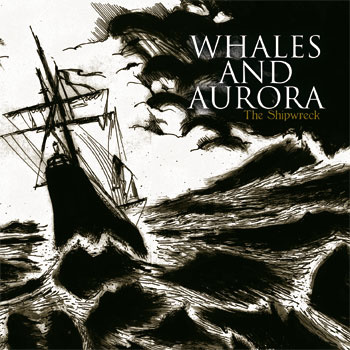
Album Review: Whales And Aurora - The Shipwreck
Lately, there’s been an awful lot of both creaking ocean-themed
concepts and atmospheric hardcore albums knocking about and this little
beauty hammers both of those increasingly prevalent events together.
These points might lead one to believe that Whales And Aurora are fans
of emotionally visceral bands like Devil Sold His Soul or Amia Venera
Landscape but having checked out their list of influences it appears
they are more likely to listen to blissed-out rumblers like Lento,
Mastodon and Russian Circles. Ignoring the incendiary wailing, the
Italians’ The Shipwreck certainly lives up to that
premise with the band cutting no corners and sinking their teeth in for
long, rotational runs to strengthen their musical structures.
Maximum volume and total immersion is required to fully appreciate the band’s efforts here, although blissful sonic drifting is made difficult and, suprisingly, the culprit isn’t Alberto Brunello’s vocal. Andrea Segnini Campesato’s snare mic has been wound up a tad too loud (trust me, you won’t miss its intermittent, aggressive “pop” sound). Instantly recognisable when it’s pounding upon the creaking bones of “Achieving The Unavoidable”, it happily sits deeper in the mix when the swathes of bottom-end cut in through the rougher sections of “Recounting Words”.
The tracks tend to rely on repeating chords which ride over peaks and through troughs, true forces of nature, but every now and then the more experimental edge of the band rises to the fore. It can be found attacking us though the monotonously crashing chord strikes of “The Aground Hard Ship” and sending our minds spiralling with the mesmerically chiming, twinkling strings of the glorious “Abandoned Among Echoes” and the somewhat clunkier “Awakened By The Aurora”.
The combined and varied musical backgrounds of the band has led to an interesting mixture of pleasure and pain; never quite tearing you apart they manage to crush and soothe in equal measure. There’s a depressive quality that settles over the listener like a cowl (the blackened gloom of “Floating On Calm Waters” is the maritime equivalent of a death march), yet the tanker-sized riffs that power the beast are from an entirely different place. The Shipwreck may not ultimately prove to be their greatest achievement, but Whales And Aurora’s waves of attack are something that just have to be experienced to be believed.
Also online (with score and links) @ Ave Noctum = http://www.avenoctum.com/2012/10/whales-aurora-the-shipwreck-slow-burn-records/
Maximum volume and total immersion is required to fully appreciate the band’s efforts here, although blissful sonic drifting is made difficult and, suprisingly, the culprit isn’t Alberto Brunello’s vocal. Andrea Segnini Campesato’s snare mic has been wound up a tad too loud (trust me, you won’t miss its intermittent, aggressive “pop” sound). Instantly recognisable when it’s pounding upon the creaking bones of “Achieving The Unavoidable”, it happily sits deeper in the mix when the swathes of bottom-end cut in through the rougher sections of “Recounting Words”.
The tracks tend to rely on repeating chords which ride over peaks and through troughs, true forces of nature, but every now and then the more experimental edge of the band rises to the fore. It can be found attacking us though the monotonously crashing chord strikes of “The Aground Hard Ship” and sending our minds spiralling with the mesmerically chiming, twinkling strings of the glorious “Abandoned Among Echoes” and the somewhat clunkier “Awakened By The Aurora”.
The combined and varied musical backgrounds of the band has led to an interesting mixture of pleasure and pain; never quite tearing you apart they manage to crush and soothe in equal measure. There’s a depressive quality that settles over the listener like a cowl (the blackened gloom of “Floating On Calm Waters” is the maritime equivalent of a death march), yet the tanker-sized riffs that power the beast are from an entirely different place. The Shipwreck may not ultimately prove to be their greatest achievement, but Whales And Aurora’s waves of attack are something that just have to be experienced to be believed.
Also online (with score and links) @ Ave Noctum = http://www.avenoctum.com/2012/10/whales-aurora-the-shipwreck-slow-burn-records/
Wednesday, October 3, 2012
Album Review: Axewound – Vultures
The trouble with supergroups is that they don’t tend to last and
their shows and material only appear when their multitudinous
commitments allow for it. Throw in the point that there is a tendency
for their work to be seen as something of a gimmick, or the fact that
their sessions together might well receive less than each band member’s
full attention, and it’s a wonder how any supergroup ever makes it past
the conceptual stage. Just imagine the scheduling nightmare that bands
like Down, Them Crooked Vultures or Shrinebuilder must have – getting their shit in order must drive them nuts!
Of course, as consumers, there’s little that compares to the buzz that accompanies the announcement of a new supergroup. Imaginations can run wild at the potential of “this vocal” with “that bass” combined with “those guitars”. Such was the thrill when Axewound were first announced to the public. The concept was always going to live or die on just how well its constituent parts would gel. Throwing Cancer Bats’ Liam Cormier’s screaming punk vocal at Bullet For My Valentine’s Matt Tuck and Glamour Of The Kill’s Mike Kingswood and their carefully-placed shreds and smooth guitar tones was a big risk. Add Rise To Remain bassist Joe Copcutt and Pitchshifter drummer Jason Bowld into the package and you get a lot of eager faces banging at the venue gates and, with debut album Vultures, music shop doors and online windows.
I got a sneak peak at them back in June when they hit the UK’s Download Festival. My expectations for just where this particular collaboration was headed panned out pretty well. They gave us petulant, direct metalcore peppered with cleans and screams all underpinned by hefty double-kick and scattergun fills. The surprise for me with the album, if there was to be any, is the nature of the emotive crooning they decided to actually throw out there. Back then, wedged into a vast tent filled with thousands of people, it didn’t seem so obvious but here, with what is an obscene level of production slapped on it, it sticks out a mile. “Cold”, ugly and unyielding at every turn, and the somber orchestral ballad “Collide” are great examples of songs where the lead and backing vocals work against each other (the line “When these two worlds collide / There’s nothing left to hide” seems particularly apt), and “Post Apocalyptic Party” and “Church Of Nothing” highlight just how easy it is for the slick riffs, chord holds, slimy guitar tones and blasé song construction to suck the fervour out of these songs.
On the flip side, the title-track (featuring an unseemly, tacked-on Synyster Gates’ solo) and the thrashing “Victim Of The System” peel back the varnish and simply rip it. Head-banging, air-guitaring fury from beginning to end. Cormier nails it as the backing vocal stays suppressed to allow him to remain unsweetened. Tracks like this and the hammering drums and skidding strings of the Unearth-esque “Destroy” prove this band could conceivably have a future if they keep away from descending into the more predictable metalcore formulas.
Essentially, with the two main protagonists, Cormier and Tuck, pressing down hardest of all, Vultures (not to be confused with Rise To Remain’s 2012 debut City Of Vultures) is more likely to appeal to the Bullet For My Valentine posse than Cancer Bats fans. If you like disco rhythms to accompany your breakdowns, you’ll probably eat this for breakfast. For anyone who fancies something a little more visceral, slightly anti-establishment and with a handsome degree of integrity (all of which Tuck promised Axewound would be), view this as a project that Tuck needs to “man up or shut up” for or that Cormier needs to ditch in a hurry.
Also online @ The NewReview = http://thenewreview.net/reviews/axewound-vultures
Of course, as consumers, there’s little that compares to the buzz that accompanies the announcement of a new supergroup. Imaginations can run wild at the potential of “this vocal” with “that bass” combined with “those guitars”. Such was the thrill when Axewound were first announced to the public. The concept was always going to live or die on just how well its constituent parts would gel. Throwing Cancer Bats’ Liam Cormier’s screaming punk vocal at Bullet For My Valentine’s Matt Tuck and Glamour Of The Kill’s Mike Kingswood and their carefully-placed shreds and smooth guitar tones was a big risk. Add Rise To Remain bassist Joe Copcutt and Pitchshifter drummer Jason Bowld into the package and you get a lot of eager faces banging at the venue gates and, with debut album Vultures, music shop doors and online windows.
I got a sneak peak at them back in June when they hit the UK’s Download Festival. My expectations for just where this particular collaboration was headed panned out pretty well. They gave us petulant, direct metalcore peppered with cleans and screams all underpinned by hefty double-kick and scattergun fills. The surprise for me with the album, if there was to be any, is the nature of the emotive crooning they decided to actually throw out there. Back then, wedged into a vast tent filled with thousands of people, it didn’t seem so obvious but here, with what is an obscene level of production slapped on it, it sticks out a mile. “Cold”, ugly and unyielding at every turn, and the somber orchestral ballad “Collide” are great examples of songs where the lead and backing vocals work against each other (the line “When these two worlds collide / There’s nothing left to hide” seems particularly apt), and “Post Apocalyptic Party” and “Church Of Nothing” highlight just how easy it is for the slick riffs, chord holds, slimy guitar tones and blasé song construction to suck the fervour out of these songs.
On the flip side, the title-track (featuring an unseemly, tacked-on Synyster Gates’ solo) and the thrashing “Victim Of The System” peel back the varnish and simply rip it. Head-banging, air-guitaring fury from beginning to end. Cormier nails it as the backing vocal stays suppressed to allow him to remain unsweetened. Tracks like this and the hammering drums and skidding strings of the Unearth-esque “Destroy” prove this band could conceivably have a future if they keep away from descending into the more predictable metalcore formulas.
Essentially, with the two main protagonists, Cormier and Tuck, pressing down hardest of all, Vultures (not to be confused with Rise To Remain’s 2012 debut City Of Vultures) is more likely to appeal to the Bullet For My Valentine posse than Cancer Bats fans. If you like disco rhythms to accompany your breakdowns, you’ll probably eat this for breakfast. For anyone who fancies something a little more visceral, slightly anti-establishment and with a handsome degree of integrity (all of which Tuck promised Axewound would be), view this as a project that Tuck needs to “man up or shut up” for or that Cormier needs to ditch in a hurry.
Also online @ The NewReview = http://thenewreview.net/reviews/axewound-vultures
Tuesday, October 2, 2012
Album Review: Mortor – Shoot ‘Em Up
Welcome to Mortor.
No, not Mordor, you numpty. This band have absolutely nothing to do
with Tolkien or his expansive works of fiction; they have zero to do
with the Land of Shadow; they are not where the fires of Mount Doom
burn, and they have zip to do with the Eye, the Mouth or any other
facial feature of the dark lord, Sauron. Instead, they have everything
to do with the “Mor” of Morbid Angel and their pig-grunting lunacy and the “Tor” of “Kreator” and their balls-to-the-wall thrash metal. I can also hear much of the denim & leather greaseball sound of Motorhead in Shoot Em’ Up,
their sophomore album, breaking up the steady flow of ripples that
comes from their straight-up hammering crush. With those guys for
heroes, these Canadians were always destined to form a band with the
name Mortor.
Stuffed full of jagged, hammer-on, hammer-off ragers like “Under The Flag”, the blistering title-track and “Infidels” – tracks that come loaded to the gills with rumbling bass, furious speed metal and almighty Corpsegrinder-esque burbles – Shoot ‘Em Up is a no-frills assault on your lugholes. Yank up the volume and the vibration it generates at the bottom-end of your aural range is mesmerising. This thing is an absolute beast of an album. “Clusterfuck”, for instance, adds flesh to the dripping, glutinous form of the bog-monster that the early tracks outline. As the track notches down the pace, you can actually feel its feet thudding on the ground as it advances upon you, a muddy trail pooling behind as it lumbers on. This is one foul stench you cannot escape.
“Trigger Happy” has jerking rhythms and guitar leads that begin to introduce other more anthemic Amon Amarth-esque elements. There’s hints of that battle metal drama about moments like this and it’s brother “Locked And Loaded” that just induce more and more panic into the mix. Those guitars go a bit over the top in places, but that’s all part of the fun, isn’t it? And don’t get me wrong this is one fun album. It absolutely refuses to take itself too seriously and that is ultimately its saving grace. If it had made even the slightest attempt to hide its weak spots, Shoot ‘Em Up would be rendered instantly redundant. There is no black metal masking here (although “Days Of Our Knives” does flirt with breaking that fourth wall), no self-absorbed progressive elements to rub your beard knowingly to. Oh no. With track-titles like “Whiskey Surgery” and the utterly loco “Let’s Deflagrate” you can be sure this is all about having a good time.
Certainly, this kind of hammer-down tomfoolery has been practiced before (it kept reminding me of Austrian Death Machine, Swashbuckle and Six Feet Under for varying reasons) and don’t be fooled into thinking that there is a wild degree of track-by-track diversity. However, if you dig the sound of ten people playing drums at once and a farm animal for a vocalist you’re going to be all over this. It all boils down to your personal preference: you can take the 44 seconds of galloping, driven crush that constitutes the “Intro” and be left gasping for air and gasping for more or, alternatively, you can listen to the full 47 minutes and be slowly bludgeoned to death by madmen with lop-sided grins and inflatable hammers. The choice, as they say, is yours.
Also online @ The NewReview = http://thenewreview.net/reviews/mortor-shoot-em-up
Stuffed full of jagged, hammer-on, hammer-off ragers like “Under The Flag”, the blistering title-track and “Infidels” – tracks that come loaded to the gills with rumbling bass, furious speed metal and almighty Corpsegrinder-esque burbles – Shoot ‘Em Up is a no-frills assault on your lugholes. Yank up the volume and the vibration it generates at the bottom-end of your aural range is mesmerising. This thing is an absolute beast of an album. “Clusterfuck”, for instance, adds flesh to the dripping, glutinous form of the bog-monster that the early tracks outline. As the track notches down the pace, you can actually feel its feet thudding on the ground as it advances upon you, a muddy trail pooling behind as it lumbers on. This is one foul stench you cannot escape.
“Trigger Happy” has jerking rhythms and guitar leads that begin to introduce other more anthemic Amon Amarth-esque elements. There’s hints of that battle metal drama about moments like this and it’s brother “Locked And Loaded” that just induce more and more panic into the mix. Those guitars go a bit over the top in places, but that’s all part of the fun, isn’t it? And don’t get me wrong this is one fun album. It absolutely refuses to take itself too seriously and that is ultimately its saving grace. If it had made even the slightest attempt to hide its weak spots, Shoot ‘Em Up would be rendered instantly redundant. There is no black metal masking here (although “Days Of Our Knives” does flirt with breaking that fourth wall), no self-absorbed progressive elements to rub your beard knowingly to. Oh no. With track-titles like “Whiskey Surgery” and the utterly loco “Let’s Deflagrate” you can be sure this is all about having a good time.
Certainly, this kind of hammer-down tomfoolery has been practiced before (it kept reminding me of Austrian Death Machine, Swashbuckle and Six Feet Under for varying reasons) and don’t be fooled into thinking that there is a wild degree of track-by-track diversity. However, if you dig the sound of ten people playing drums at once and a farm animal for a vocalist you’re going to be all over this. It all boils down to your personal preference: you can take the 44 seconds of galloping, driven crush that constitutes the “Intro” and be left gasping for air and gasping for more or, alternatively, you can listen to the full 47 minutes and be slowly bludgeoned to death by madmen with lop-sided grins and inflatable hammers. The choice, as they say, is yours.
Also online @ The NewReview = http://thenewreview.net/reviews/mortor-shoot-em-up
Monday, September 24, 2012
Album Review: Harp & Lyre - Tribes
There are shouty albums and then there are SHOUTY albums. Oklahoma City’s Harp & Lyre,
hardcore musicians first and Christians second, have conjured up a
debut that comes at you in capital letters. They are a group of
individuals who are clearly proud to call themselves a band and, boy, do
they like to tell you about it. They have spent the last four years
honing their music; developing their voice, as it were. It is this voice
that, as they themselves acknowledge, can offer “some a soundtrack to
parallel their lives”. They give the impression that their urgent,
impassioned music and equally fervent messages play out as bullet-points
to their own existence. One read of their poetic facebook biography
will tip you off as to how deep the H&L well goes and where they
believe the buck really stops.
Their first full-length, Tribes, moves one step on from their Clumsy Architects EP, heaping even heavier, harder hits on us one after the other. Through the demonstrative opening forays of “Birthpains” we are hurried through echoing halls where banners declaring “Welcome to humanity” and “Welcome to life” are ripped from their moorings to lie muddied and torn on the floor. Fists burst through the clanging guitar strokes of Jose Hernandez as he sets about shirking off the semi-laconic runs, theatrical breaks and assorted chaos that drummer Dylan Baxter spews throughout “Eyes”. Front and center is Tyler Carder, doubled-up, orchestrating the madness with his all-consuming, vitriolic, scrawling vocals. This is not the type of vocal delivery you are supposed to like. Throughout “I Am Rebellion” and “Tamenation” he is right up in your grill, sonically hewing a path through his own band’s output. Forget weaving in and out of the music; this takes you, as-the-crow-flies, screeching and howling, bisecting the riffs, dividing the battery, careering blindly through the thrum.
Bands like this tend to have a trick up their sleeves. So whilst you’re gawping at their ability to both challenge, like The Chariot and Norma Jean, and bulldoze, like The Prestige or Feed The Rhino, don’t be surprised when you happen upon a track like “This Is Giving Up”. Here, you’ll discover build, melody, clarity and harmony wrapped around a heightened level of tense, rhythmic focus. It reminded me of those mind-mangling moments when bands like Poison The Well and To Speak Of Wolves switched tack to reveal their singing and screaming voices, one after the other, usually to stunning effect. There’s a frailty, tenderness and passion that hits in layered waves, enough to wash over the brim and into a (pointlessly separated) instrumental tack-on, “Hope In Things To Come”. Hearing this is like actually hearing the band for the first time, as they slice clinically through the bullshit to confess their innermost thoughts.
Most certainly, there’s a deep sense, appreciation and understanding of the power of faith guiding the lyrics, but the band do seem particularly keen to explore both the negative and positive sides of their relationship with the subject so it’s not an overwhelming aspect. What is of greater detriment to the album is the tendency for its tracks to blur together. Tribes‘ initial swathes of volume set about desensitising the listener to such a degree, that the louder and harder the subsequent tracks go, the less of an impact they seem to make and, as a consequence, the lines of division crumble. On the positive side, there are some expansive switches in delivery to be found in the whines of “Wormood”, the totemic beats of the title-track and the tonal trickery of “1:7″ (for those not diving for their little black book it’s a bible passage that refers to “The fear of the Lord”, apparently). The latter two seem like mere afterthoughts that makes something of a mockery of the running order.
Yes, Tribes is definitely a SHOUTY album. As a jockey lashes his ride to go faster, bawling your lyrics across a rabble-rousing backdrop can be a useful tool to inject urgency, vitality and passion to an opus; a trigger for those primal fight-or-flight surges. Harp & Lyre, a hugely promising addition to this industry, have proven with their debut that if they want to thrash it as hard as they do, the one thing they must also learn is to steady the hand and stay the whip a little more often or they could well end up flogging a dead horse.
Also online (with samples) @ The NewReview = http://thenewreview.net/reviews/harp-lyre-tribes
Their first full-length, Tribes, moves one step on from their Clumsy Architects EP, heaping even heavier, harder hits on us one after the other. Through the demonstrative opening forays of “Birthpains” we are hurried through echoing halls where banners declaring “Welcome to humanity” and “Welcome to life” are ripped from their moorings to lie muddied and torn on the floor. Fists burst through the clanging guitar strokes of Jose Hernandez as he sets about shirking off the semi-laconic runs, theatrical breaks and assorted chaos that drummer Dylan Baxter spews throughout “Eyes”. Front and center is Tyler Carder, doubled-up, orchestrating the madness with his all-consuming, vitriolic, scrawling vocals. This is not the type of vocal delivery you are supposed to like. Throughout “I Am Rebellion” and “Tamenation” he is right up in your grill, sonically hewing a path through his own band’s output. Forget weaving in and out of the music; this takes you, as-the-crow-flies, screeching and howling, bisecting the riffs, dividing the battery, careering blindly through the thrum.
Bands like this tend to have a trick up their sleeves. So whilst you’re gawping at their ability to both challenge, like The Chariot and Norma Jean, and bulldoze, like The Prestige or Feed The Rhino, don’t be surprised when you happen upon a track like “This Is Giving Up”. Here, you’ll discover build, melody, clarity and harmony wrapped around a heightened level of tense, rhythmic focus. It reminded me of those mind-mangling moments when bands like Poison The Well and To Speak Of Wolves switched tack to reveal their singing and screaming voices, one after the other, usually to stunning effect. There’s a frailty, tenderness and passion that hits in layered waves, enough to wash over the brim and into a (pointlessly separated) instrumental tack-on, “Hope In Things To Come”. Hearing this is like actually hearing the band for the first time, as they slice clinically through the bullshit to confess their innermost thoughts.
Most certainly, there’s a deep sense, appreciation and understanding of the power of faith guiding the lyrics, but the band do seem particularly keen to explore both the negative and positive sides of their relationship with the subject so it’s not an overwhelming aspect. What is of greater detriment to the album is the tendency for its tracks to blur together. Tribes‘ initial swathes of volume set about desensitising the listener to such a degree, that the louder and harder the subsequent tracks go, the less of an impact they seem to make and, as a consequence, the lines of division crumble. On the positive side, there are some expansive switches in delivery to be found in the whines of “Wormood”, the totemic beats of the title-track and the tonal trickery of “1:7″ (for those not diving for their little black book it’s a bible passage that refers to “The fear of the Lord”, apparently). The latter two seem like mere afterthoughts that makes something of a mockery of the running order.
Yes, Tribes is definitely a SHOUTY album. As a jockey lashes his ride to go faster, bawling your lyrics across a rabble-rousing backdrop can be a useful tool to inject urgency, vitality and passion to an opus; a trigger for those primal fight-or-flight surges. Harp & Lyre, a hugely promising addition to this industry, have proven with their debut that if they want to thrash it as hard as they do, the one thing they must also learn is to steady the hand and stay the whip a little more often or they could well end up flogging a dead horse.
Also online (with samples) @ The NewReview = http://thenewreview.net/reviews/harp-lyre-tribes
Subscribe to:
Posts (Atom)